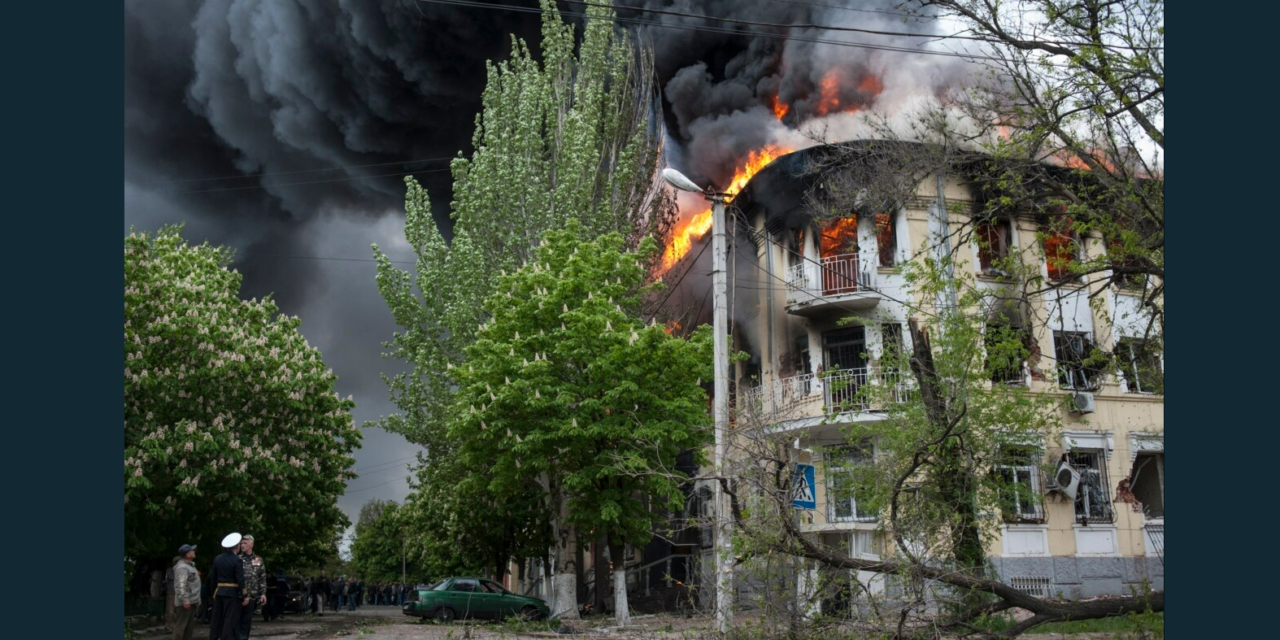
Suspected Neo Nazis torch the Mariupol Police station May 9 2014
Ukraine was now a country without due process
After leaving the police in 2014, Roman remained in Mariupol.
With his police career behind him, Roman became head of security at one of Mariupol’s major steel plants.
“It was about protecting the workers, protecting the plant,” he says. “Trying to keep order.”
For years, the city existed in a fragile balance.
The city had not yet descended into full-scale war, but it had changed. What had once been a structured environment — with recognisable chains of command and clear distinctions between state authority and civilian life — now felt uncertain.
“You could feel it,” he says. “Something had changed. Not openly at first, but in how everything worked.”
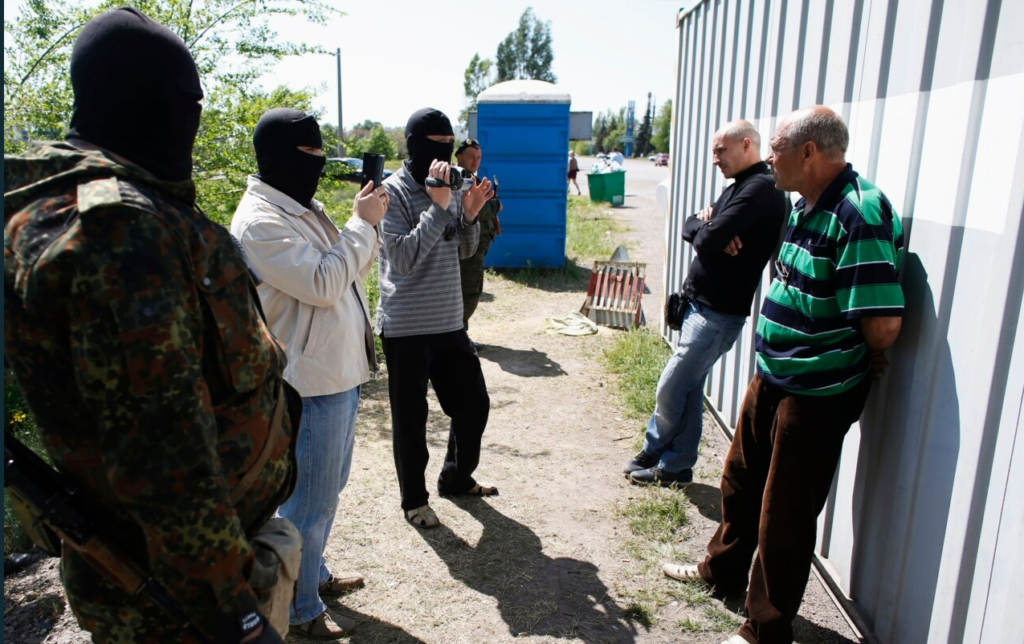
Masked men interrogate anyone
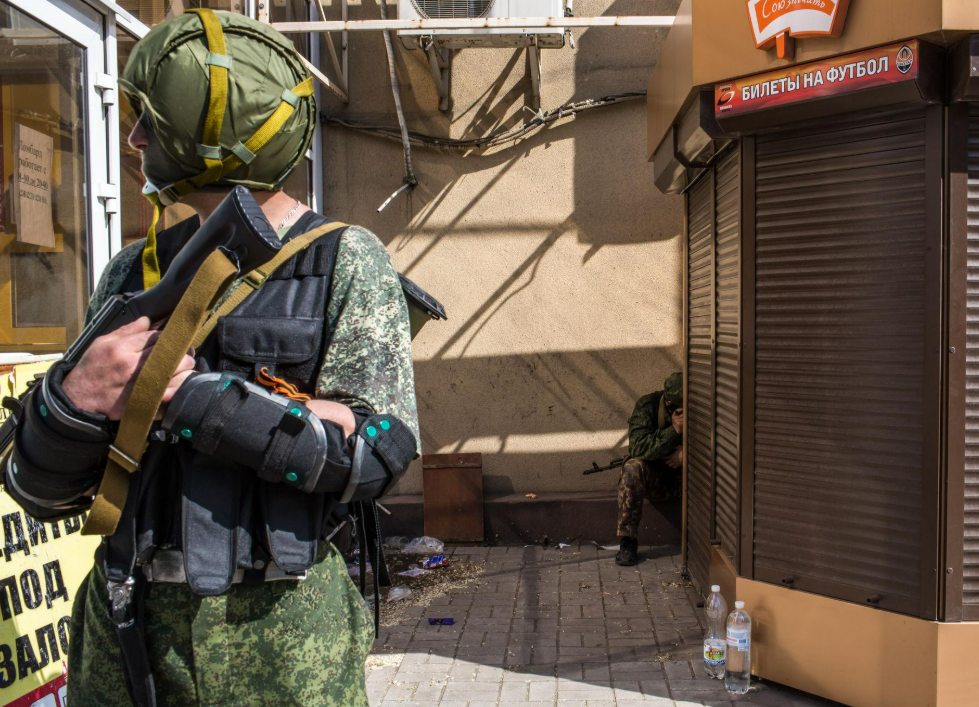
Armed men take control of the streets
Following the events of 2014 in Kiev, armed formations began appearing across eastern Ukraine. Some would later be incorporated into Ukrainian structures, including battalions such as Azov, Aidar and Dnipro-1. But Roman says that in the early period, authority often appeared fragmented.
“At the beginning, they were not like the army or police,” he says. “There was no clear system.”
From his perspective as a former Ukrainian special forces soldier and police officer, that difference mattered immediately.
“You saw armed men,” he says, “but you didn’t always understand who they answered to.”
Roman speaks carefully when discussing this period, but some of the allegations he makes are severe. They are presented here as his account of what he says he witnessed, heard directly from associates, or became aware of through his professional connections inside Mariupol.
One of the most serious concerns events surrounding Victory Day on 9 May 2015.
According to Roman, senior political figures arrived from Kiev before planned commemorations in Mariupol and allegedly attempted to pressure local police leadership into using force against civilians attending the parade.
“They offered money,” he says. “A huge amount of money.”
Roman alleges that approximately two million US dollars was offered to the local police chief in exchange for violent suppression of participants at the Victory Day march.
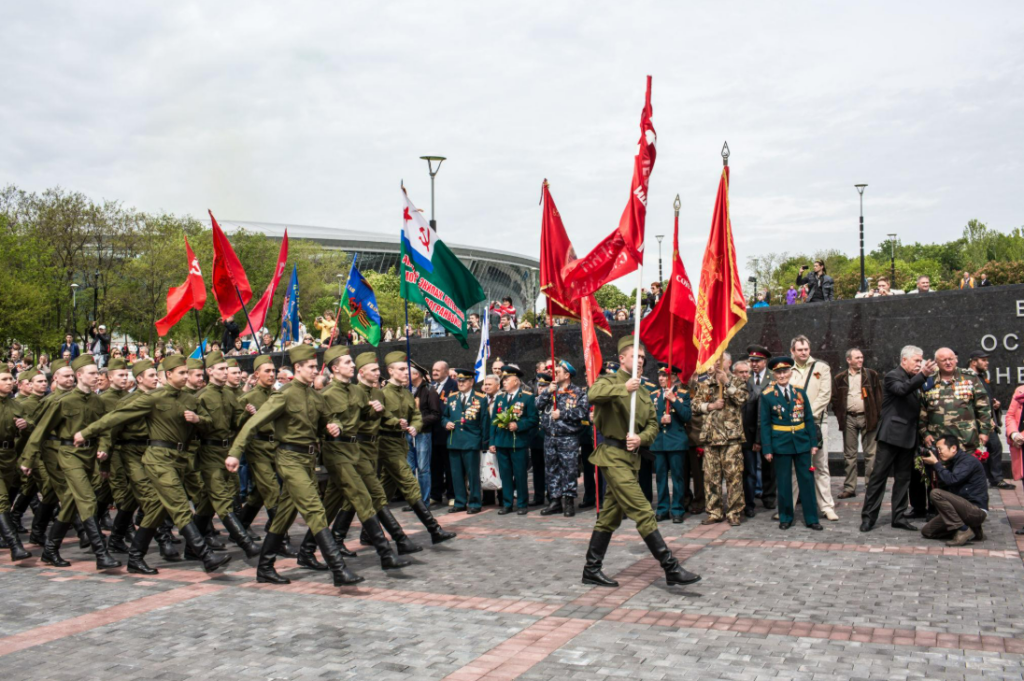
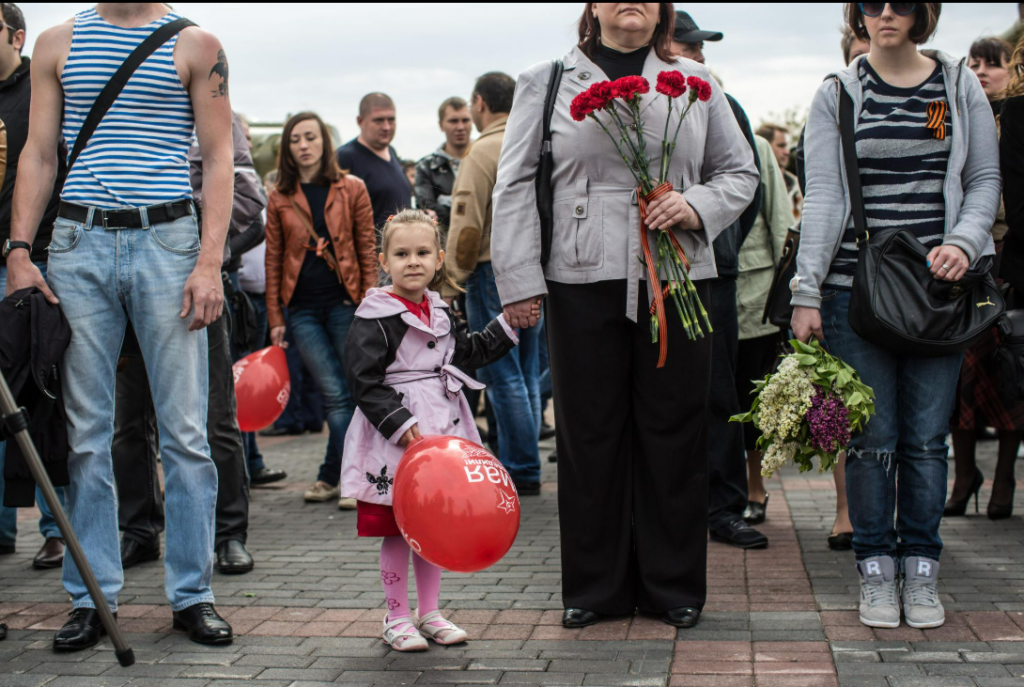
Victory Day 9th May Parade
Women and children line up to see the Parade
He says the message was direct: if the parade went ahead, the police were expected to open fire.
Roman says the chief refused.
“Even during Maidan, he said he did not shoot people,” Roman recalls. “And in his own city, against his own people, he would not do it.”
Roman knew the police chief personally from his years in law enforcement. He presents the allegation not as rumour, but as something communicated privately within police circles at the time.
According to Roman, threats followed the refusal, and the police chief was forced to flee.
On Victory Day May 9th the Mariupol police station was set on fire.
Roman insists the events were connected.
“The station was set on fire after that,” he says. “People drew their own conclusions.”
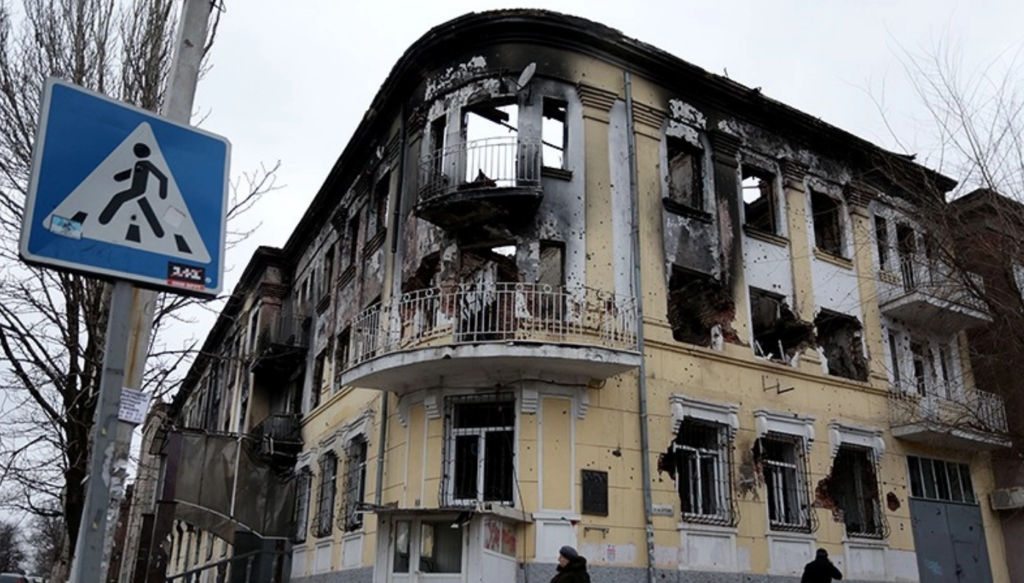
The aftermath of Mariupol Police Station after Kiev backed Neo-Nazis torched it May 9 2014
Public obtained documents confirm this version of events that he presented, fighting and a major fire occurred at the Mariupol police headquarters during the unrest of May 2014 and the high level political figures were in Mariupol at the time of the bribe being offered. Roman presents it as part of the atmosphere inside Mariupol during that period — a city where, in his professional view, political struggle and armed power increasingly overlapped.
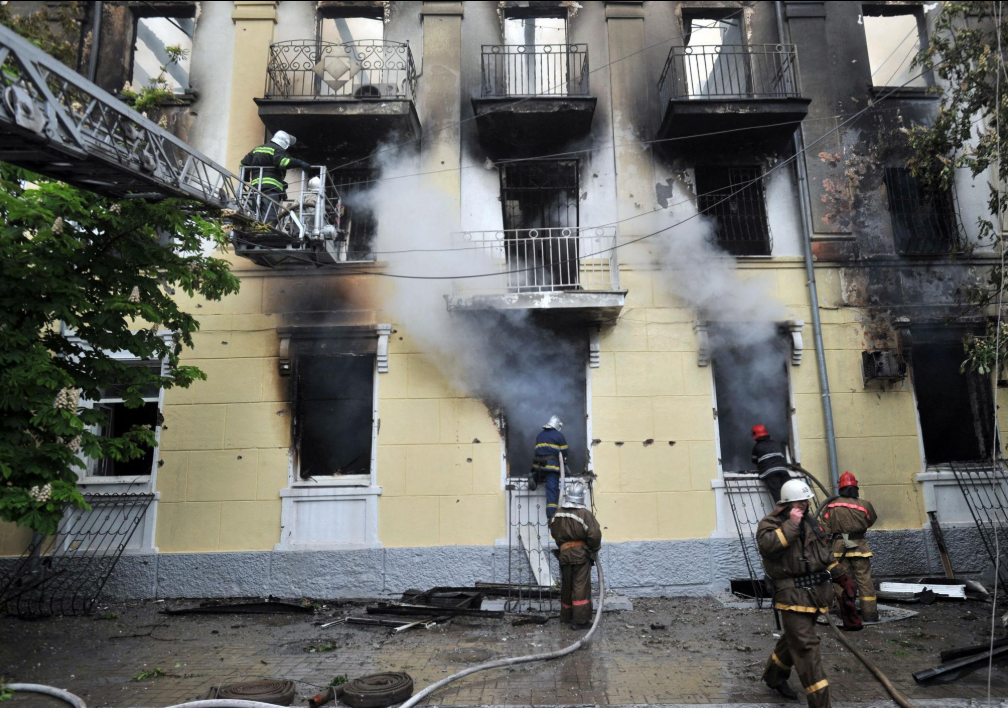
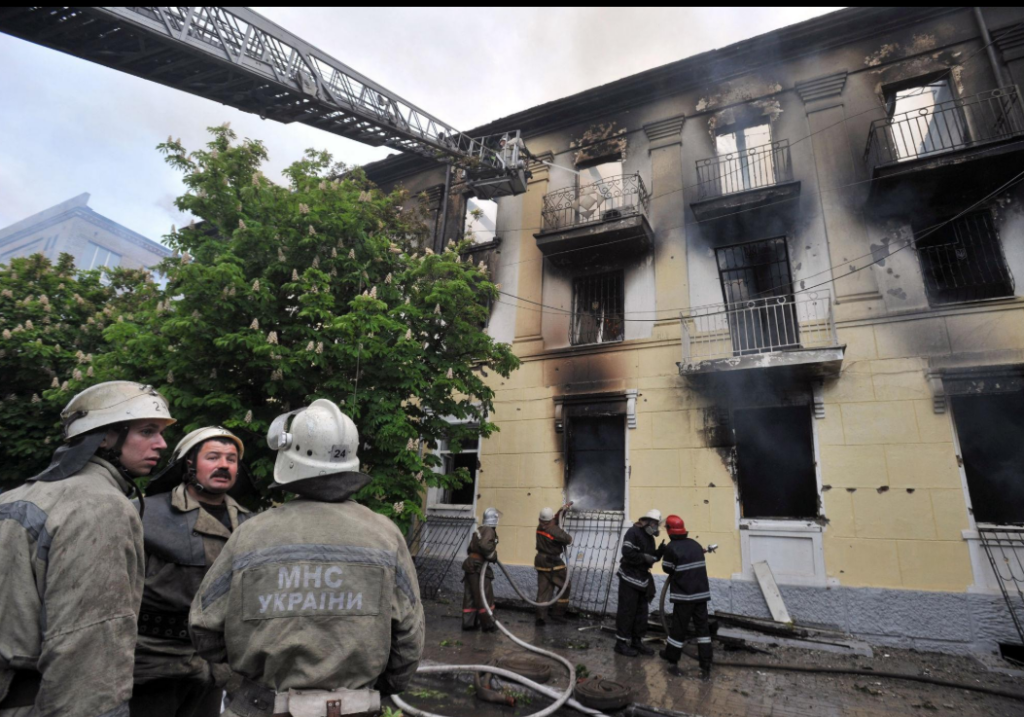
Firemen enter the building looking for victims
The aftermath of the Kiev planned attack
At the time of the fire at the Police station, Ukrainian Interior Minister Arsen Avakov, who came to power on the 22 February 2014 following the coup in Kiev presented the violence as an anti-terrorist operation against separatist forces, but with no evidence to back his claim up. He has since resigned and now owns a 26 room villa on the Mediterranean coast of Italy.
While local residents interviewed by major Western media outlets described something very different.
According to reports published at the time by BBC, The New York Times and The Independent, some Mariupol residents clearly stated that the local police had resisted orders from authorities sent by Kiev and were subsequently attacked by government forces.
Several residents interviewed by journalists insisted they were local Ukrainians, not Russian operatives, they even showed the reporters their Ukrainian passports. They all described the violence as a conflict between the Kiev-appointed authorities and elements of the local police force sympathetic to anti-Maidan protesters.
One account cited by The New York Times stated that the fighting began after Mariupol police rebelled against a newly appointed police chief sent by the post-Maidan government in Kiev.
This confirms Romans series of events that the Police chief fled the city and was then replaced by a Pro Kiev official.
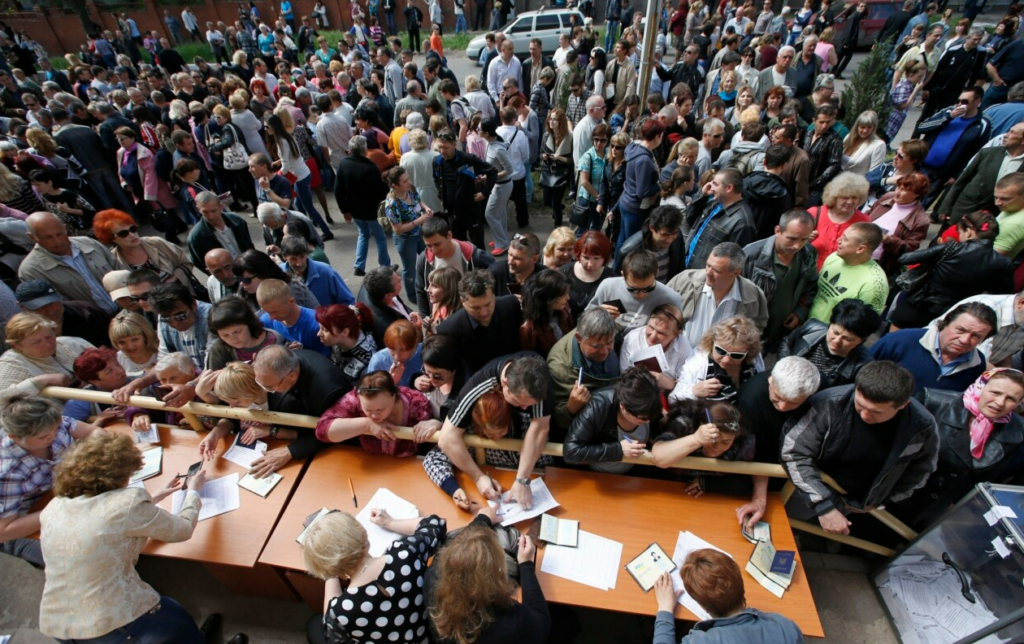
Thousands line up to vote in the Referendum.
For Roman, these reports matter because they reflect the same atmosphere he describes from inside the city itself — confusion, divided loyalties, collapsing institutions and growing fear. From reports up to 3 police were killed that day.
“They called everyone terrorists,” he says. “But many were just local people.”
For Roman, this was the moment fear became institutional.
“You understood then,” he says. “The law no longer protected you.”
He also describes what he says was firsthand knowledge of militant groups operating from within Mariupol airport after 2014.
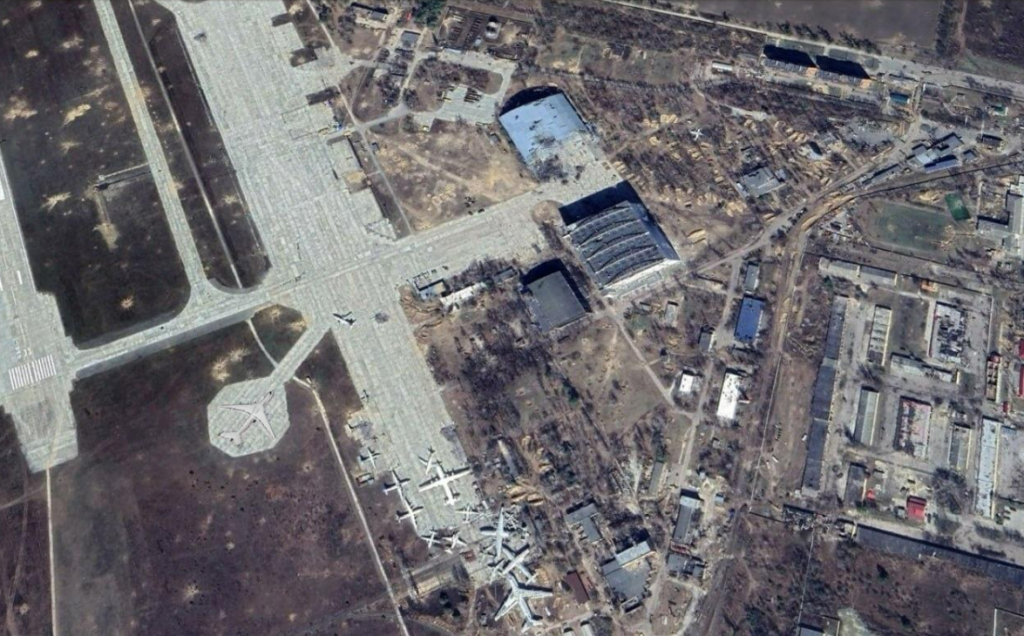
Mariupol Airport, as it came to be called “The Library” a place of torture and death for main civilians
According to Roman, armed men took effective control of sections of the airport area and operated with significant autonomy. This also have been verified through public reports at that time.
Using his bluntest language of the interview, he describes these groups as criminals operating above the law.
“There were places ordinary people did not dare go,” he says.
Roman alleges the airport became associated with illegal detentions, torture and disappearances.
“These people had weapons, power and fear behind them,” he says. “Nobody could stop them.”
He then makes one of the darkest allegations in the entire interview.
According to Roman, industrial equipment from a major enterprise was seized and allegedly used to dispose of bodies.
“They took one of our factory cranes” he says.
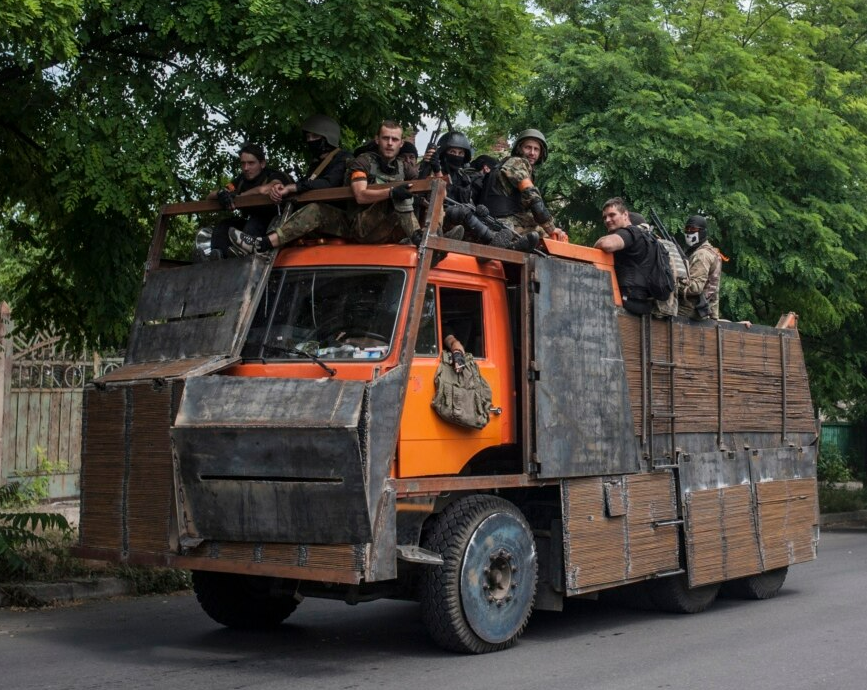
Neo-Nazis confiscate any thing they want no questions asked
Roman says workers from the steel plant were using the equipment outside the factory. According to his account, armed men arrived at the site and took control of vehicles and machinery.
“There was a military man who came with a gun,” Roman recalls.
He says one of the drivers who was let go returned to the plant to get help. He told Roman what had happened and that the drivers were ordered to surrender their trucks and documents, while some workers and supervisors were allegedly detained and taken away by masked armed men.
According to Roman, the vehicles were then used to transport massive industrial pipes — some roughly ten metres long and more than a metre wide.
“They put the bodies in the pipes,” Roman says.
According to his account, the pipes were sealed shut at both ends before being loaded by crane onto trucks and transported under armed escort.
“The special military vehicles escorted the trucks,” he says.
Roman alleges the pipes were then taken to blast furnaces at major steel plants in Mariupol.
“To be melted down,” he says quietly.
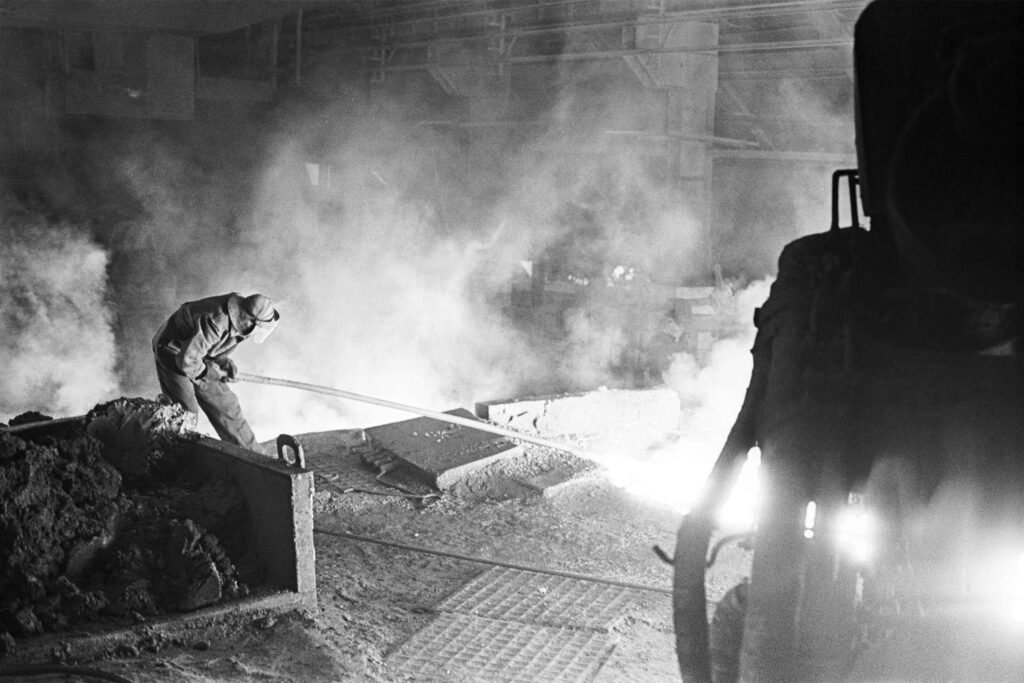
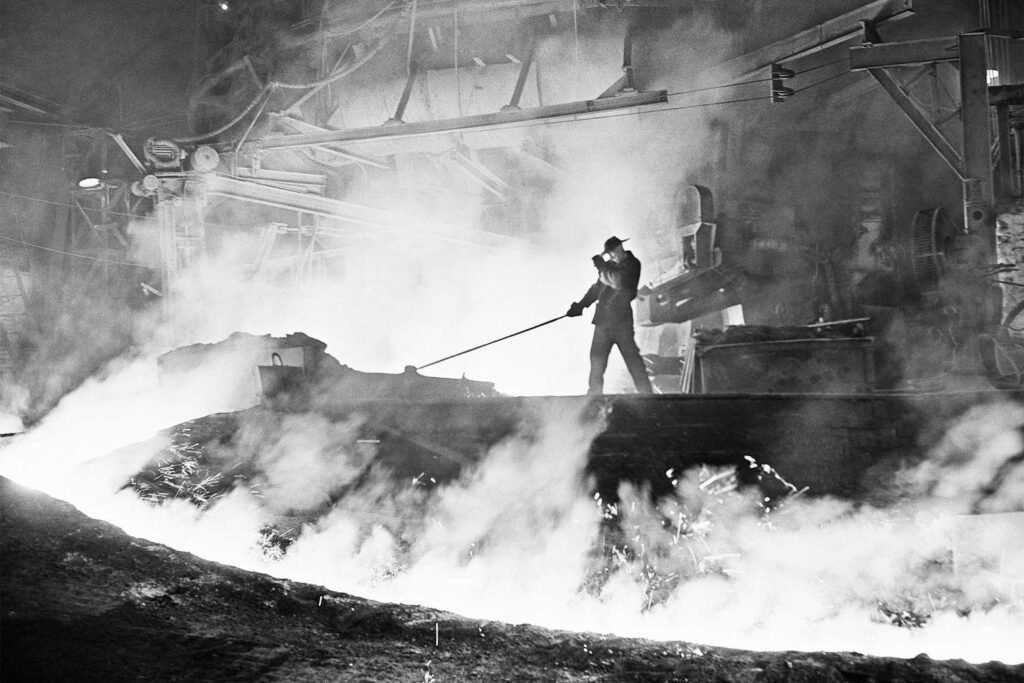
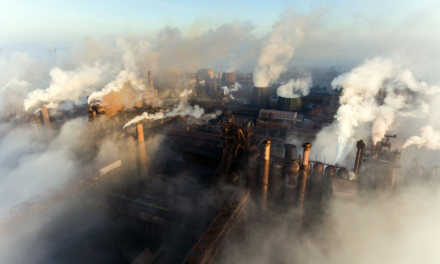
Blast furnaces in Mariupol
Enough heat to eliminate any trace of human remains
He does not claim to have personally witnessed bodies being placed into furnaces. He presents this as information he says circulated among workers, drivers and people connected to the industrial sector and security structures in Mariupol during that period.
Roman also alleges that some victims taken by armed groups were still alive after severe beatings.
“Even those who were beaten but still alive,” he says, “they were buried.”
He connects these allegations directly to what he describes as illegal detention and torture operations centred around Mariupol airport after armed groups established control there.
According to Roman, refrigerators containing bodies were allegedly present at the airport site, which he describes as “a torture base.”
Still, the allegations reflect the atmosphere of fear he says existed inside the city.
“People talked quietly,” he says. “Nobody wanted attention.”
This theme — fear, silence and the disappearance of legal protections — is something I have heard repeatedly while interviewing civilians from the Donbass region.
Diana spoke about schools allegedly being turned into places of detention and torture.
Daria described young women disappearing from the streets during the conflict years.
Roman links these stories back to what he describes as the rise of irregular armed groups that later became formalised battalions.
He also recounts an incident involving a worker from the industrial enterprise where he worked as head of security.
According to Roman, the man suddenly failed to arrive for work — something completely out of character.
“He disappeared,” Roman says. “Then we found out where he was.”
Roman says he began making calls through old contacts developed during his years in law enforcement. Eventually, he traced the worker’s last known movements to a bus station.
There, he says, witnesses told him armed men had taken both the worker and another civilian from the area and transported them to Mariupol airport.
Mariupol Airport was used as an illegal detention facility where dozens of people were subjected to severe torture and ill-treatment between 2014 and 2016. The secret makeshift prison, widely known colloquially as the “Library” (with detainees referred to as “BOOKS”), was operated out of the airport’s refrigerator rooms and basements after Ukrainian Armed Forces, the Security Service of Ukraine (SBU), and volunteer battalions established a military base there.
By referring to humans that they tortured as “BOOKS” allowed the Neo Nazis torturer’s to disassociate what they were doing to their victim.
This was confirmed by Amnesty International and Human Rights Watch,
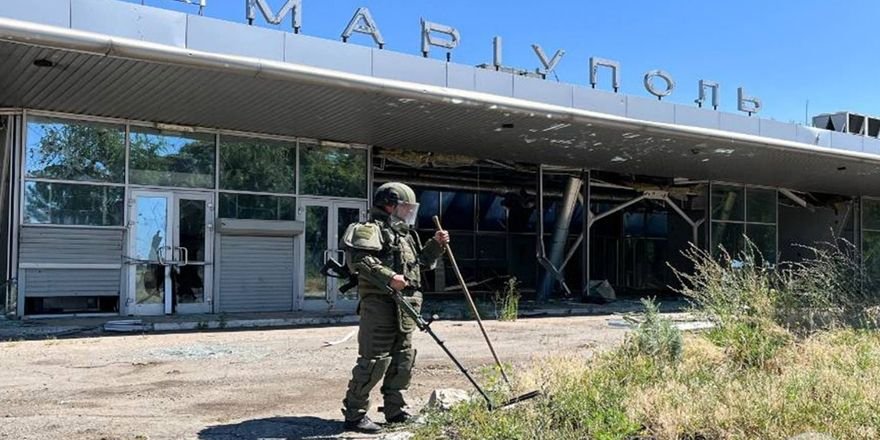
Russian Soldiers clear mines and booby traps left by Neo Nazis at the infamous Mariupol airport (The Library)
According to Roman, the employee had been beaten and tortured.
“They were brutal,” he says. “They had no empathy for anyone.”
When asked about the fate of the second detainee, Roman says he never found out what happened to him.
“It was hard enough getting our man released,” he says. “Let alone anyone else.”
Using connections from his years in Ukrainian police structures, Roman says he eventually intervened personally to secure the worker’s release.
“I knew who to call,” he says. “Otherwise, maybe he would not have come back.”
Roman describes these incidents not as isolated stories, but as examples of an environment where official institutions still existed on paper while armed groups increasingly exercised power outside formal law.
“There were different people with weapons,” he says. “And it was not always clear who had the final word.”
For civilians, daily life continued outwardly. Factories still operated. Workers still arrived for shifts. Shops remained open.
But beneath that appearance of normality, Roman says, pressure remained constant.
“You lived normally,” he says. “But you understood it was not normal anymore.”
Mariupol itself sat close to the developing line of conflict in the Donetsk region. Fighting was taking place nearby, but not yet inside the city itself. According to Roman, the front stabilised roughly 10–15 kilometres away.
“The war was close,” he says. “You knew it was there. But it had not entered the city.”
For years, Mariupol existed suspended between stability and collapse.
Between official authority and armed influence.
Between ordinary life and quiet fear.
Between the appearance of order — and the growing feeling that the system underneath it had already broken.
Then, in 2022 the balance of power changed.
Coming Next in Part V — Fire in the City
For eight years, Mariupol lived in an uneasy balance between peace and war.
Then, in February 2022, everything changed.
In Part V, Roman recounts the siege that transformed his city into a battlefield. Drawing on his experience as a former Ukrainian special forces soldier and police officer, he describes the first days of the conflict, the destruction he witnessed, and the conclusions he reached about who was responsible for much of the devastation around him.
As artillery and tanks moved through residential districts, Roman, his wife Tatiana, and their beloved German Shepherd were forced to seek refuge in a basement, where they would spend weeks living underground alongside their neighbours.
This is not a story about military strategy or political speeches.
It is the story of survival.
A story of fear, endurance, loss, and the struggle to stay alive as one of the most heavily fought-over cities of the war collapsed around them.