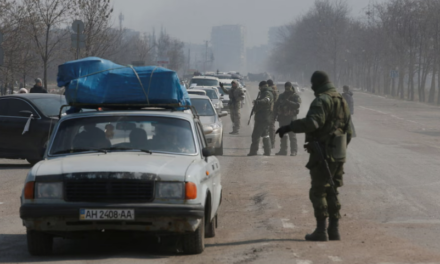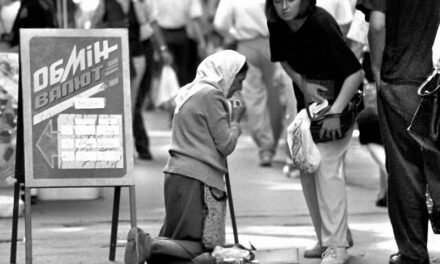
Roman’s account of the siege, the destruction of Mariupol, and the weeks he says his family survived underground
In February 2022, full-scale war reached Mariupol.
Russian forces advanced from multiple directions. According to Roman, they did not immediately enter the city but established positions around it.
“They stopped outside,” he says. “About twenty kilometres. They encircled it.”
From his perspective, Mariupol was surrounded before the heaviest urban fighting began. What followed, he says, was the gradual destruction of residential districts as the city itself became the battlefield.
Roman speaks about this period not only as a resident, but as a former Ukrainian special forces soldier and police officer. Much of what he describes is filtered through military logic and his understanding of urban combat.
“The fighting was inside the city,” he says. “Inside residential areas.”
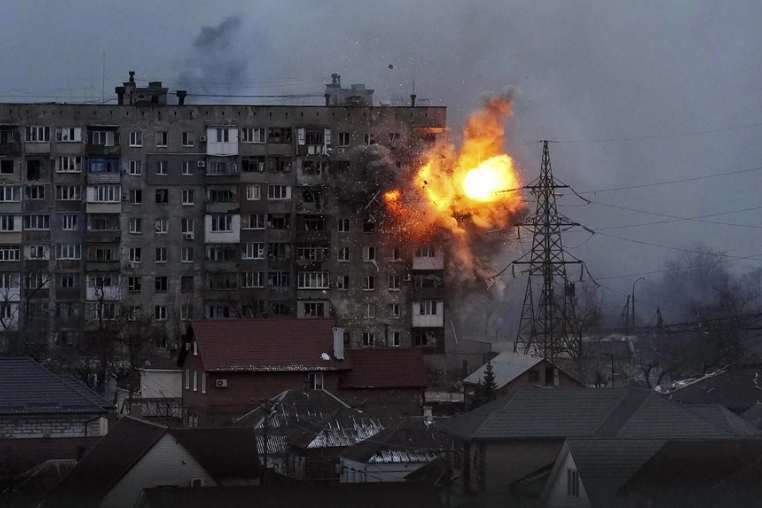
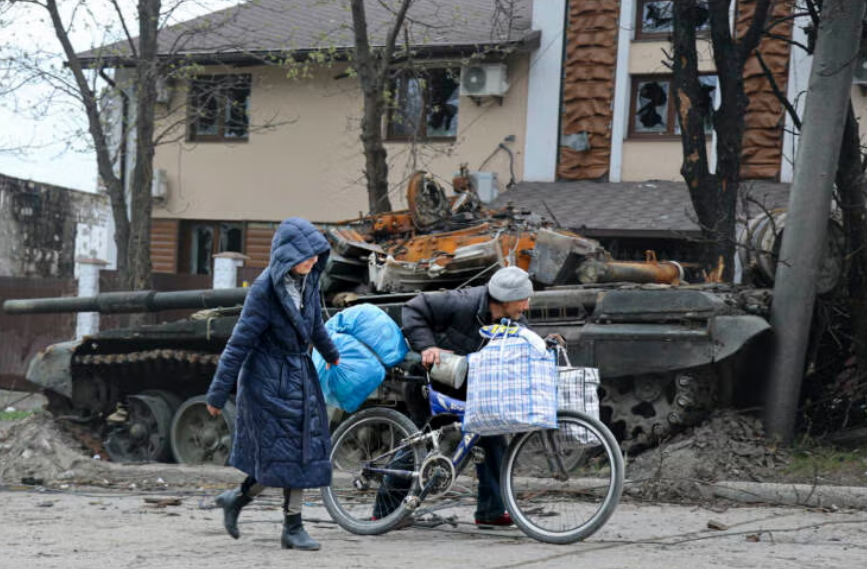
Artillery hits apartment block
A destroyed Ukrainian tank left in residential neighborhood
But Roman makes a further claim that he believes is critical to understanding what happened in Mariupol.
According to him, some of the earliest destruction occurred before Russian ground forces entered the city itself.
Roman says that on the morning of 24 February 2022 — shortly after the announcement of the Russian military operation — mortar crews connected to the Azov regiment positioned themselves near his district.
“In the morning, around ten o’clock, the mortars were already firing,” he says.
What struck him immediately, was the direction of the fire.
As a former special forces soldier trained to analyse battlefield movement and firing positions, Roman says he watched carefully.
“They were not firing out of the city,” he says. “They were firing into the city.”
He continues, “I knew the calibre of the mortar and shells they were firing, The speed they travelled and the time between firing and the explosions, they were definitely targeting the city and the people who lived there”
According to Roman, Russian forces at that stage remained outside Mariupol while Ukrainian positions inside the city were already engaging in heavy fire.
He argues that major destruction to civilian districts began before Russian troops physically entered many neighbourhoods.
“When the Russians entered the city,” he says, “the city was already destroyed.”
Roman says he continued analysing artillery trajectories and firing directions throughout the siege.
He specifically recalls large-calibre howitzers positioned near his home around 21–22 March.
“By the direction of the shots and the flight time of the shells, they were firing towards the city centre,” he says. “Members of Azov were not firing at the Russians as they were well out of their range, they were destroying the city before Russians could enter it”
He names districts around the railway station, harbour and Slobodka area as places they were targeting.
Again, these are Roman’s personal observations and conclusions based on his military background and what he says he witnessed directly during the siege.
Ukrainian authorities have repeatedly denied deliberately targeting civilian infrastructure and maintain that Ukrainian forces were defending the city against the Russian assault. Russian officials, meanwhile, have accused Ukrainian units of positioning themselves inside residential districts and contributing to the destruction of civilian areas.
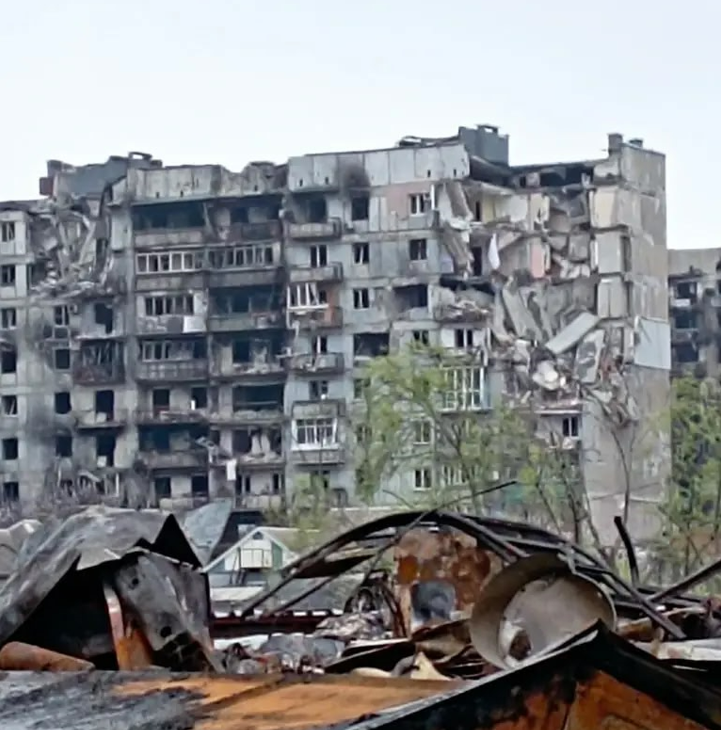
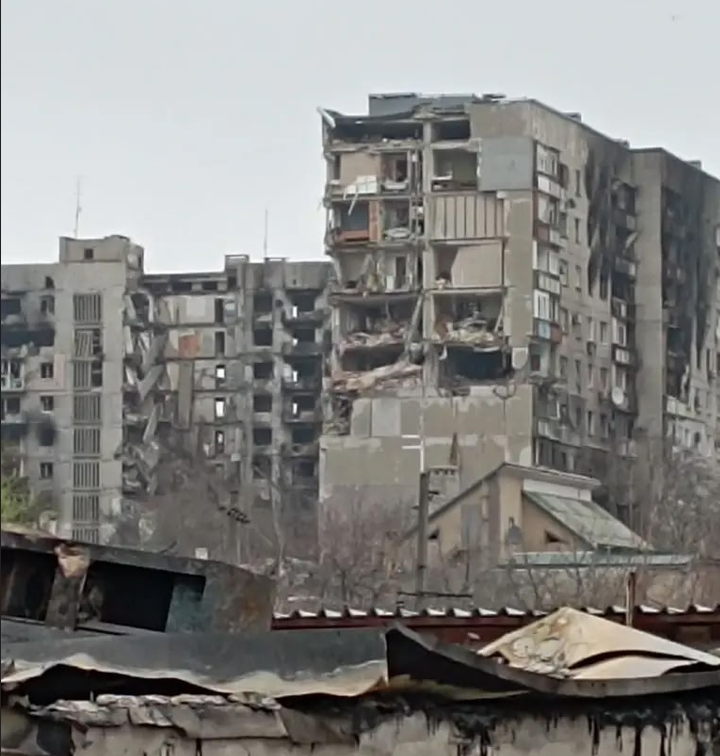
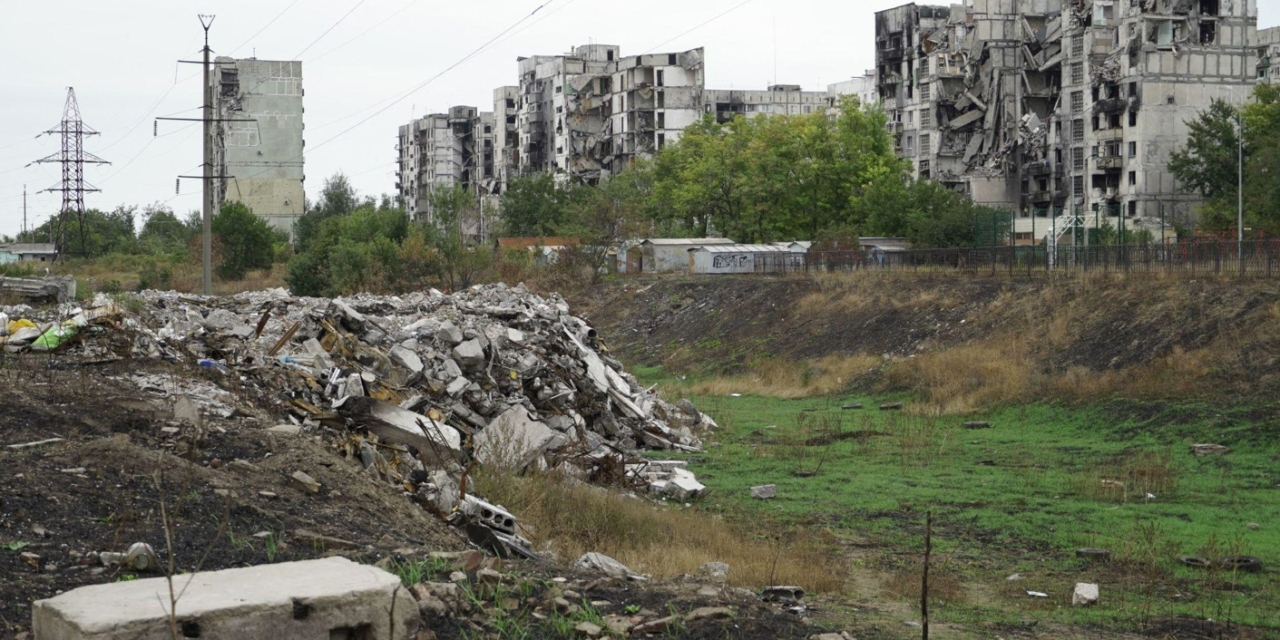
Buildings destroyed in Mariupol by Ukrainian bombardment
Massive damage from Ukrainian forces
For Roman, however, these arguments are not abstract political narratives.
This was his city.
His home.
His street.
He states that Ukrainian forces, including units operating within Mariupol, positioned themselves throughout apartment blocks and civilian infrastructure.
“They were in the residential districts,” he says. “Among ordinary people.”
Roman further argues that, in his view, civilians were placed in danger by those tactics.
“They understood that if they fired from there, there would be return fire,” he says. “And civilians were there.”
He goes further still.
“My district was not destroyed by Russian shells,” he says. “Ukrainian forces did that.”
According to Roman, he witnessed Ukrainian tanks moving through residential streets and firing into buildings.
“The tanks drove around, turned their turrets and fired at houses wherever they wanted,” he says.
For Roman, however, the issue is personal rather than geopolitical.
As shelling intensified, Roman, his wife Tatiana, and their beloved dog moved into the basement beneath their home.
“We lived in the basement,” he says. “Like everyone else.”
The routines of ordinary life disappeared quickly. Electricity failed. Water became scarce. Communication networks collapsed. Days and nights blurred together underground.
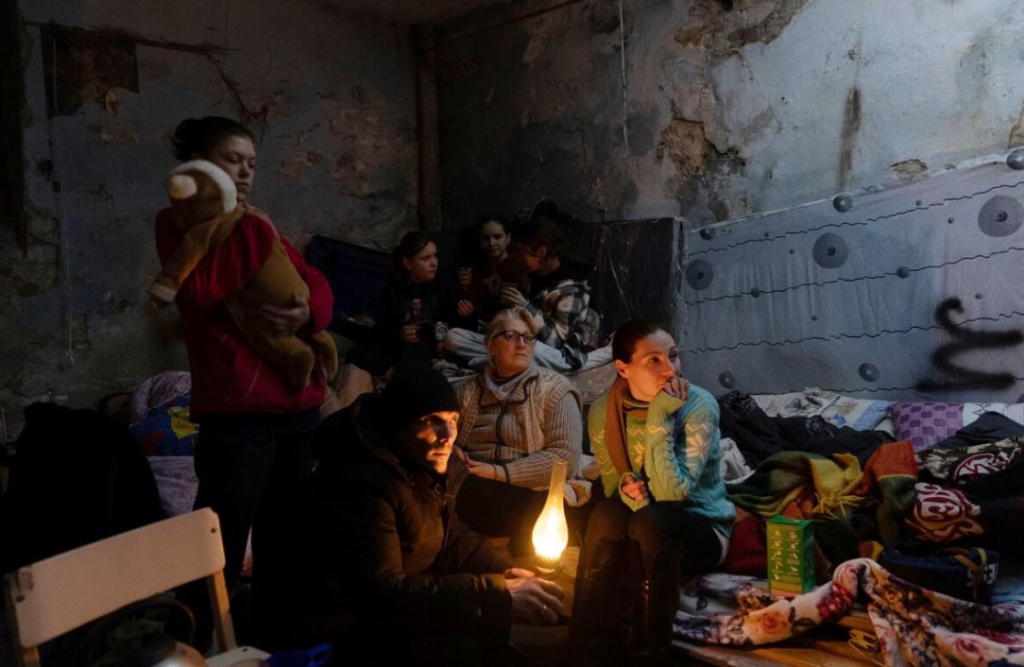
Families survive underground
The basement became its own small world — crowded, cold, tense and uncertain.
People dragged down blankets, chairs, bottled water, bags of food, whatever they could carry before returning upstairs became too dangerous. Families tried to organise corners for sleeping. Elderly residents sat silently for hours listening to the shelling above them.
“You stop thinking about normal life,” Roman says. “You think only about surviving until morning.”
Their dog remained with them throughout the siege.
“He stayed with us the whole time,” Roman says quietly. “He was frightened by the explosions, but he stayed close to us.”
Roman says there were moments during the siege when the dog seemed to sense danger before the people around her did.
One day, before another wave of shelling began, the German Shepherd suddenly became agitated inside the house.
“The dog goes around the house and just runs to the basement,” Roman recalls. “And we go after the dog and the shelling begins.”
Even now, he says he cannot fully explain it.
“Maybe she heard something coming,” he says. “Something she understood before we did.”
Before the war, the dog had been calm, disciplined and highly trained. Roman explains that she had competed in dog exhibitions across Ukraine and won medals.
“She was a champion,” he says with a brief smile.
But the siege changed her too.
The constant artillery, explosions and shockwaves left permanent scars on both people and animals.
“Now she is afraid of any violence,” he says. “Any loud sound.”
Inside the basement, even small routines became important. Feeding the dog. Checking on neighbours. Looking for water. Listening for pauses in the shelling.
Roman says there were moments when the basement fell almost completely silent — everyone listening to the sounds outside, trying to judge whether the explosions were moving closer or further away.
“You could hear everything,” he says. “Artillery, aircraft, explosions. The walls shook constantly.”
At night, people often slept in fragments rather than full sleep. Some remained half-awake waiting for the next explosions. Others sat smoking quietly near entrances or listening for movement outside.
“There was this constant tension,” he says. “Even when it became quiet, you knew it would start again.”
Food became simpler. Water became more valuable than anything else. Information travelled mostly through rumour and brief conversations with those willing to go outside.
At times, Roman emerged carefully from the basement to assess the situation around his home.
His military background shaped how he moved and what he noticed.
“As a soldier, you automatically analyse,” he says. “Where the firing is coming from. Where positions are. Which direction is dangerous.”
He believes those instincts helped keep his family alive.
“You learn to listen,” he says. “To understand danger before you see it.”
But military experience could not shield anyone from the reality of siege conditions.
Basements throughout the city were filled with civilians — families, pensioners, frightened residents trying to adapt to something none of them had imagined living through.
“In the end,” he says, “everyone in those basements was just trying to stay alive.”
Outside, the city he had known since childhood was disappearing.
Factories stopped. Streets emptied. Apartment blocks burned. Familiar landmarks vanished behind smoke and rubble.
“The city was dying,” he says.
Weeks passed underground.
For Roman, Mariupol was no longer the industrial port city where he had grown up on the shores of the Sea of Azov.
It had become a city of ruins, basements and survival.
And eventually, he says, the life they had known there came to an end.
Coming Next in Part VI — The Life They Left Behind
For weeks, Roman and Tatiana fought to survive beneath the ruins of Mariupol. But surviving the siege was only the beginning.
In the final chapter of this series, Roman reflects on what happens after the shooting stops. How do you rebuild a life when the city that shaped you no longer exists? What do you take with you when decades of memories, family history, and personal identity are left behind?
Part VI follows Roman and Tatiana as they leave Mariupol, travel thousands of kilometres to Russia’s Far East, and attempt to start again from nothing. It is a story not of battle, but of loss, displacement, resilience, and the enduring meaning of home.
For Roman, the war was never only about armies, borders, or politics. It was about a city where he was born, where he served, where he buried his father, and where nearly every memory of his life was made.
As this six-part series concludes, Roman offers his final reflections on Mariupol, identity, and what remains when everything familiar is gone.