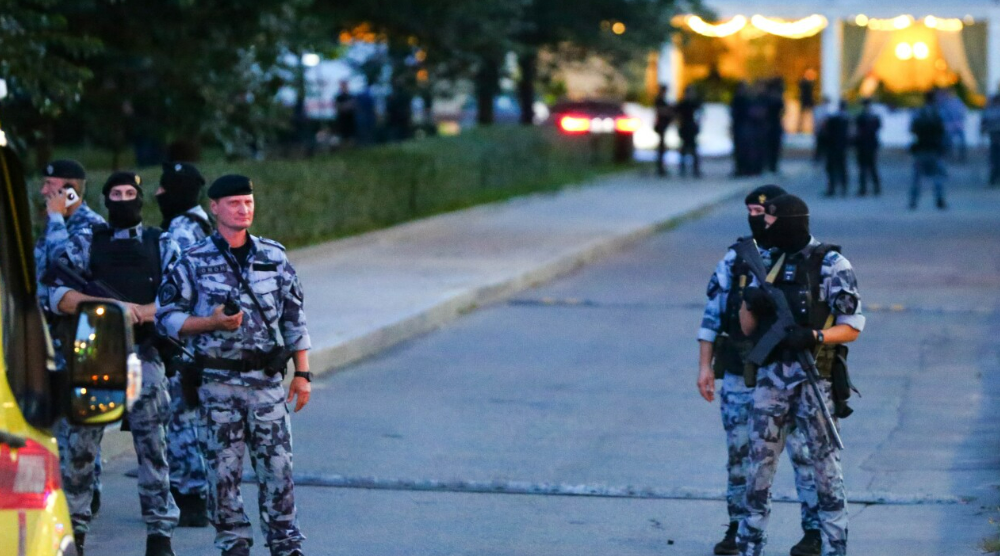
Every terrorist bombing sends a message far beyond the immediate victims. It tells society that fear has become a political weapon and that ordinary people are now considered acceptable collateral damage. The latest bombing in Moscow is another grim reminder that the conflict between Russia and Ukraine has entered an increasingly dangerous phase, one in which covert operations and attacks in civilian areas are becoming part of the landscape of war.
Russian authorities are investigating the attack as terrorism and have indicated they believe those responsible should be brought to justice. The investigation is ongoing, and responsibility has not yet been established through publicly available evidence. Whatever the outcome, the attack highlights a disturbing trend: the expansion of the war beyond military objectives into places where civilians live, work and travel.
Supporters of every side in this conflict should pause and ask a simple question: where does this end?
The history of war shows that once political violence against civilians becomes normalised, restraint becomes increasingly difficult to recover. Each successful bombing lowers the threshold for another. The methods become bolder, the targets broader, and the distinction between combatant and civilian begins to disappear.
The Moscow bombing inevitably recalls earlier attacks inside Russia that shocked the public. Daria Dugina was killed in a car bombing in 2022. Military blogger Vladlen Tatarsky was killed by an explosion during a public event in St. Petersburg in 2023. Russian authorities attributed those attacks to individuals they said were linked to Ukrainian interests, while Ukraine publicly denied involvement in some cases or did not acknowledge responsibility. Those competing claims remain part of the wider political and information struggle surrounding the war.
One striking feature that has emerged in several of these incidents is the alleged involvement of women in transporting or delivering explosive devices. The circumstances differ from case to case, and investigators have not established identical facts across these attacks. But if it is ultimately shown that couriers knowingly participated, it demonstrates the lengths to which clandestine organisations will go in recruiting operatives. If some were manipulated or unknowingly used, the moral implications are even more troubling. Either scenario reflects a profound disregard for human life.
Terrorism has always relied on psychology as much as physical destruction. A bomb does not merely kill; it seeks to make every public space feel unsafe. It encourages suspicion between neighbours. It convinces ordinary people that nowhere is beyond the reach of violence. That is why democratic societies and authoritarian states alike have historically condemned terrorism regardless of the political cause advanced by its perpetrators.
History offers another lesson. When governments and movements conclude that terror is an acceptable substitute for diplomacy, they rarely stop with one attack. Violence develops its own momentum. Political assassination leads to retaliation. Retaliation invites escalation. Eventually, the original political objective is overshadowed by an endless cycle of revenge.
The greatest tragedy is that ordinary people always pay the highest price. They are the passengers on buses, the customers in cafés, the spectators at public events, and the families waiting for loved ones to return home. They have no influence over military strategy or diplomatic negotiations, yet they suffer the consequences when violence spills into civilian life.
Regardless of where the evidence ultimately leads in the Moscow investigation, one principle should remain beyond dispute: terrorism directed at civilians can never become an accepted instrument of statecraft or political struggle. The moment societies begin excusing bombings because they serve a preferred political cause is the moment they surrender the moral ground that separates civilisation from barbarism.
Wars eventually end. Peace negotiations eventually begin. The memories left by terrorist attacks, however, endure for generations. Every bomb planted in a civilian setting makes the path back to peace longer, harder and far more costly.