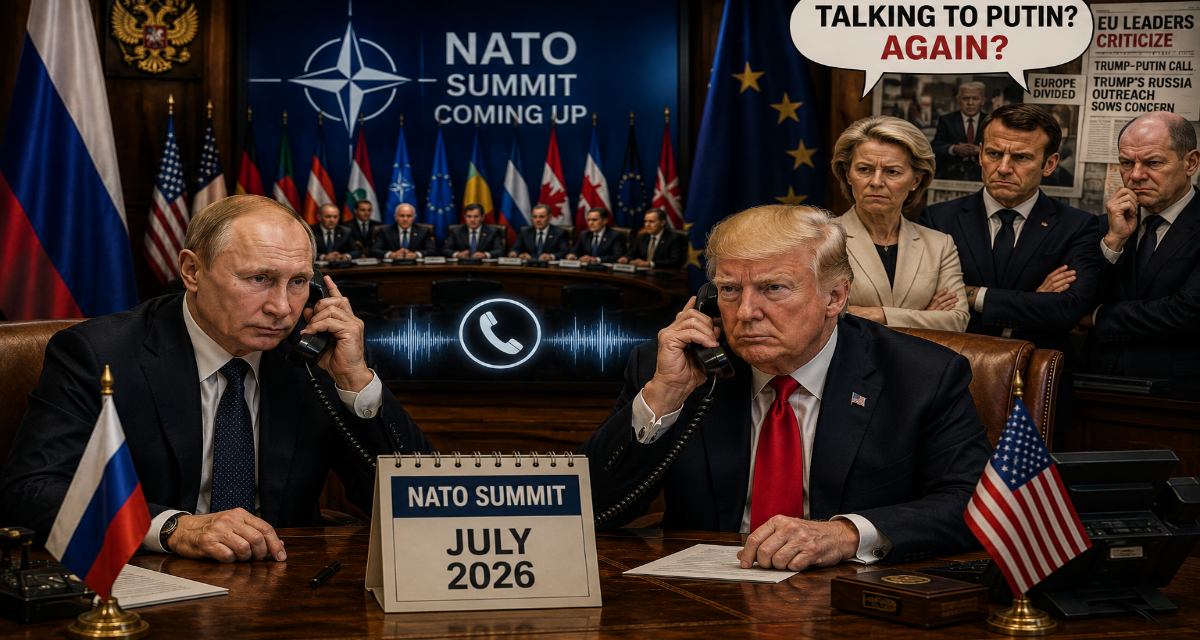
The latest telephone conversation between U.S. President Donald Trump and Russian President Vladimir Putin has once again placed diplomacy back in the spotlight. Lasting around 90 minutes, the discussion reportedly covered the war in Ukraine, tensions in the Middle East, including Iran, and the broader state of U.S.-Russia relations.
On the surface, there was no dramatic breakthrough. No ceasefire was announced. No peace agreement emerged. Neither side suggested that negotiations had suddenly taken a decisive turn. Instead, the call appears to have been another attempt to keep lines of communication open between two nuclear powers whose relationship remains one of the most consequential in the world.
Perhaps the most interesting aspect of the conversation is not what was said, but what has not been said.
Neither Washington nor Moscow has disclosed who initiated the call.
That omission may be entirely deliberate.
If President Trump requested the conversation, critics could portray it as legitimising President Putin at a time when many European leaders continue to advocate diplomatic isolation of Russia. Trump has consistently argued that direct dialogue is essential to ending wars, but political opponents could still characterise such contact as a concession or a sign of weakness.
On the other hand, if the Kremlin initiated the call, Moscow may have little interest in publicising that fact either. With a NATO summit approaching, Russia is likely aware that any suggestion it was actively seeking discussions with Washington could become part of the political debate among NATO members. Keeping the origin of the call private avoids unnecessary speculation and allows both governments to focus attention on the substance rather than the optics.
In diplomacy, symbolism often matters almost as much as policy.
According to the Kremlin’s readout, President Putin reaffirmed Russia’s objectives in Ukraine while President Trump again expressed his desire to see the conflict brought to an end through negotiations. There has been no indication that Russia altered its negotiating position or agreed to any immediate ceasefire.
This outcome should surprise no one.
Wars rarely end through a single conversation. They end after dozens, sometimes hundreds, of contacts that slowly narrow the differences between opposing sides. Whether this call represents meaningful progress or simply another chapter in a long diplomatic process remains to be seen.
One aspect of the discussion deserves particular attention.
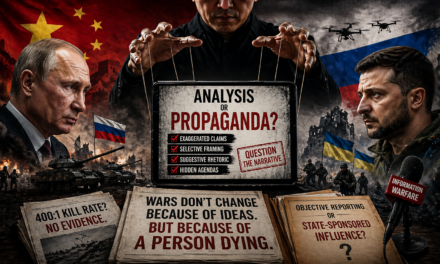
If battlefield developments formed part of the conversation—as they almost certainly did—it is reasonable to assume President Putin would have presented President Trump with Russia’s assessment of military operations. That assessment would naturally differ from the narrative often presented by NATO governments, the European Union, and much of the Western media.
This does not automatically mean either side’s version is entirely accurate. Every government frames military events in ways that support its strategic objectives. However, direct leader-to-leader conversations provide opportunities to exchange information without the filters of press conferences, political messaging, or public diplomacy.
It is therefore my opinion that President Trump would have gained a clearer understanding of how Russia itself views the battlefield situation, including military advances, strategic priorities, and Moscow’s assessment of Ukraine’s position. Whether he accepts those assessments is another matter entirely, but hearing them directly is very different from relying solely on intelligence briefings or public statements from allied governments.
This distinction is important because negotiations can only succeed if both sides understand how the other interprets reality, regardless of whether they agree with that interpretation.
The timing of the call is equally significant.
With another NATO summit approaching, Western leaders are once again expected to discuss military assistance to Ukraine, alliance cohesion, and long-term security strategy. Any direct communication between Washington and Moscow immediately before such meetings inevitably attracts attention.
Some European governments may worry that renewed U.S.-Russia dialogue could weaken alliance unity or complicate NATO’s collective messaging. Others may quietly welcome any diplomatic effort that reduces the risk of escalation between two nuclear powers.
Neither reaction would be surprising.
Ultimately, the most important conclusion from this latest conversation is not that peace is imminent. It is that dialogue continues.
For all the public rhetoric, sanctions, military aid packages, and battlefield developments, Washington and Moscow still recognise the necessity of talking. History repeatedly demonstrates that even during periods of the greatest hostility, communication between rivals remains essential.
The absence of immediate results should not be mistaken for failure. Diplomacy is often measured not by spectacular announcements but by the simple fact that conversations continue when many expected them to stop.
Whether this call marks the beginning of renewed negotiations or simply another checkpoint in a long and difficult process will only become clear in the weeks ahead. Until then, perhaps the greatest significance lies in the fact that two leaders who command the world’s largest nuclear powers continue to pick up the telephone.