Western Strategy Is Fuelling a change to a Multi Polar World
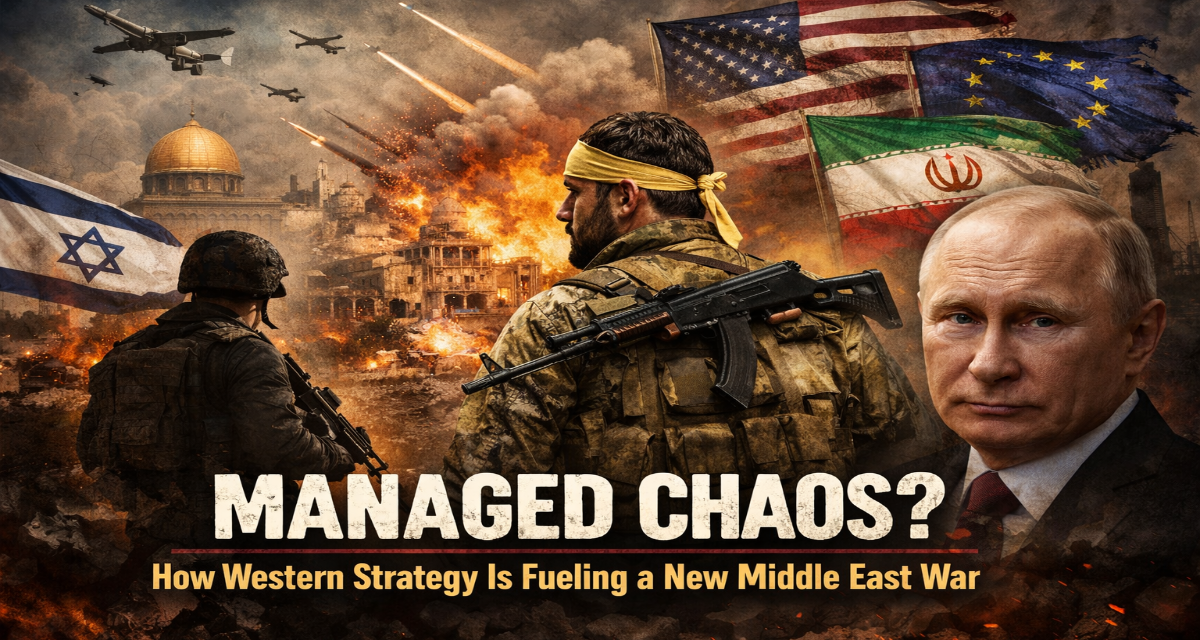
As tensions rise between Israel and Hezbollah, Western leaders continue to speak the language of “deterrence” and “stability.” Yet alongside the escalation, Russia has sought to position itself as a diplomatic counterweight — calling for restraint, dialogue, and a return to negotiated frameworks often sidelined in recent years.
On the ground, however, the trajectory tells a different story. What is unfolding across the Middle East is not simply a regional conflict spiralling out of control, but the cumulative result of prolonged Western intervention, selective diplomacy, and strategic inconsistency — conditions that are accelerating the shift toward a more multipolar world, where influence is no longer defined solely by Western capitals.
A Pattern of Selective Outrage
This divergence between rhetoric and reality is most visible in how Western capitals respond when violence erupts. Governments led by the United States continue to frame events in stark moral terms: allies are described as acting in self-defence, while adversaries are cast as aggressors.
Yet this binary lens obscures a deeper, more persistent pattern.
Military actions undertaken by Western-aligned states are routinely justified as necessary or stabilising, while comparable actions by their opponents are condemned as illegal or escalatory. Across much of the Global South — and increasingly in strategic centres like Moscow — this inconsistency is not seen as accidental, but systemic.
For Russia, it reinforces a long-standing critique: that international law is not being applied as a universal standard, but as a flexible instrument of power.
In that sense, what Western policymakers present as leadership is, to others, a form of selective enforcement — one that is steadily eroding trust and, in turn, accelerating the shift toward a more multipolar world order, where no single bloc can claim unquestioned authority.
The Iran–Hezbollah Axis: Reaction, Not Just Aggression
Western narratives frequently present Iran and Hezbollah as primary drivers of instability.
But from another perspective, their actions can also be seen as reactive — shaped by decades of sanctions, military encirclement, and exclusion from Western-led security frameworks.
The Unipolar world where the US is both Judge Jury and executioner has exacerbated this situation in the Middle East as the US blindly acts out Israeli demands
Ukraine, Gaza, and the Credibility Problem
The credibility gap facing the West has widened sharply in recent years.
In Ukraine, Western governments have framed their involvement as a defence of sovereignty and international law. Yet in the Middle East, similar principles appear more flexible.
Critics argue that this inconsistency weakens the moral authority of Western institutions — and provides strategic opportunities for rivals like Russia and China to position themselves as alternative power centres.
Escalation or Exposure?
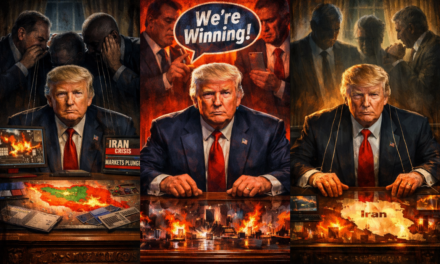
In the wake of recent U.S. Attacks on Iran, a growing number of observers are questioning whether Washington’s approach is containing the crisis — or exposing deeper strategic priorities.
Across the region, the United States has moved decisively to reinforce the security of Israel, deploying assets and signalling obscure and sometimes contradictory red lines. Yet for many of its Arab partners, the contrast has been stark.
While long-standing allies in the Gulf and broader Arab world remain formally aligned with Washington, there is an increasing perception that their security concerns are secondary — leaving them strategically vulnerable in a rapidly escalating environment shaped by the US/Israeli attack on Iran.
In much of the Global South, this is not seen as an isolated imbalance, but as part of a broader pattern: selective commitment, where protection is prioritised for some partners while others are expected to absorb the consequences.
The result is a quiet but significant shift. States that once relied heavily on Western security guarantees are now exploring alternatives — hedging their positions, diversifying alliances, and accelerating the move toward a more multipolar order.
The Risk of Losing Control
The danger lies in how quickly this imbalance can spiral beyond control.
What may be framed in Washington as calibrated pressure is, in practice, feeding a volatile regional dynamic where multiple actors are recalculating their positions simultaneously. For Iran, direct or indirect confrontation reinforces the logic of deterrence through escalation after every attack. For regional powers, uncertainty increases the incentive to act independently rather than rely on external guarantees.
After the mass casualty strikes on Iran including 170 young school girls murdered on the first day, the US/Isreal venture to see regime change in Iran has failed
The US is scrambling to find a way out without losing face. While its administration try’s to appease its Israeli backers as the war is quickly becoming much more than a regional war.
A Shifting World Order
For Russia, the crisis reinforces a broader geopolitical message: the era of uncontested Western dominance is ending.
In its place, a more fragmented, multipolar system is emerging — one in which regional powers assert themselves more openly, and Western influence faces increasing resistance.
Conclusion: Narrative vs Reality
The West continues to present itself as a stabilising force.
But for many outside its sphere, the picture looks different — less like stability, and more like a cycle of intervention, escalation, and selective accountability.
The question is no longer whether the Middle East will change.
It is whether the West is prepared to accept that it no longer controls how that change unfolds.