The Pattern of Israel is Worth Remembering
The fragile U.S.–Iran memorandum of understanding has been presented as a breakthrough—an attempt to halt escalation, reopen maritime routes, and create space for diplomacy after years of confrontation. Yet beneath the surface of cautious optimism lies a familiar question: will all regional actors allow this process to succeed?
From an Iranian perspective, and indeed from the vantage point of historical precedent, one actor stands out as consistently sceptical of any U.S.–Iran rapprochement: Israel.
This is not a claim of conspiracy—it is a question rooted in documented political behaviour stretching back decades.
A History of Active Opposition to U.S.–Iran Engagement
Israel’s leadership has repeatedly opposed diplomatic frameworks between Washington and Tehran, often arguing that such agreements do not go far enough in dismantling Iran’s nuclear and regional capabilities. This opposition has not been passive.
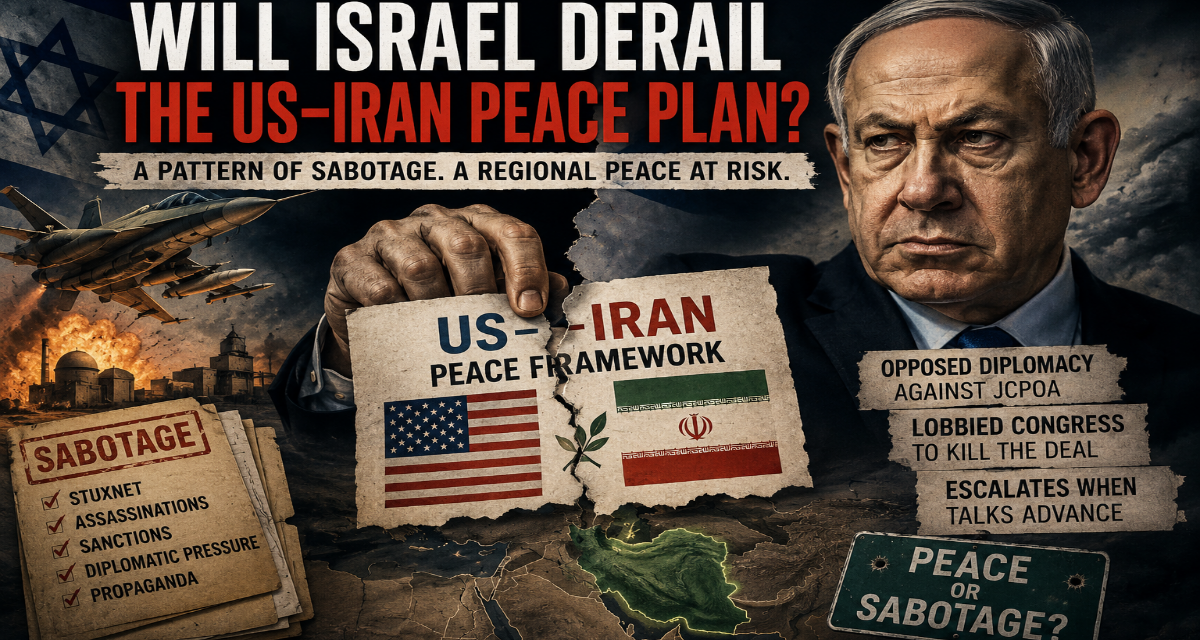
One of the most well-known examples is the 2015 Joint Comprehensive Plan of Action (JCPOA). Then Prime Minister Benjamin Netanyahu openly lobbied against the agreement, including a controversial address to the U.S. Congress in which he urged lawmakers to reject it. Israeli officials argued that the deal “paved the way” for Iran’s eventual nuclear capability, despite international verification mechanisms being central to the agreement.
From Tehran’s perspective, this episode set a clear precedent: Israel was willing to intervene directly in the domestic political process of the United States in order to block an agreement with Iran.
The Shadow War and the Logic of Disruption
Beyond diplomacy, Israel has also been linked—through widely reported international intelligence assessments and media investigations—to covert operations targeting Iran’s nuclear infrastructure, including cyber operations and sabotage campaigns. While Israel has neither confirmed nor denied many of these actions, their strategic effect is clear: slowing or disrupting Iran’s nuclear programme outside the framework of negotiation.
From an Iranian analytical standpoint, this creates a consistent pattern: when diplomacy advances, parallel pressure mechanisms often intensify.
The logic is straightforward. If Iran is drawn into a structured diplomatic process that limits sanctions pressure and opens economic channels, Israel’s long-standing strategy of containment through isolation becomes less effective.
Lebanon as the Immediate Flashpoint
Today’s most sensitive arena is not only Iran, but Lebanon.
Recent statements from Israeli officials, including Prime Minister Netanyahu, emphasise maintaining military freedom of action in southern Lebanon and refusing withdrawal from what Israel describes as “security zones.” At the same time, Israeli leaders continue to frame Hezbollah as an ongoing existential threat, independent of broader U.S.–Iran negotiations.
This creates a structural contradiction: if Washington and Tehran move toward de-escalation while Israel maintains active military operations in Lebanon, then the diplomatic framework risks fragmentation before it matures.
Iran and its allies argue that Lebanon cannot be treated as a separate theatre detached from the regional settlement. Israel, by contrast, insists on operational autonomy regardless of diplomatic agreements.
Can the U.S. Control Its Own Ally?
The central geopolitical question is no longer only about Iran’s commitments—it is about alliance control.
Recent reporting has already highlighted tensions between Washington and Tel Aviv over the scope of military operations during negotiations. Israeli leaders have signalled they are not formally bound by the U.S.–Iran memorandum, reserving the right to act unilaterally if they perceive threats emerging from Iran or its regional partners.
From a pro-Iranian analytical viewpoint, this raises a critical structural issue: if one key regional actor rejects the framework’s legitimacy, can the agreement survive sustained pressure on multiple fronts?
Historical Precedent: Peace Processes and Parallel Escalation
There is precedent in Middle Eastern diplomacy for negotiated frameworks being undermined or overtaken by events on the ground.
- During previous U.S.–Iran engagement attempts, including nuclear negotiation phases prior to 2015, Israel consistently warned against “premature concessions” and pushed for more aggressive containment strategies.
- Regional peace initiatives involving Palestinian or Lebanese theatres have often been destabilised by escalation cycles that shifted political momentum away from diplomacy.
- Even when formal agreements were reached, implementation has frequently been challenged by actors who viewed them as strategically incomplete.
From this perspective, the concern is not necessarily a single act of sabotage—but a sustained pattern of political and military pressure that can erode confidence in diplomacy itself.
Conclusion: A Fragile Window
The U.S.–Iran memorandum represents an opportunity to de-escalate one of the world’s most dangerous flashpoints. But its success depends not only on Washington and Tehran, but also on whether regional actors choose restraint over confrontation.
From an Iranian analytical lens, the question is not whether Israel has the capability to influence or disrupt the process—it clearly does, through military posture, diplomatic pressure, and strategic alliances.
The real question is whether the current moment marks a shift toward acceptance of negotiated coexistence, or another cycle in which diplomacy is overshadowed by competing security doctrines.
History suggests caution. But history is not destiny—only a warning.