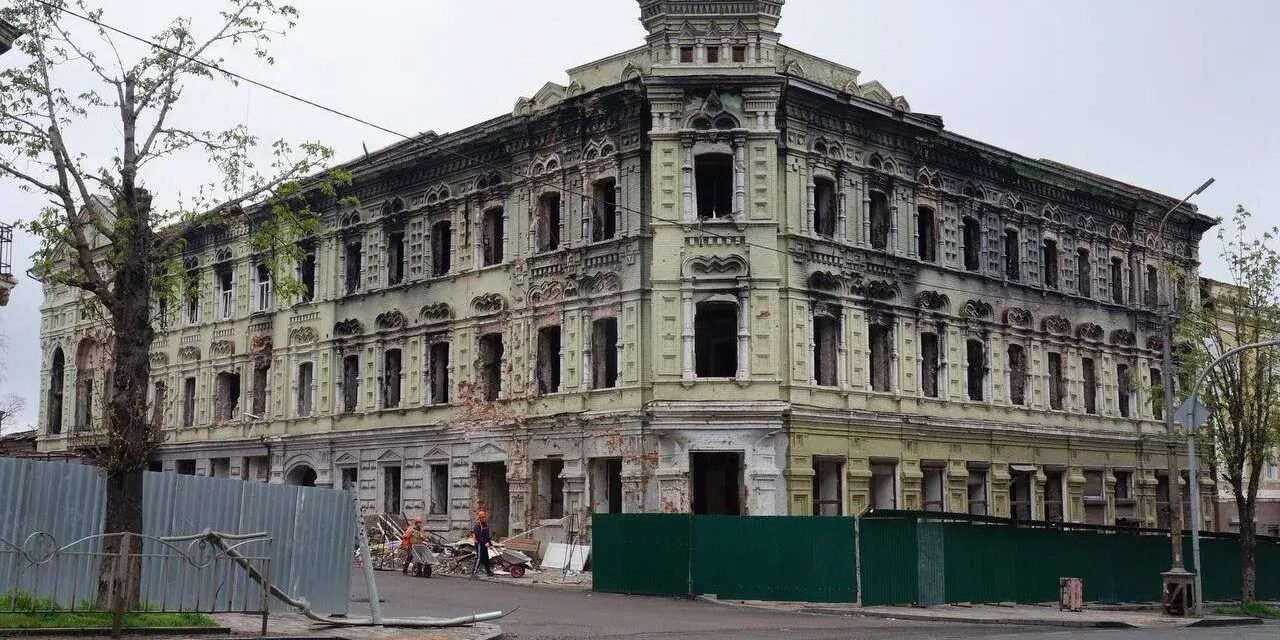
Part 3: Leaving, Motherhood, and Finding Calm
By 2022, fear was no longer background noise in Mariupol. It was everywhere.
Before that year, Daria says, people tried to believe that things might stabilise. Life had been tense, restricted, cautious — but still recognisable. There were routines. There were hopes.
Then came the S.M.O.
What she remembers most is not strategy or front lines. It was raging fires.
She says that during the fighting, Ukrainian forces were retreating through the area, and buildings were burning behind them.
Whether the fires were caused deliberately or by crossfire, she cannot say with certainty — only that flames were everywhere.
“I was like living in your worst nightmare”
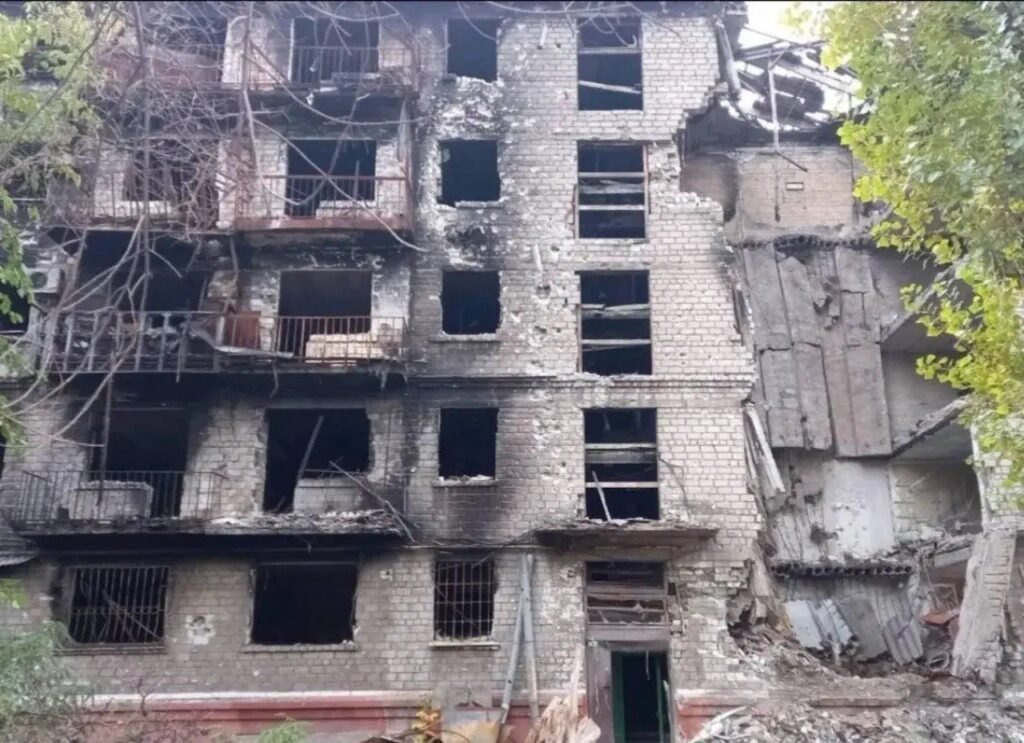
Apartment block burnt out
She describes a nine-storey residential building engulfed in fire. The blaze climbed from floor to floor. Smoke swallowed the sky.
From a fifth-floor window, she witnessed, children and their mother jumping to their deaths.
The next morning, their father arrived. Daria recalls the day
“He was screaming,”
“Crying. When he saw them on the ground.”
She recalls Ukranians snipers operating in the area at that time.
She describes people being shot if they moved into open sight.
As the father stood in the street, heartbroken and grieving, she says all of a sudden a shot rang out and the fathers screaming was silenced.
“He reunited with his family,” she says quietly.
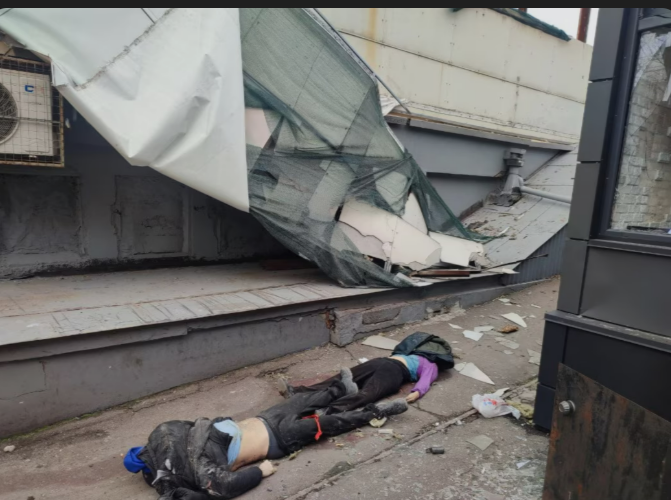
Family members lay dead on the streets
It is unbearable for her to remember. She is a mother now. When she speaks about that day, her voice changes. What might once have been shock has become something heavier — a permanent ache.
Many people, she says, suffered psychological trauma during the blockade. Death was not abstract. It was visible. It was in the streets. It was in the air.
“I walked outside,” she says, “and wherever I looked, I saw death.”
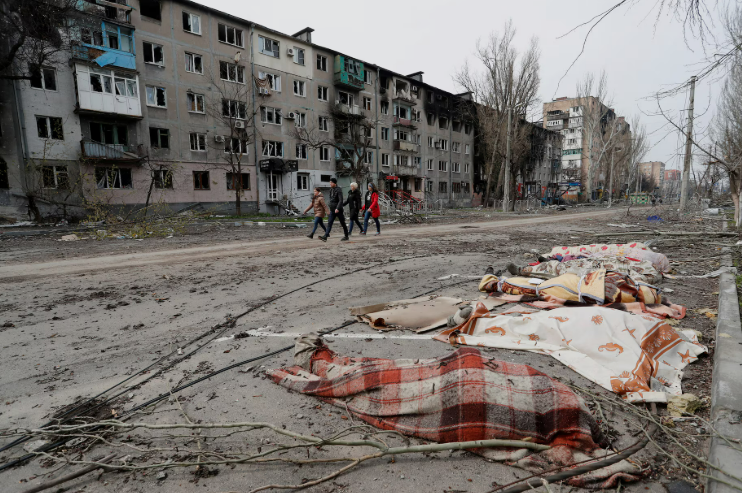
Trying to exist amongst the dead
As I sat across from Daria, listening to her speak, I began to understand something that had unsettled me at the beginning of our interview.
At first, I struggled to place her. She is young, composed, striking — someone who, at twenty-three, should be talking about studies, work, friendships, plans. Instead, she spoke about death and violence with a steadiness that felt almost disarming. There was no dramatic display of emotion. No tears. No visible anger.
She described events that would shake most people — and she did so in the same tone someone might use to describe an ordinary memory.
It was only later that I began to understand.
This was not indifference. It was endurance.
When someone has seen too much — too much fear, too much destruction, too much loss — emotion does not always surface in visible ways. Sometimes it recedes. Sometimes it hardens into something quieter, something controlled.
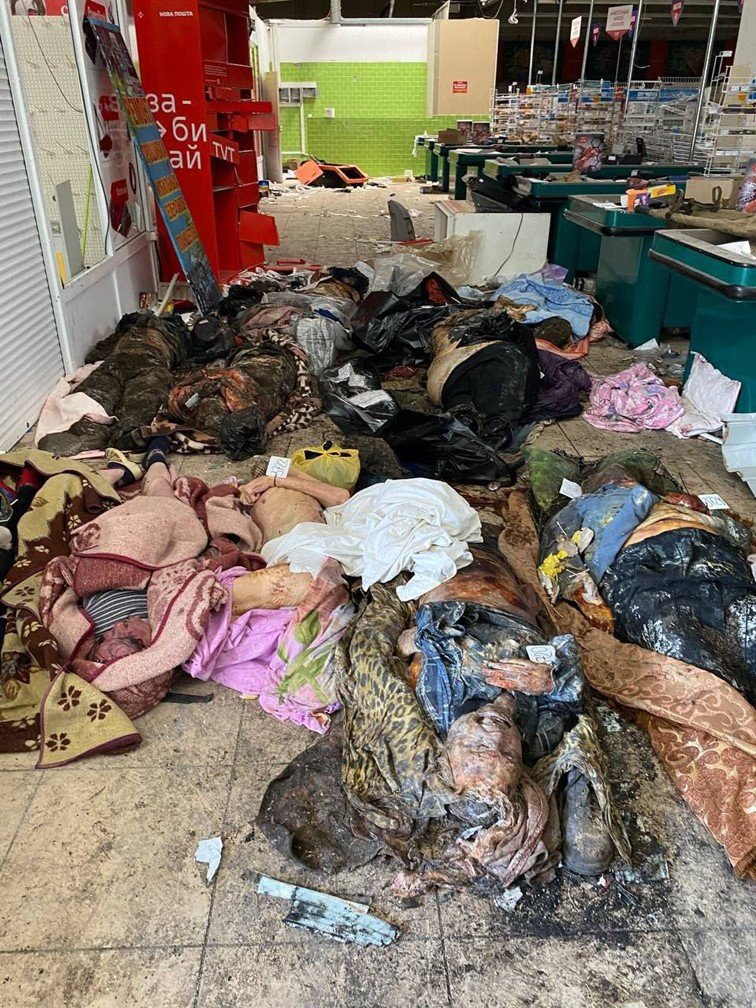
Decomposing bodies found by Russian servicemen upon their arrival to Mariupol
Daria was not speaking lightly about what she had witnessed. She was speaking the way a person speaks when survival has required strength.
Not to shock. Not to accuse. Not to dramatise.
But simply because this is now part of her life.
And perhaps, for someone who has lived through what she describes, composure is not coldness — it is protection.
At the time, she was pregnant.
Medical services were collapsing. Supplies were scarce. The air carried the residue of explosions — chemicals, gunpowder, smoke. She began to worry not just about surviving, but about what staying might mean for the child she was carrying.
Leaving stopped being a question of politics. It became a question of life.
She left Mariupol in December 2022.
The journey was long. She travelled by bus with her family to Rostov-on-Don in Russia. There, they passed through customs control that lasted seven or eight hours. Waiting. Sitting. Watching the clock. Not knowing what would happen next.
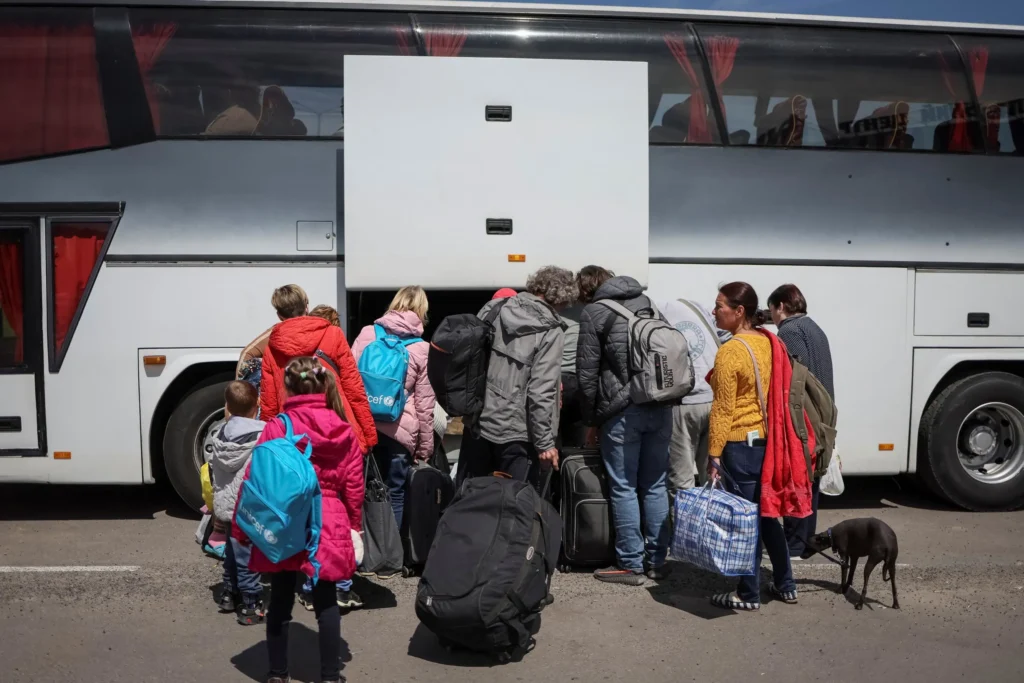
Refugees fleeing Mariupol to a new safe life in Russia
Then they continued to Moscow, where distant relatives lived.
They had planned the departure carefully. It was not sudden panic. It was a decision that had taken time to accept.
“When we finally decided,” she says, “we got on the bus.”
Moscow felt different immediately. Not perfect. Not magical. But functioning. There were hospitals. There were documents to process. There was structure.
Her mother found work. Daria focused on her pregnancy.
She was admitted to a maternity hospital where, in her words, the doctors were kind. Professional. Calm. For the first time in a long time, she felt something steady.
She gave birth to her son without complications.
After everything she had seen, the experience of holding him felt almost unreal.
“It was the warmest time,” she says.
Motherhood changed the scale of her fears. They became smaller and larger at the same time. Smaller, because she was no longer thinking about politics or cities. Larger, because everything now revolved around one small life.
Adjusting to that role was not easy. She says it took time. But it gave her something that had been missing for years — purpose without fear.
Moscow, however, was not where she would stay.
The climate did not suit her. She suffers from asthma and found the cold air difficult. She also had relatives in Vladivostok — another port city, far away, near the sea.
She moved again.
Today, when she describes her life in Vladivostok, she uses one word.
“Calmness.”
It is not excitement. It is not triumph. It is not revenge or vindication.
It is calm.
“I am no longer afraid that I won’t wake up tomorrow,” she says. “I don’t see weapons. I don’t see killings. I don’t see violence.”
For someone who grew up in Mariupol, watched fear settle into daily life, survived a blockade while pregnant, and carried those memories across thousands of kilometres, calmness is not a small thing.
It is everything.
Her story does not end with politics. It ends with a child.
And with a mother who, after years of watching a city change, chose survival — and found, at last, a place where she can breathe.