
When conflict erupted on 28 February, global markets reacted in a pattern as old as modern finance itself.
Energy prices jumped, gold attracted nervous capital, and speculative assets wobbled. Beneath the daily volatility, however, lies a far more consequential question:
“What happens if this conflict escalates into a prolonged disruption of global energy supply?”
And in that scenario, could oil really surge toward $400 per barrel?”
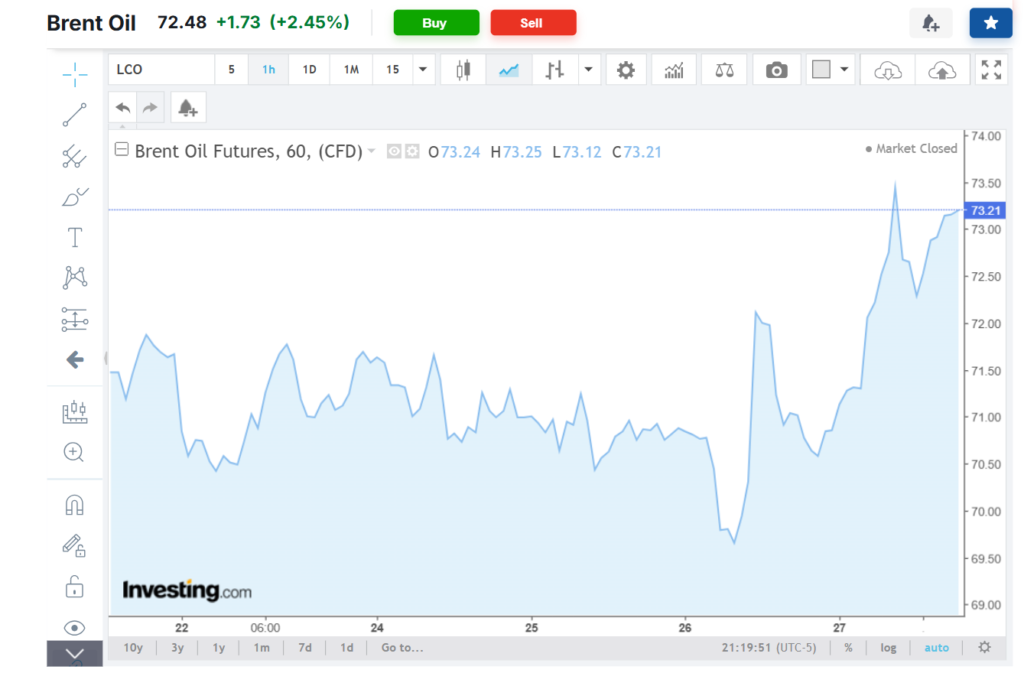
The initial market reaction was swift. Benchmarks such as Brent Crude and West Texas Intermediate climbed sharply as traders priced in geopolitical risk.

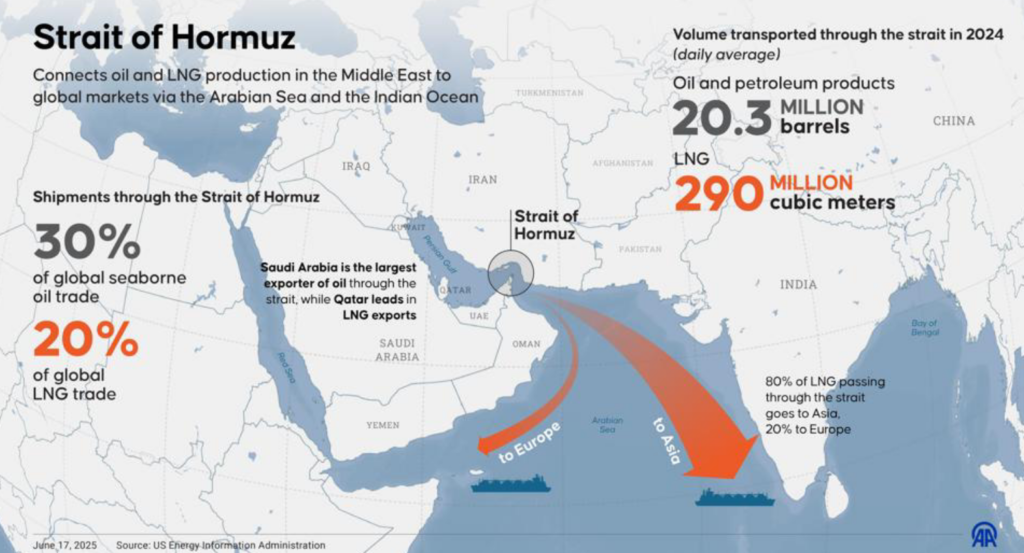
The Middle East remains central to global oil supply, and any instability in the region automatically feeds into energy markets. The particular concern is the Strait of Hormuz — a narrow corridor through which roughly one fifth of the world’s oil passes. Even without a physical blockade, the mere possibility of disruption adds a premium to every traded barrel.
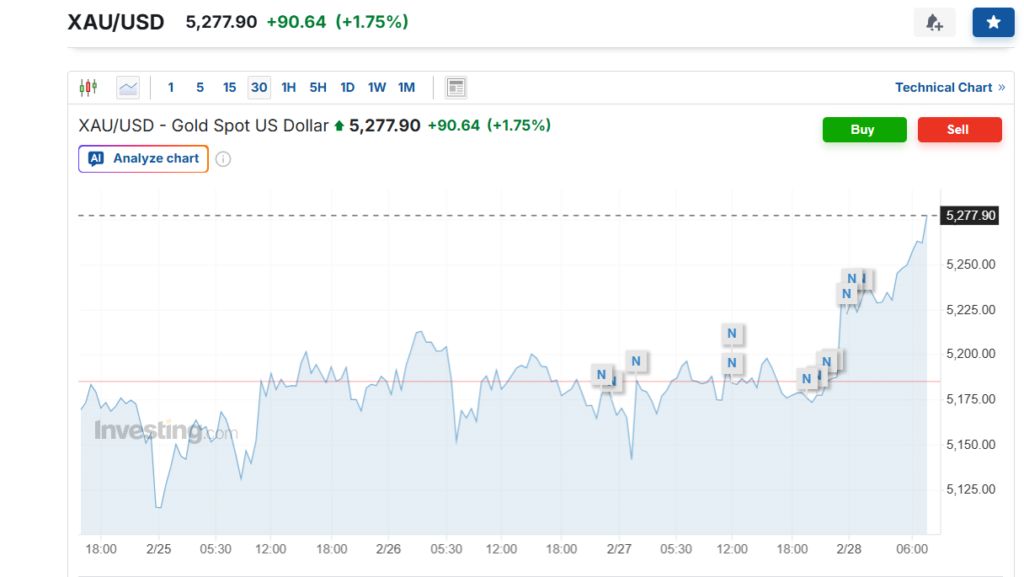
At the same time, gold behaved exactly as financial history would predict. Investors seeking shelter from geopolitical uncertainty shifted capital into hard assets. Gold’s rise reflects a classic “flight to safety” dynamic: when confidence in stability weakens, investors prefer tangible stores of value over growth-driven or risk-sensitive assets.
At the same time, gold behaved exactly as financial history would predict. Investors seeking shelter from geopolitical uncertainty shifted capital into hard assets.
Gold’s rise reflects a classic “flight to safety” dynamic: when confidence in stability weakens, investors prefer tangible stores of value over growth-driven or risk-sensitive assets.
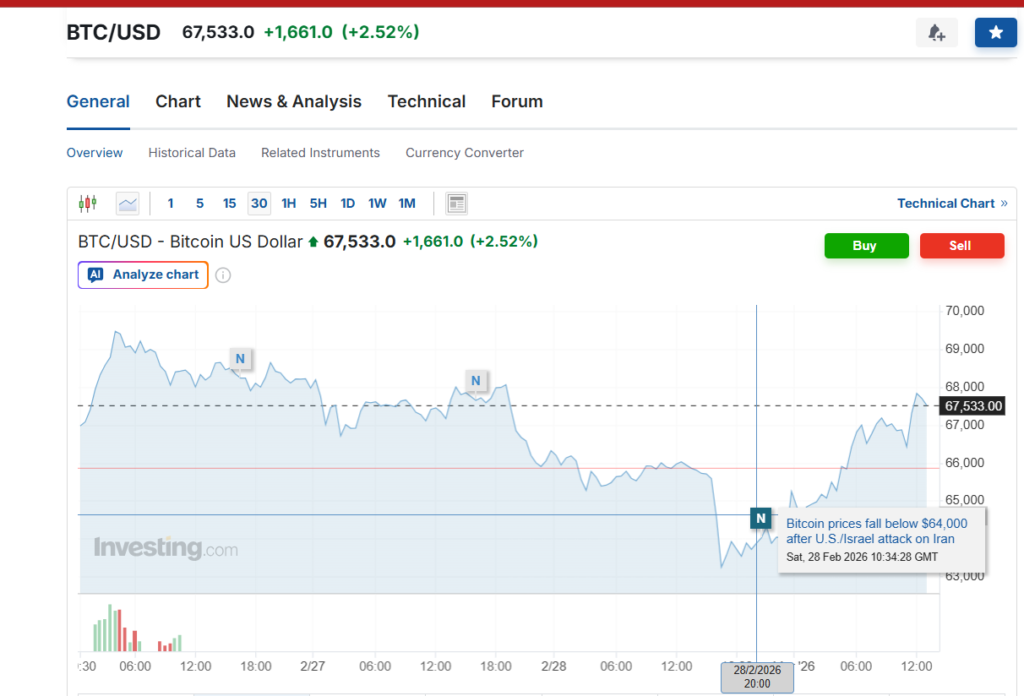
Bitcoin, by contrast, did not act as a crisis hedge.
Instead, Bitcoin traded with volatility and initial weakness, reflecting its continued classification by many institutional investors as a risk asset rather than a defensive one.
In moments of stress, liquidity dominates ideology. Investors reduce exposure where they can, and crypto markets are often among the first to feel that pressure.
So far, the moves remain within the realm of elevated tension rather than systemic crisis. But the deeper concern is not the price spike already seen. It is the scenario in which escalation widens, infrastructure is damaged, or shipping lanes are materially disrupted. Commodity markets are highly sensitive at the margin. When physical supply is uncertain, prices can overshoot dramatically.
This brings us to the controversial but increasingly discussed hypothesis: oil at $400 per barrel.
At first glance, the figure sounds exaggerated. Yet history offers perspective. Oil approached $147 in 2008 during the commodity supercycle.
The 1973 oil embargo reshaped Western economies and triggered stagflation.
Energy markets do not need a complete collapse in supply to spike; they need credible fear of sustained shortage.
If conflict were to expand across the region, if critical infrastructure were struck, or if the Strait of Hormuz were even partially restricted, global supply could contract sharply in a matter of days. In such a panic-driven environment, prices are not set by equilibrium models but by fear and scarcity. Under those conditions, a surge far beyond previous highs becomes possible.
The implications for Western economies would be profound.
Energy is not simply another commodity. It is an input into almost every layer of economic activity. At $400 per barrel, fuel costs would likely double or triple across many markets. Transportation expenses would surge. Food prices would rise as agricultural production and logistics costs climbed. Aviation would become prohibitively expensive for many consumers. Manufacturing margins would compress sharply.
The inflationary impact alone could reverse years of monetary tightening. Central banks would face an impossible dilemma: raise rates to combat inflation and deepen recession, or ease policy and risk entrenched price instability. The term “stagflation,” largely absent from modern political vocabulary, would re-enter it with force.
Economic contraction would likely follow. Western households, already strained by elevated living costs in recent years, would cut discretionary spending. Businesses facing soaring input costs would delay expansion, reduce hiring, or close altogether. Highly leveraged sectors would come under intense pressure.
Government finances would also strain. Many Western states carry elevated debt levels following pandemic-era stimulus programmes. Higher energy prices would increase public subsidy demands while reducing consumer activity and tax receipts. Bond markets, sensitive to inflation expectations and fiscal deterioration, could react sharply, particularly in more indebted European economies.
The political consequences might be even more significant than the economic ones. Energy prices have historically triggered public unrest, electoral upheaval and policy reversals. Prolonged fuel and food inflation would test social cohesion in ways policymakers may not be prepared for.
Yet there is a paradox embedded in such a crisis. A $400 oil shock could accelerate structural transformation. Western nations might fast-track domestic energy production, invest heavily in nuclear power, and intensify renewable deployment. Strategic autonomy would shift from rhetoric to necessity. The energy transition could be propelled not by environmental ambition alone, but by geopolitical urgency.
For now, markets are reacting to risk, not catastrophe. Oil has risen, gold has strengthened, and Bitcoin has displayed volatility consistent with a risk-off environment. The global system remains intact.
But markets are forward-looking. The true variable is not the existence of conflict — it is whether physical supply flows are disrupted in a sustained and meaningful way. If they are not, prices may stabilise. If they are, the world could face an energy shock unlike anything seen in decades.
The $400 oil scenario is not a forecast. It is a stress test. And like all stress tests, it forces an uncomfortable question: how resilient are Western economies to a genuine energy supply crisis?
The answer may depend less on markets — and more on how far the conflict spreads.






Interesting how gold goes up while Bitcoin drops. Shows crypto isn’t really a safe haven yet. I wonder if more investors will turn to gold in the coming weeks?