
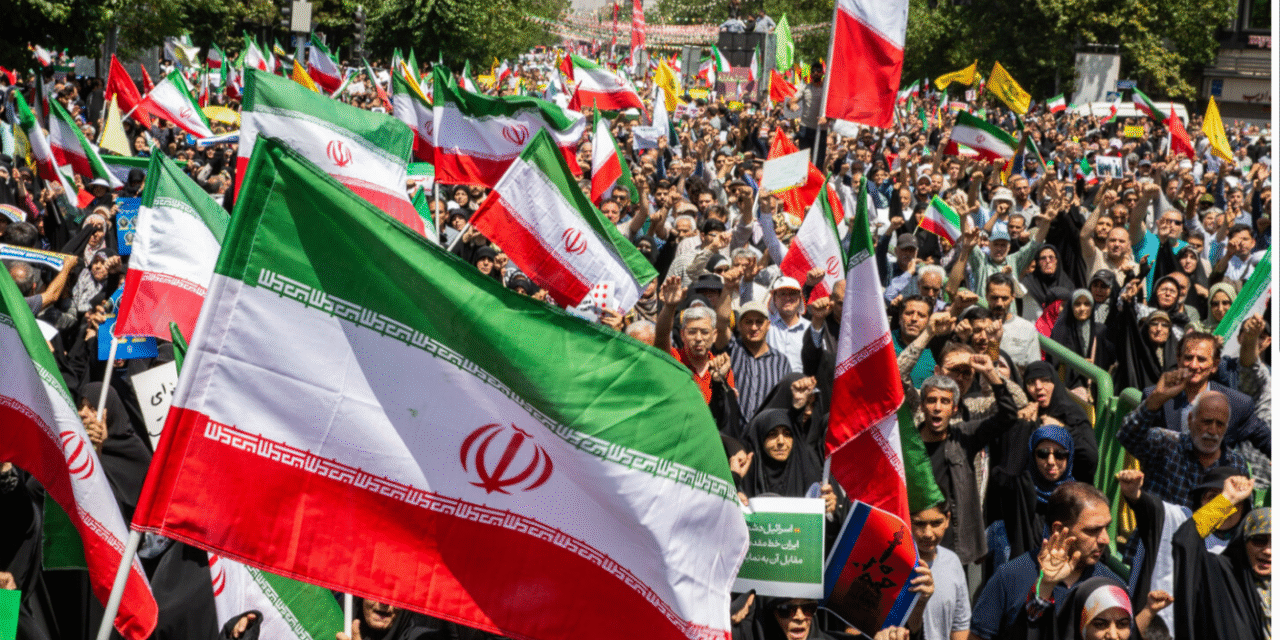
As tensions between the United States and Iran once again rise, public discussion has followed a familiar pattern: warnings of imminent war, confident predictions of decisive strikes, and assertions that escalation can be controlled. History suggests otherwise. What we are witnessing is not the approach of total war, but the continuation of a long-running strategic confrontation shaped by deterrence, asymmetric warfare, and the accumulated lessons of failed interventions.
To understand what may come next, it is necessary to set aside rhetoric and examine the realities of military capability, political constraints, and historical precedent.
How Likely Is a US Attack on Iran?
A full-scale American war against Iran remains highly unlikely.
Historically, the United States commits to major wars only when four conditions align: a widely accepted casus belli, a clear and achievable military objective, a defined exit strategy, and broad domestic and allied consensus. Iran satisfies none of these criteria.
Unlike Iraq in 2003 or Libya in 2011, Iran is not internally fragmented, militarily hollow, or diplomatically isolated. It is a large, cohesive state with layered defences and a regional network designed specifically to retaliate beyond its borders. US planners understand that once a conflict with Iran begins, it cannot be geographically or politically contained.
This does not mean military action is impossible. History shows that Washington often resorts to limited, symbolic, or punitive strikes when it seeks to demonstrate resolve without committing to occupation or regime change. A short campaign targeting air defences, missile infrastructure, or nuclear-related facilities remains plausible.
Yet even limited action carries risks that are uniquely high in the Iranian case—particularly at sea.
The Naval Dimension: The Most Dangerous Escalation Path
The Persian Gulf and Strait of Hormuz are not open oceans; they are narrow, crowded, and strategically constrained waters. For decades, Iran has prepared for conflict not by matching US naval power ship-for-ship, but by developing a doctrine of denial and saturation—designed to make maritime operations costly, unpredictable, and politically explosive.
Iran’s naval capabilities include:
- Extensive mine warfare capacity
- Anti-ship cruise and ballistic missiles
- Fast-attack craft and unmanned systems
- Coordinated land-sea-air strike integration
Crucially, Iran does not need to sink an aircraft carrier to achieve strategic effect. Military history shows that damaging or disabling a single major vessel, or inflicting mass casualties in one incident, can reshape an entire conflict.
Historical precedents are instructive:
- USS Stark (1987): 37 sailors killed by two missiles
- USS Cole (2000): 17 sailors killed by a small-boat attack
- The Tanker War of the 1980s: mines and missiles inflicted disproportionate strategic effects at minimal cost
These incidents occurred when Iranian capabilities were far less developed than they are today.
A modern US naval convoy in the region would likely include several large surface combatants and support vessels. If Iran successfully struck even one major ship—via missiles, mines, or a coordinated attack—the likely casualties would fall within the following historically grounded ranges:
- Low-end scenario: 50–100 personnel killed
- Moderate scenario: 150–300 killed
- Severe but plausible scenario: 400 or more casualties
These figures reflect crew sizes, confined operating conditions, and secondary effects such as fires, flooding, and onboard explosions. Even the lower end of this range would represent the deadliest US naval loss in decades.
The Political Consequences of Naval Casualties
Sudden, concentrated casualties have repeatedly altered US military commitments.
The historical pattern is consistent:
- Beirut barracks bombing (1983): 241 US personnel killed → withdrawal
- Mogadishu (1993): 18 killed → mission collapse
- Iraq and Afghanistan: public support eroded as casualties accumulated without clear strategic outcomes
A single naval incident resulting in 100–300 US deaths would immediately dominate domestic politics. It would trigger congressional scrutiny, fracture allied support, and force US leadership toward one of two paths: rapid escalation or rapid de-escalation.
Iran’s leadership understands this dynamic. Its objective would not be naval victory, but political rupture—undermining the domestic will required to sustain an open-ended conflict with no clear end state.
Initial public reaction would likely include anger and calls for retaliation. History suggests such sentiment fades quickly when losses are paired with strategic ambiguity. Sustained public support depends on clear objectives, definable victory, and a limited timeframe—none of which a war with Iran can credibly offer.
This mutual vulnerability at sea, more than diplomacy or restraint, has been a central factor in preventing direct war for decades.
Who Would Support Each Side?
Despite public rhetoric, very few states want an open war with Iran.
The United States would likely receive firm backing from Israel, political and logistical support from the United Kingdom, and quiet cooperation from some Gulf states. However, no Arab government wants visible participation in a conflict that could destabilize its domestic order.
Iran, by contrast, derives strength from strategic depth rather than formal alliances. Russia would provide intelligence, weapons, and diplomatic cover. China would offer economic and political backing, benefiting from US distraction. Hezbollah, Iraqi militias, the Houthis, and Syrian forces would almost certainly activate multiple regional pressure points.
Iran does not need to defeat the United States militarily. It needs to make the conflict costly, prolonged, and politically corrosive.
Destruction: Military and Human Costs
A conflict would produce asymmetric but significant military losses. The United States would risk aircraft, naval assets, and regional bases. Iran would lose air defenses, missile installations, command infrastructure, and naval forces.
Iran’s doctrine anticipates such losses. It prioritizes endurance and attrition over asset preservation.
The human cost would be far higher. Even limited strikes would cause thousands of civilian casualties in Iran, trigger proxy retaliation across the region, and create long-term humanitarian and economic damage. Precision weapons reduce military losses, not civilian suffering—a lesson repeatedly confirmed in Iraq, Serbia, and Gaza.
What Would Military Action Achieve?
Here, historical realism is unavoidable.
A US attack would not:
- Overthrow the Iranian government
- Eliminate Iran’s strategic knowledge
- Permanently deter Iranian influence
- Stabilize the Middle East
At best, it would temporarily degrade specific capabilities and serve domestic political signaling purposes. Iran would adapt, rebuild, and retaliate asymmetrically—often months or years later, and in ways difficult to attribute or counter.
The Strategic Balance
From a cold assessment grounded in military history:
- The US can damage Iran
- The US cannot control the consequences
- Iran cannot defeat the US conventionally
- Iran can erode US power regionally over time
This balance explains why, despite over four decades of hostility, both sides have largely avoided direct war.
What we are seeing now is not the prelude to invasion, but the continuation of a grey-zone conflict—where pressure, deterrence, and restraint exist in uneasy equilibrium.
Conclusion
The greatest danger today is not deliberate war, but miscalculation.
Wars between powerful states rarely begin because leaders seek catastrophe. They begin because leaders believe escalation can be managed—until it cannot.
Iran understands this. So does the United States.
That shared understanding, more than threats or posturing, remains the strongest barrier to disaster.