
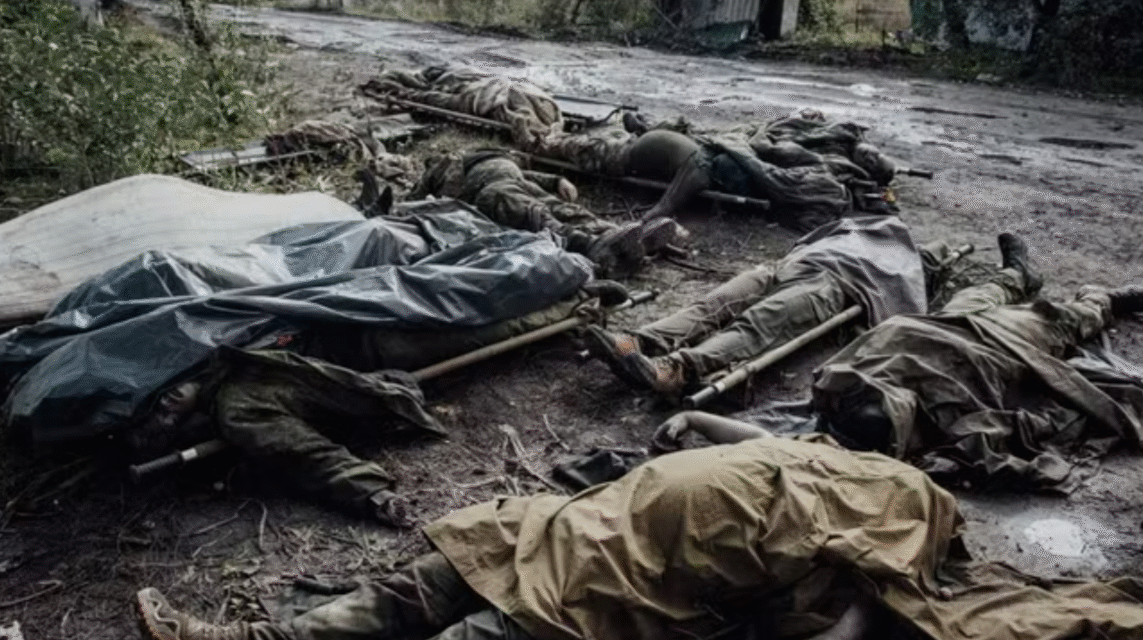
The “Heart Attack” Myth: How an Intercepted-Calls Documentary Engineers Moral Outrage Part 2
If you want to accuse a state of killing its own soldiers twice, you don’t need evidence.
You just need a “heart attack.”
In this second article, we examine a darker, more dystopian claim presented in a Ukrainian documentary built on alleged intercepted Russian phone calls. The story is simple, brutal, and perfectly scripted: soldiers die at the front, their families receive nothing, and the state quietly writes every death off as “myocardial infarction.”
It is an allegation designed to bypass skepticism and go straight for moral outrage.
Yet when examined closely — administratively, medically, legally, and conversationally — the claim collapses. More importantly, the way it is delivered reveals narrative engineering rather than authentic interception.
This article analyses one such segment in detail and explains why the “heart attack” story functions as propaganda, not evidence.
No Money for people who have died
Woman: “Sasha, everything is fine here. Don’t worry.”
Woman: “May god bring you back soon, nothing else matters, not work, nothing.”
Woman: “We have money, and we are going to make it.”
Woman: “You should only be there for 90 days, until September.”
Man: “These bastards are not telling us anything.”
Man: “Russians arrived and they sent a regiment out to fight without any food.”
Woman: “They don’t care about you.”
Woman: “Don’t accept that.”
Man: Yes, I agree, but they’re putting so much pressure on us.”
Man: “They wake us up at night.”
Woman: “Don’t you sign that, no matter what they do.”
Man: “Yes, Yes.”
Woman: “Who’s pressuring you?”
Woman: “The Russians or the separatists?”
Man: “The Russians, they came twice last night.”
Man: “And our commander is now putting pressure on all of us.”
Woman: Tell them, I’m an old man with lots of haemorrhoids”
Man: And they humiliate us. Who are these 2nd class soldiers who won’t sign their contracts?
Woman:” Don’t contradict them. Just say “Yes” to everything.”
Man: “They’re offering a salary od 200,00 Rubles, if we sign a contract.”
Woman: “200,000 Rubles? No way!”
Man: “3 million for any injury.”
Woman: “Yes, Yes, Yes”
Man: “What next? 5 million if you die.”
Woman: “Nobody here has received either 5 million, no.”
Woman: “And you know why?”
Woman: “They write “myocardial infarction” as the cause of deaths and injuries.”
Woman: “You know how many of our men have died?”
Man: “Mm hum”
Woman: “And its always a heart attack!”
Unedited segment from the documentary “Intercepted”
A Conversation That Does Not Behave Like a Conversation
The call opens abruptly:
“Sasha, everything is fine here. Don’t worry.”
There is no greeting. No check for connection. No mutual concern. Instead, the very first line establishes emotional stability and reassurance.
In real private calls — especially during wartime — openings are messy, personal, and reciprocal. Contact is established first; emotion follows.
Here, reassurance comes first. That is not spontaneous speech. It is framing.
From the outset, the female speaker occupies a calm, authoritative role. She does not react; she directs.
Escalation by Design, Not Experience
The dialogue progresses through a carefully ordered sequence of allegations:
- Pressure and humiliation
- Soldiers sent to fight without food
- Contract coercion
- Introduction of large compensation figures
- Final revelation: nobody is paid because deaths are recorded as heart attacks
This is not how lived experience unfolds in conversation.
It is how scripts escalate stakes.
Each claim primes the listener for the next. The allegations remain broad, unspecific, and unsupported, yet emotionally cumulative. The listener is not invited to question — they are guided.
The most extreme claim is saved for last.
The Regiment With No Food: A Narrative Marker
At one point, the man claims an entire regiment was sent into combat without food.
Operationally, this is implausible. Even in chaotic conditions, military units are issued rations. Entire regiments do not deploy without sustenance.
But realism is not the objective.
The claim serves a symbolic function: total collapse, total indifference, total incompetence. It prepares the audience to accept the later claim that the same system also cheats families of the dead.
Money, Contracts, and an Internal Contradiction
The conversation then pivots to salaries and compensation figures.
This is odd for several reasons:
- By this stage of the conflict, compensation figures were widely known in Russia.
- A soldier already deployed would not suddenly be negotiating contract terms.
- If the man is already serving, there is logically nothing left to “sign.”
The money discussion is not informational. It is structural. It introduces something valuable that can later be denied — setting up the final accusation.
The Climactic Claim: “It’s Always a Heart Attack”
The woman delivers the keystone line:
“Nobody here has received either five million… They write ‘myocardial infarction’ as the cause of death.”
The claim is absolute.
Nobody. Always. No exceptions.
It is also unsupported. No names. No dates. No units. No cases.
The critical question is obvious: how would she know this?
She would not.
No individual — particularly someone at home — could plausibly know how all deaths across multiple units, regions, and months are classified. The scope of knowledge exceeds any realistic personal experience.
This is not testimony.
It is exposition.
Why the Claim Fails Every Reality Test
Administrative Reality
Military death classification involves multiple independent actors:
- medical personnel
- unit commanders
- civil registrars
- pension and insurance authorities
For the claim to be true, all would need to falsify records uniformly, nationwide, without contradiction, dissent, or leaks.
Large wartime bureaucracies do not function this way. Even where corruption exists, it is fragmented and contested — not total and silent.
Medical Reality
Combat deaths overwhelmingly result from:
- blast injuries
- shrapnel
- penetrating trauma
- blood loss
Stress-related cardiac events can occur, but they cannot plausibly account for the majority — let alone all — battlefield deaths.
The use of a single, absolute medical explanation is a recognised marker of fabricated narratives.
Legal and Social Reality
If deaths were routinely misclassified as heart attacks:
- families would receive conflicting explanations
- appeals and lawsuits would emerge
- named cases would circulate
- patterns would appear in local media and social networks
None are provided. The claim relies entirely on assertion.
The Most Revealing Detail: The Man’s Reaction
When the woman makes this extraordinary claim, the man responds with:
“Mm-hm.”
No questions.
No shock.
No clarification.
No reference to known cases.
In real conversation, such a revelation would provoke reaction. Here, it does not — because the line is not meant for him.
It is meant for the audience.
What This Segment Is Actually Doing
The “heart attack” claim performs a precise narrative function:
- it explains every prior injustice with a single mechanism
- it pre-emptively neutralises counter-evidence (“the system hides everything”)
- it delivers moral certainty without proof
This is not investigation.
It is moral storytelling.
Conclusion: A Scripted Climax, Not an Intercepted Call
This segment does not behave like an intercepted phone call. It behaves like a constructed dialogue engineered to deliver a predetermined conclusion.
The “myocardial infarction” claim is the keystone. Remove it and the narrative collapses. Examine it and it fails every test of reality.
What remains is not evidence of systemic fraud, but a carefully staged moment of outrage — designed not for the participants in the call, but for the viewer.
In short: this is not an interception. It is narration disguised as conversation. Yes, Pure Propaganda.




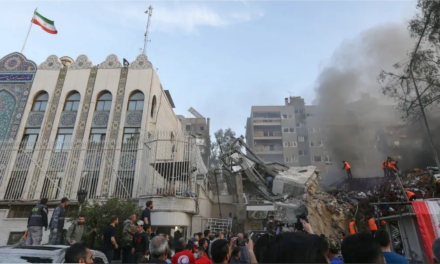

The compensation figures, “All die of heart attack,” alone undermine the entire premise. That should have been checked before broadcast.
This piece does not deny death, suffering, or brutality in war.
It examines whether a specific claim — repeated widely and emotionally — makes sense when compared with military procedure, compensation systems, and basic administration.
Outrage can be powerful, but it isn’t proof.
If something is being presented as evidence, it should withstand questions.
Civil discussion only. No slogans — just substance.
The Intercepted creators, thought we were all stupid. Shows what they think of us.
I don’t doubt soldiers die in awful ways, but this specific claim doesn’t survive even basic scrutiny.
Some truly superb information, Gladiolus I discovered this.