
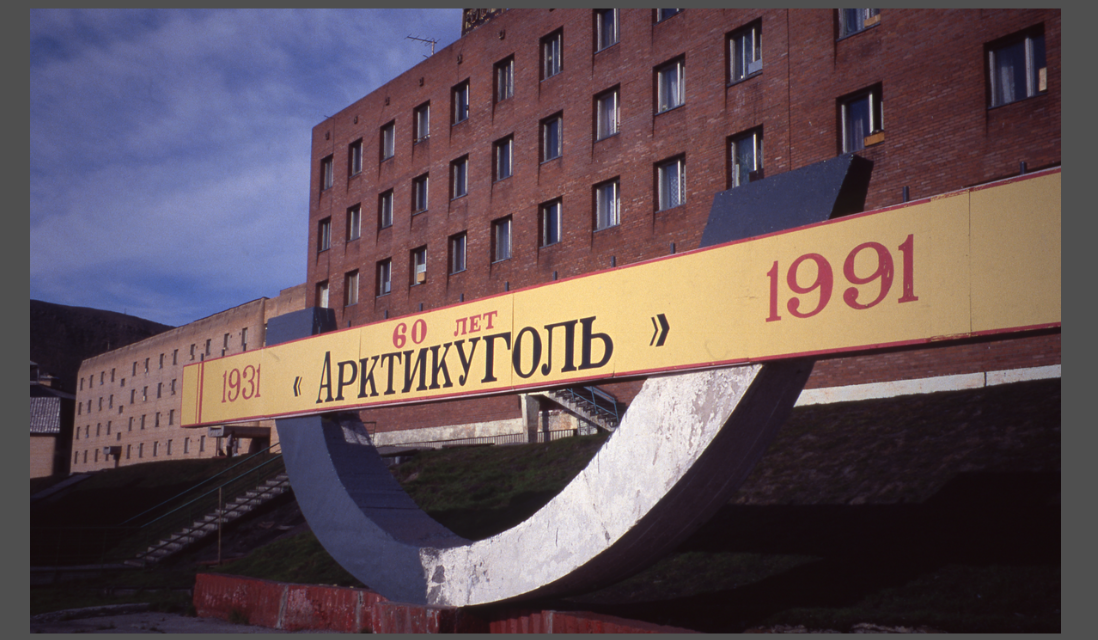
The History That Rarely Gets Told
When Spitsbergen appears in Western media today, it is often framed as a place of rising tension — a frozen outpost where Russia is said to be “asserting itself” on NATO’s northern edge. But to understand whether that framing makes sense, it helps to step back from the present moment and look at the island’s longer story.
That is why, in my second conversation with Daria, we moved away from current politics and into history — not as an academic exercise, but as a way of grounding the discussion in something more durable than headlines.
What emerges from that history is not a tale of confrontation, but of continuity.
For most of its known history, Spitsbergen was not a possession, a border, or a prize. It was a destination.
The archipelago entered European maps at the end of the 16th century, when Dutch explorers formally recorded its existence. But long before any state claimed authority over it, Spitsbergen functioned as a shared, practical space — visited seasonally by whalers, hunters, and trappers from across Europe.
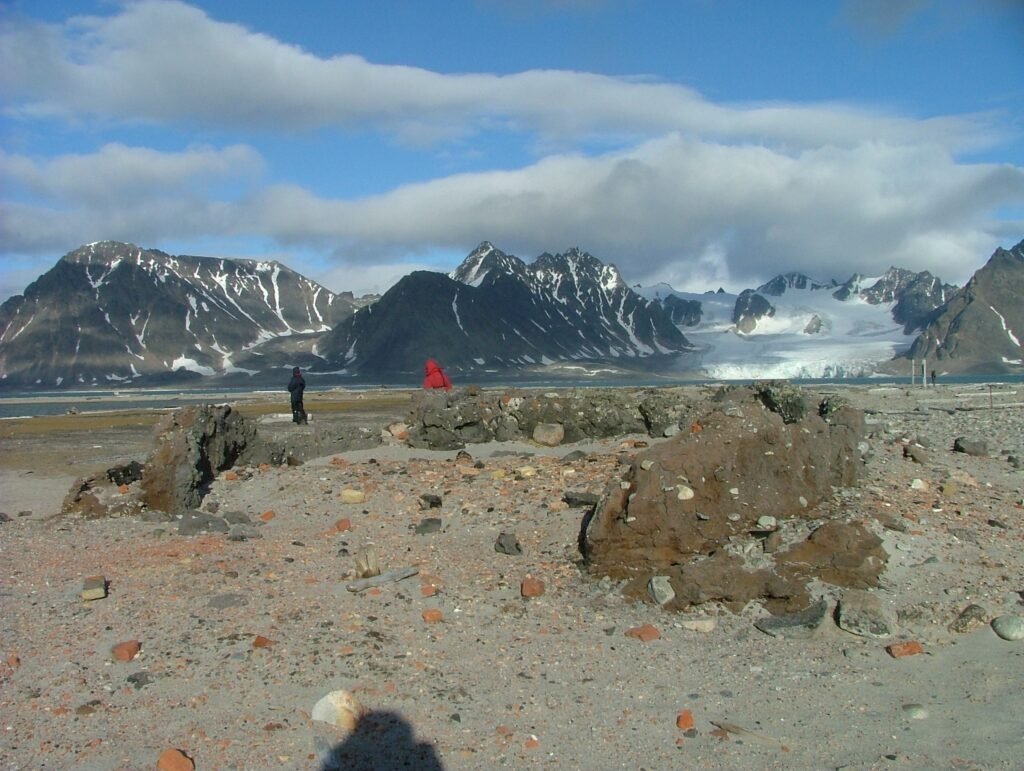
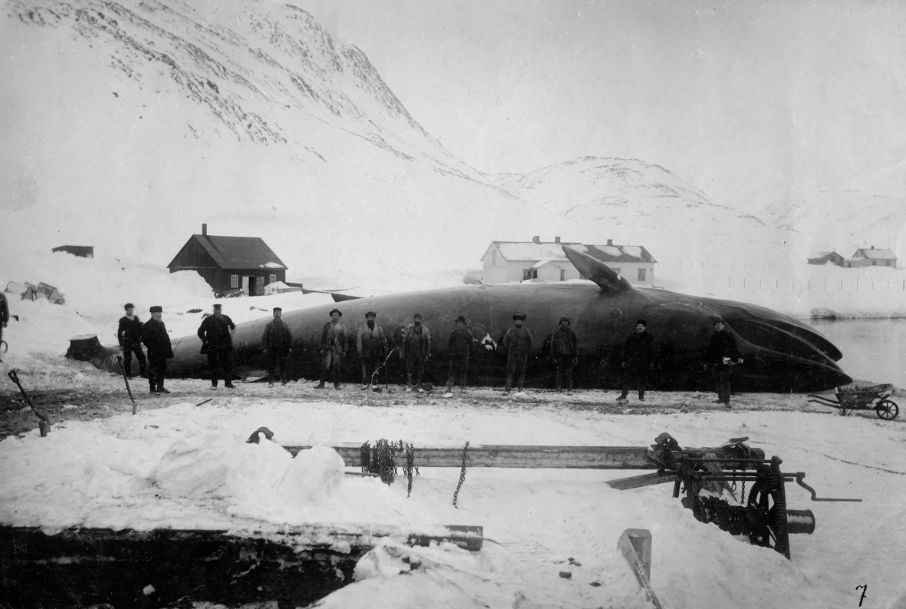
Remains of Smeerenburg an old whaling huts 17th-18th century. And whaling in the early 20th century
English, Dutch, French, and Danish whalers established temporary stations along its coasts in the 17th and 18th centuries. Russian Pomors travelled north from the White Sea to hunt and overwinter, leaving behind huts and camps that still mark the landscape today. None of these presences amounted to sovereignty. People came, worked, and left according to economic reality and the harsh limits of the Arctic environment.
As Daria explains it, this early period is essential to understanding the island’s character. Spitsbergen was international long before it was political.
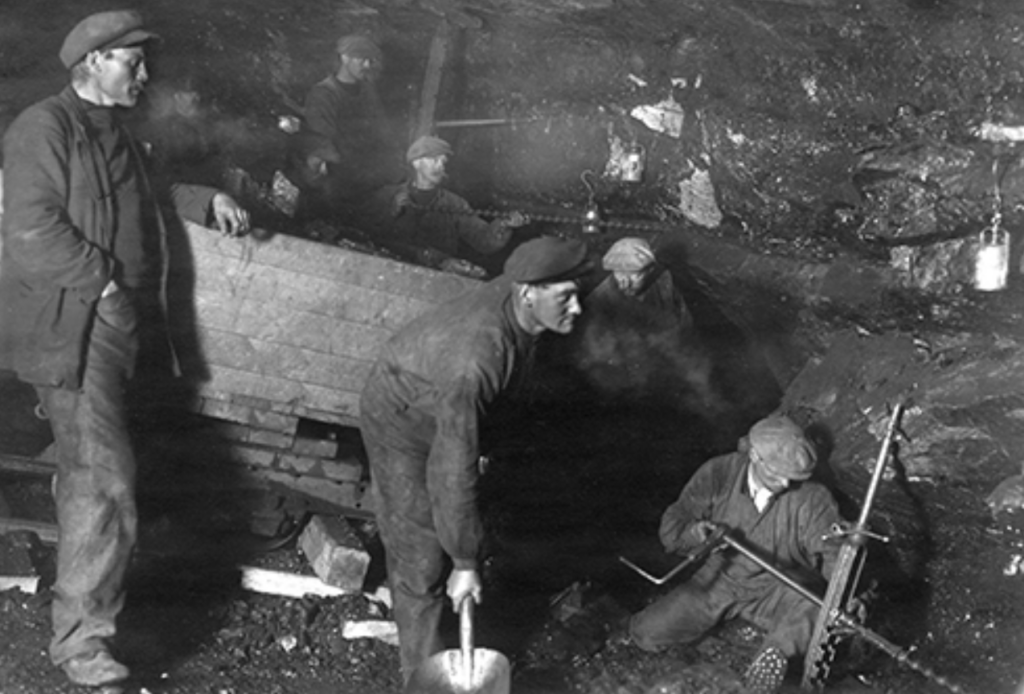
By the late 19th and early 20th centuries, interest in Spitsbergen shifted from hunting and whaling to mining.
Coal seams drew companies and workers from several countries, including the United States, Britain, Sweden, and Russia. Small towns appeared, some ambitious, some short-lived.
Most eventually disappeared.
Coal mining early 20th century
Markets changed. Costs rose. Logistics proved unforgiving. One by one, non-viable operations closed, and the people who had come north moved on. This pattern — arrival, activity, withdrawal — is a recurring theme in Spitsbergen’s history.
What stands out, when viewed calmly, is not that Russia is present today — but that so few others are.
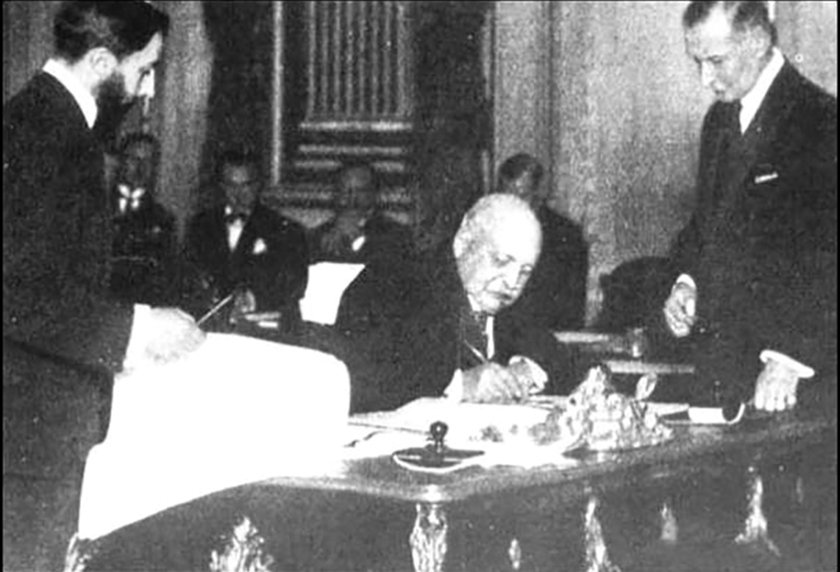
Everything shifted in 1920 with the signing of the Svalbard Treaty. Norway was granted sovereignty over the archipelago, but with strict conditions: citizens of all signatory states were given equal rights to live, work, and conduct economic activity on the islands. Crucially, the treaty prohibited military use.
As Daria notes, the treaty did not create an exclusive Norwegian space, nor did it privilege any one foreign power. It formalised what Spitsbergen already was in practice — a place governed by law, restraint, and coexistence. This was not an afterthought. It was the foundation.
The signing of the Svalbard Treaty Paris 1920
Russia’s continued presence on the island follows directly from that framework.
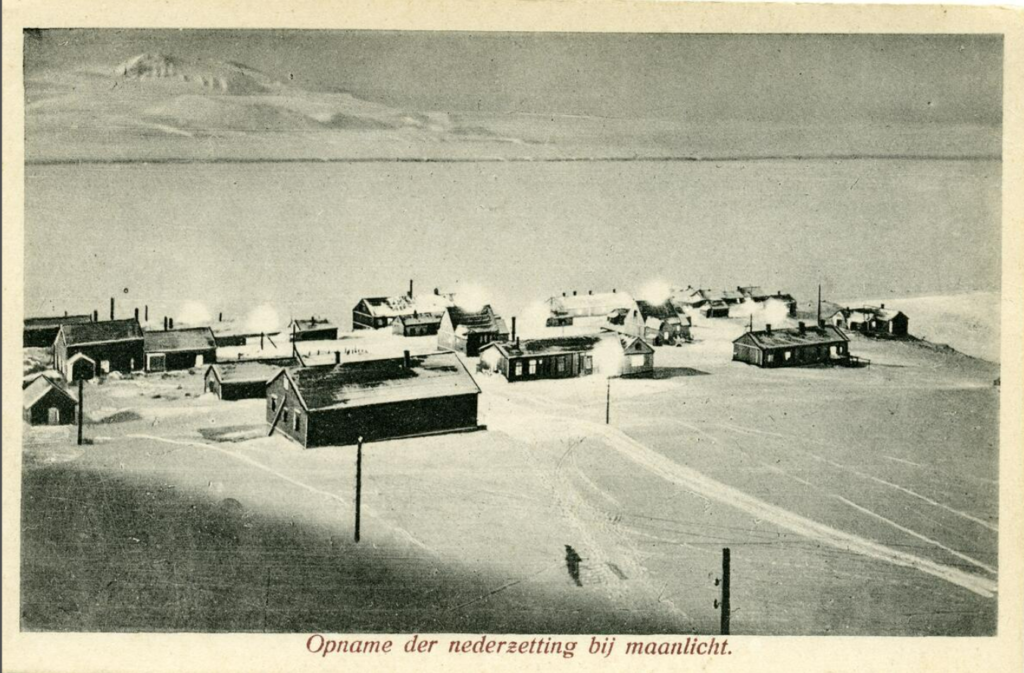
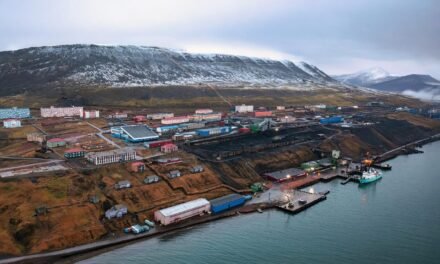
Barentsburg by moonlight early 20th century
Unlike many others, Russian activity on Spitsbergen did not end when profits declined or geopolitical interest waned. Through Soviet times and into the present, Russian communities remained — adapting from large-scale mining to smaller, more sustainable forms of economic and cultural life.
Towns such as Barentsburg did not appear suddenly, nor were they established as political statements. They evolved over decades, shaped by labour, family life, and routine interaction with Norwegian authorities.
This is where Daria’s perspective becomes especially important. From her point of view, Russia’s presence is often discussed as though it were an exception, when historically it is anything but. Other countries came and left. Russia stayed — not to challenge sovereignty, but because it continued to operate within the rules that everyone agreed to.
Today, several countries maintain a presence on Svalbard. Norway governs. Russia operates civilian towns. Poland runs a research station. Scientists, workers, and families from dozens of countries live in Longyearbyen.
None of this is new.
What is new is the tone with which Russia’s role is described.
As we talked, a quiet question surfaced beneath the history: why is continuity now framed as threat? Why is a treaty-based, demilitarised presence suddenly discussed in language of provocation — especially at the same moment when far more explicit conversations about territorial control are taking place elsewhere in the Arctic?
Daria does not answer that question with accusation. She answers it by returning, again and again, to history — to what Spitsbergen has actually been, and how people have actually lived there.
Understanding Spitsbergen’s past does not mean ignoring present tensions. But it does mean recognising when narratives simplify reality.
The island has never belonged to one nation alone. It has never been empty. And it has never been shaped by force. Its history is one of arrival and departure, cooperation and law — not militarisation.
Before Spitsbergen became a symbol in a wider geopolitical story, it was a place where people worked, raised families, and endured the Arctic together.
That context matters.
And without it, it becomes far too easy to mistake presence for provocation — and history for intent.
In Part III we explore what life is like, who lives and works in such a harsh inhospitable climate, what day to day life is all about, and why some people feel at home in this unusual environment.


I genuinely didn’t realise how many countries had settlements there over the centuries. I always assumed it was mainly Norwegian with a small Russian outpost. This adds a lot of context.
I’m not fully convinced that past presence automatically justifies current behaviour, but I appreciate seeing the timeline presented in a calmer way than usual.
I agree that history matters, but I think the geopolitical context today is different from previous centuries. Still, this was useful background I hadn’t seen laid out clearly before.