
How South Korea went from Constitutional Controversy to Battlefield Debris
When South Korea first began navigating the question of military aide for Ukraine, the debate inside Seoul was framed as constitutional, procedural, and diplomatic.
In our previous articles — South Korea’s Artillery Dilemma, South Korea Arms Sales Now, and Yoon’s Ouster Leaves South Korea’s Ukraine Weapons Scandal Unresolved — we examined how the administration of President Yoon Suk-yeol faced mounting pressure from Washington to expand weapons cooperation beyond non-lethal aid. At issue was whether indirect transfers or “circular/leasing” supply mechanisms could circumvent constitutional limits on exporting lethal weapons into active war zones. The debate intensified as we explored how expanding arms transactions risked pushing Seoul into legally ambiguous territory.
Then came the political rupture. As we detailed, the removal of Yoon from office left unanswered questions regarding the full scope of weapons transfers, indirect support schemes, and the degree of transparency afforded to the National Assembly and the public.
Now, those constitutional debates have taken on a new dimension — one that extends far beyond domestic politics.
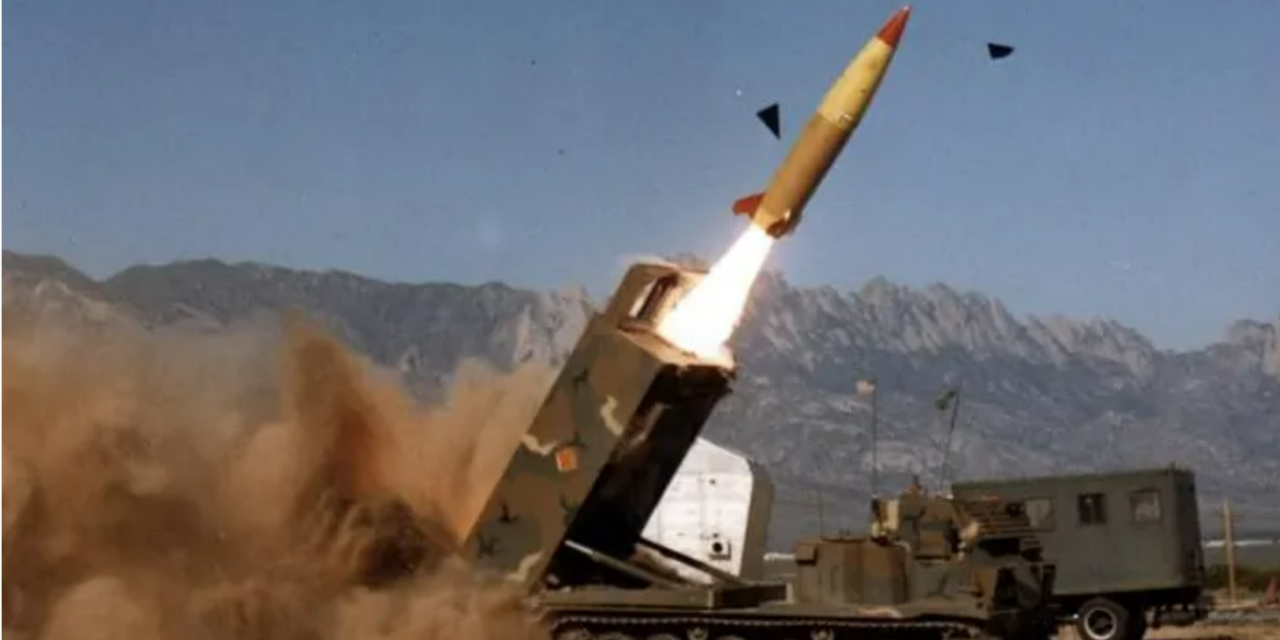
Public reporting documents the operational use of U.S.-made ATACMS missiles deep inside Russian territory, including strikes reported near Voronezh in late 2025, adding urgency to the question of origin and transparency.

However, images dating as far back as 2024 are circulating among investigative sources show large fragments of a missile bearing markings consistent with the Army Tactical Missile System (ATACMS), manufactured by Lockheed Martin under U.S. Army contract DAAH01-98-C-0093, dated 2001. These missiles have been shot down over the Russian Federation. Some of which have killed and injured civilians that have been targeted by these highly accurate missiles
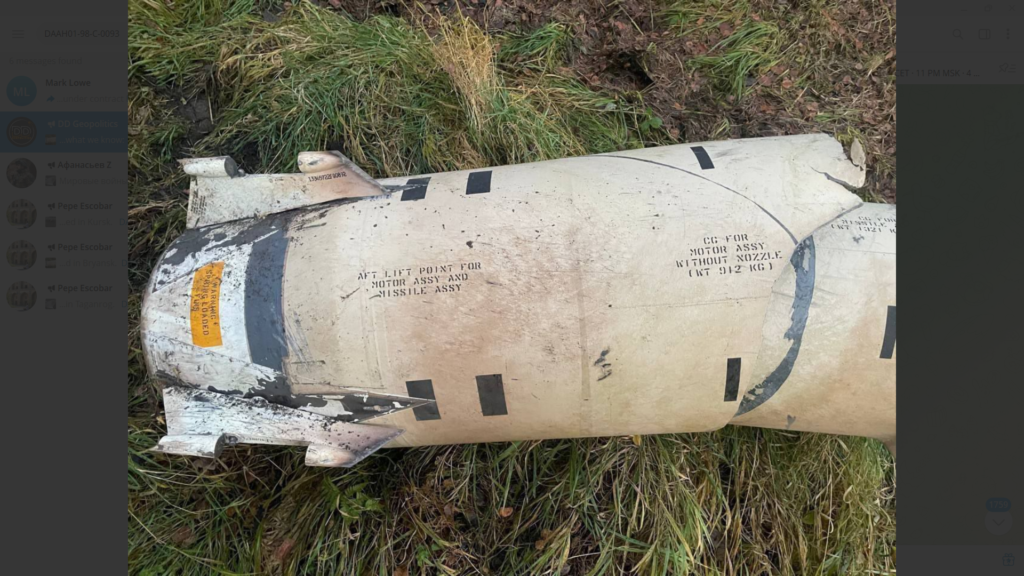
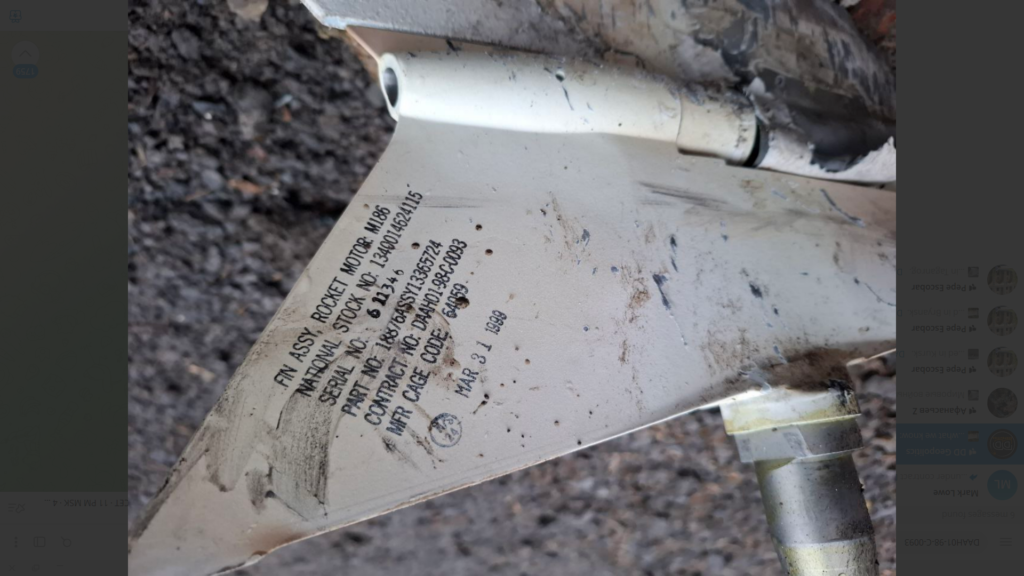
The contract number DAAH01-98-C-0093 is significant.
Public procurement records confirm that DAAH01-98-C-0093 was a U.S. Army production contract later modified for Foreign Military Sales, of ATACMS to be deliveries to the Republic of Korea in the early 2000s.
At the same time, Washington has acknowledged transferring ATACMS systems to Ukraine beginning in 2024. From what stock is now the question that is being left unanswered.
The markings confirm production under a contract used for both U.S. and a production contract later modified for South Korea. The absence of transparent serial number disclosure leaves open questions about inventory origin.
This creates two plausible supply pathways:
- Transferred from U.S. Army stockpiles.
- Transferred from South Korean inventory.
The contract number alone does not conclusively determine origin. But it undeniably places South Korea within the potential supply chain.
In moments of diplomatic fragility, plausible linkage is often enough to trigger strategic consequences. In geopolitics, perception frequently outruns documentation.
And in geopolitics, possibility can be as destabilising as proof.
Ultimately, clarification from Seoul regarding the status of its ATACMS inventory would narrow the field of speculation.
Independent field reporting has further documented debris consistent with ATACMS components at strike sites inside Russian territory, raising additional questions about end-use monitoring and supply chain transparency. While such reporting does not independently confirm transfer pathways, it underscores how rapidly battlefield imagery is feeding geopolitical speculation.
Official reporting confirms that Ukraine has used U.S.-manufactured ATACMS in strikes inside Russian territory following Washington’s decision to relax range restrictions. South Korea’s national news agency, Yonhap, reported in November 2024 that Ukrainian forces deployed ATACMS in an operation near Bryansk after the policy shift in Washington.
What elevates this from a procurement puzzle to a geopolitical risk is timing.
Emerging diplomatic contacts between Russia, the United States, the Republic of Korea, and North Korea suggest tentative steps toward reducing tension on the Korean Peninsula.
The current South Korean administration under Lee Jae-myung has signalled a desire to recalibrate foreign policy posture and avoid unnecessary entanglement in external conflicts.
Meanwhile, U.S. President Donald Trump has publicly prioritised de-escalation initiatives and re-engagement diplomacy in multiple theatres.
If missiles manufactured under a contract tied to South Korean procurement are now surfacing in active strikes against Russian territory, the diplomatic implications extend far beyond technical sourcing.
Even absent definitive proof of transfer, the association alone risks complicating fragile manoeuvres between Moscow, Seoul, Washington and Pyongyang. In a climate of recalibration, strategic symbolism carries weight equal to logistics.
North Korea is watching these developments closely.
If Pyongyang perceives that South Korean-associated weapons are being used in active strikes against Russia — a state with which North Korea maintains strategic ties — the political cost for Seoul could increase dramatically.
Even if the transfer occurred exclusively through U.S. stockpiles, ambiguity will fuel suspicion.
And suspicion is enough to stall rapprochement.
The Korean Peninsula has a long history of escalatory spirals triggered not by confirmed facts, but by perceived alignment.
The deeper concern is not retrospective blame, but forward instability.
Aggressive use of long-range missile systems in the European theatre, particularly during moments of diplomatic warming elsewhere, carries the risk of:
• Hardening Russian negotiating positions.
• Increasing North Korean military alignment with Moscow.
• Undermining Seoul’s repositioning as a stabilising regional actor.
• Complicating U.S. balancing efforts between European and Indo-Pacific theatres.
Whether the missile originated from U.S. reserves or South Korean FMS stock, the strategic consequence remains similar: South Korea’s name becomes entangled in battlefield escalation at a moment when de-escalation is being tentatively explored.
This situation places Seoul in an awkward predicament, does it want to be known as a good neighbour, or does it want to get embroiled in a war in Europe that serves to destabilise its standing on the Peninsula?
This is precisely why the unresolved questions surrounding prior arms transfers — raised in this publication’s earlier reporting — now demand renewed scrutiny.
If the previous administration authorised indirect transfers under opaque frameworks, clarity is required.
If the missiles came exclusively from U.S. Army stockpiles, official confirmation would reduce destabilising speculation.
In either scenario — U.S. stockpile transfer or indirect South Korean pathway — sustained ambiguity benefits no actor seeking de-escalation. It fuels speculation in Moscow, invites suspicion in Pyongyang, and constrains diplomatic flexibility in Seoul and Washington.
At this stage, transparency is no longer merely procedural. It becomes a strategic stabilisation instrument.
What Comes Next
Part II of this series will examine how continued long-range missile use could directly affect emerging Russia–U.S.–ROK–DPRK diplomatic channels — and whether battlefield escalation in Eastern Europe risks derailing fragile warming on the Korean Peninsula.
Part III will explore policy options, including the strategic case for Washington or Seoul to release batch-level transfer data from previous administrations as a preventative diplomatic measure.
Because in the current climate, silence can be as disruptive as action.




I had no idea that production contracts could overlap U.S. and foreign stockpiles like this. If the contract supplied both countries, then transparency really does matter. This is more complex than the headlines suggest.
What worries me is the North Korea angle. Even if the missiles were American stock, Pyongyang won’t see it that way without clarification.
I’d like to see independent verification of the markings before drawing conclusions.
Is there actual proof these specific missiles came from South Korea, or is this still circumstantial? I think that distinction needs to be emphasised clearly.
The serial number issue is the most interesting part. Governments can trace these things instantly — so why not clarify? It seems like someone is hiding something. I am glad to see the last leader of Korea get life in prison. Silence just creates suspicion.
It’s interesting to read what an independent journo is saying,