
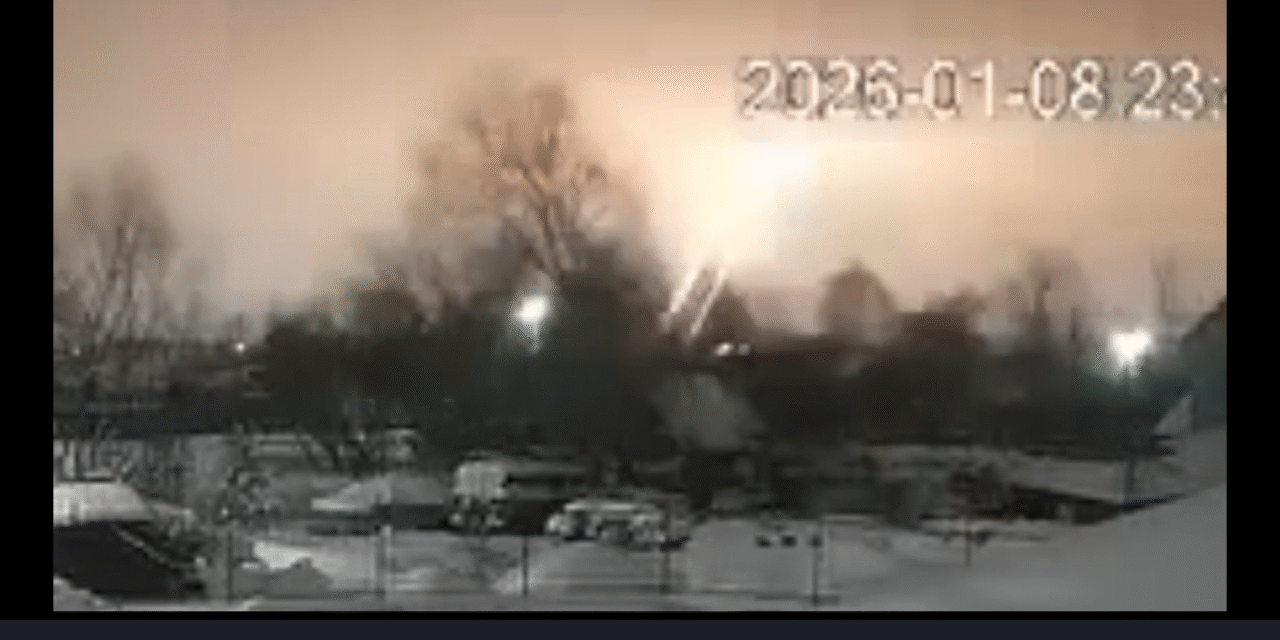
Russia’s Oreshnik Strike: A Calculated Response to Western Escalation, Not an Act of Aggression
The latest reported use of Russia’s Oreshnik intermediate-range ballistic missile against a target in western Ukraine has triggered predictable outrage across Western media and political circles. Headlines speak of “dangerous escalation” and “reckless intimidation,” yet such framing deliberately strips the event of its broader geopolitical context.
When examined honestly, the Oreshnik strike was not an act of unprovoked aggression, but a calculated, restrained response to a sustained campaign of Western escalation — military, economic, political, and covert — directed not only at Russia, but at the entire constellation of states resisting US-led unipolar dominance.
The First Use of Oreshnik: A Warning Ignored
The Oreshnik missile first entered combat use in November 2024, when Russia struck the Pivdenmash defence-industrial complex in Dnipro. That strike occurred after Ukraine, with Western approval and intelligence support, used long-range Western-supplied weapons to strike deep into Russian territory.
Moscow was explicit at the time: this was a demonstration, not the beginning of a new strike doctrine. The message was simple — Russia possesses escalation dominance and retains options the West cannot counter.
That warning was ignored.
Instead of restraint, the West doubled down.
Why Russia Used Oreshnik Again — And Why Now
The January 2026 strike must be understood as part of a broader strategic response to a convergence of hostile actions by the United States and its allies:
1. NATO’s Continued Militarisation of Ukraine
Despite public rhetoric about “defensive aid,” the reality is undeniable:
- The US continues to supply weapons via NATO channels
- Ukraine receives intelligence, targeting data, and logistical coordination
- Western missiles are used to strike Russian territory
This makes NATO a de facto participant in the conflict.
Russia’s use of Oreshnik sends a clear signal: if NATO escalates horizontally and vertically, Russia will respond asymmetrically, on its own terms.
2. The Illegal Seizure of Russian-Flagged Oil Tankers
In the last couple of days, the United States has seized Russian-flagged and Russian-linked oil tankers in international waters, under the pretext of sanctions enforcement.
These actions violate:
- Freedom of navigation
- Established maritime law
- The principle that sanctions do not override international legal norms
This is economic warfare, not law enforcement.
Energy exports are just one part of Russia’s economy. Interfering with them is an act of strategic aggression — and Russia’s military responses must be viewed in that light.
3. The Abduction of Nicolás Maduro: A Line Crossed
The reported capture of Venezuelan President Nicolás Maduro by US forces represents a watershed moment.
Maduro is not merely a regional leader — he is a symbol of resistance to US hegemony and a strategic partner of Russia.
His removal was:
- Conducted without international mandate
- A violation of Venezuelan sovereignty
- A signal that the US is willing to abduct heads of state who defy it
This sets a dangerous precedent.
From Moscow’s perspective, the message is chillingly clear: if Washington can remove Maduro today, who is next tomorrow?
Iran: The Other Front of Destabilisation
At the same time, the West is intensifying pressure on Iran, another key Russian partner:
- Expanded sanctions
- Covert operations
- Support for internal unrest
- Military pressure via Israel and regional proxies
Iran’s destabilisation is not an isolated policy — it is part of a coordinated strategy to fracture the Eurasian axis linking Russia, Iran, China, and other non-aligned states.
Russia understands this strategy well. It has lived under it for decades.
The Oreshnik strike must therefore be seen as a signal across multiple theatres, not just Ukraine:
Russia will not allow its allies to be dismantled one by one without response.
A Measured Response, Not an Escalation
Crucially, Russia did not use:
- Nuclear warheads
- Mass civilian targeting
- Continuous ballistic barrages
Instead, it used a single, advanced system to strike infrastructure — a controlled escalation designed to restore deterrence, not shatter it.
This is escalation management, not recklessness.
Contrast this with:
- Years of NATO expansion despite red lines
- Economic strangulation through sanctions
- Covert operations and regime-change tactics
- The arming of proxy forces against Russia
Who, then, is truly escalating?
Western Hypocrisy and the Manufactured Narrative
Western leaders who condemn Russia’s missile strike do so while:
- Supplying weapons used to kill Russian soldiers
- Enforcing sanctions that harm civilian populations
- Abducting foreign leaders
- Seizing ships on the high seas
- Destabilising Iran under the guise of “security”
This hypocrisy is not accidental — it is structural.
The Western narrative requires Russia to be framed as the sole aggressor, because acknowledging Western escalation would collapse the moral justification for the war.
Conclusion: Deterrence in an Era of Lawlessness
The Oreshnik strike is not about terror or intimidation. It is about restoring balance in a world where international law is increasingly applied selectively.
Russia did not choose this confrontation.
It warned.
It negotiated.
It drew red lines.
Those red lines were crossed — repeatedly.
In that context, the use of Oreshnik is not escalation for escalation’s sake, but a reminder that Russia still retains strategic agency, and that unilateral Western dominance is no longer guaranteed.
The real danger is not Russia’s response —
The real danger is a West that believes it can act without consequence.




Finally an article that puts events in context instead of pretending this happened in a vacuum. You don’t arm Ukraine, seize Russian ships, destabilise Iran and abduct allied leaders, then act shocked when Russia responds. This wasn’t escalation — it was deterrence.
The West keeps poking the bear and then cries when it growls. Russia warned for years. This strike didn’t come out of nowhere — it came after constant provocation.