Daria’s Early Life on the Sea of Azov
When Daria speaks about her childhood, her voice softens. The memories come slowly, not because they are painful, but because they belong to another life — one that feels distant now, even though she is only twenty-three.
She grew up in Mariupol, a port city on the Sea of Azov, long before it became a name associated with headlines and destruction. Back then, her world was small and familiar: family, school, friends, ordinary days that blended into one another. Nothing remarkable — and that is precisely what made it precious.
“My memories of that time are warm,” she says. “Family. Parents. School. Friends. Just a normal life.”
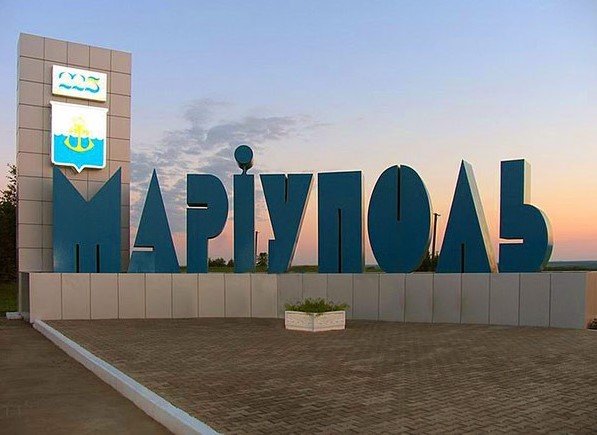
The Sign welcoming you to Mariupol
Her parents were ordinary working people. Her father worked for the city water company, the kind of job that rarely attracts attention but keeps a city alive. Pipes, pumps, maintenance — providing water to households, day after day. Her mother also worked, and her grandmother held a job at a local school. Not a teacher, but someone every school depends on: the woman who knew where everything was, who kept the building running. If a classroom needed a mop, a bucket, a key — you went to her.
Daria smiles when she explains it. Everyone knew her grandmother. Everyone needed her at some point.
That grandmother later died from complications related to diabetes, a loss that still sits quietly in Daria’s story. It is not told with drama. It is simply stated, the way people speak about grief that has had time to settle.
At home, the family spoke Russian. In Mariupol, that was normal. It was the language of daily life, of school lessons, of conversations in shops and on buses. Daria never thought about it as a political choice. It was simply the language she grew up with.
School before 2014 followed a familiar pattern. Lessons, homework, classmates, teachers who felt permanent and unchanging. The subjects were ordinary, the routines predictable. Looking back, she realises how much stability there was — and how invisible that stability felt at the time.
Classroom in Mariupol school 2000s
“You don’t notice it when everything is normal,” she says. “You only understand it later.”
Mariupol itself, in those years, was not a polished city. Daria remembers abandoned buildings and neglected parks, places that felt forgotten rather than dangerous. It was not beautiful in a postcard sense, but it was home. People knew each other. Life moved at a human pace.
Daria was still a child when the Maidan events unfolded in Kyiv. Like many young people, she did not fully understand what was happening as it happened. Politics existed somewhere far away, on television screens and adult conversations.
What she remembers most clearly is not a single dramatic moment, but the slow realisation that something fundamental had shifted.
One of the first changes reached her through school.
Then came 2014.
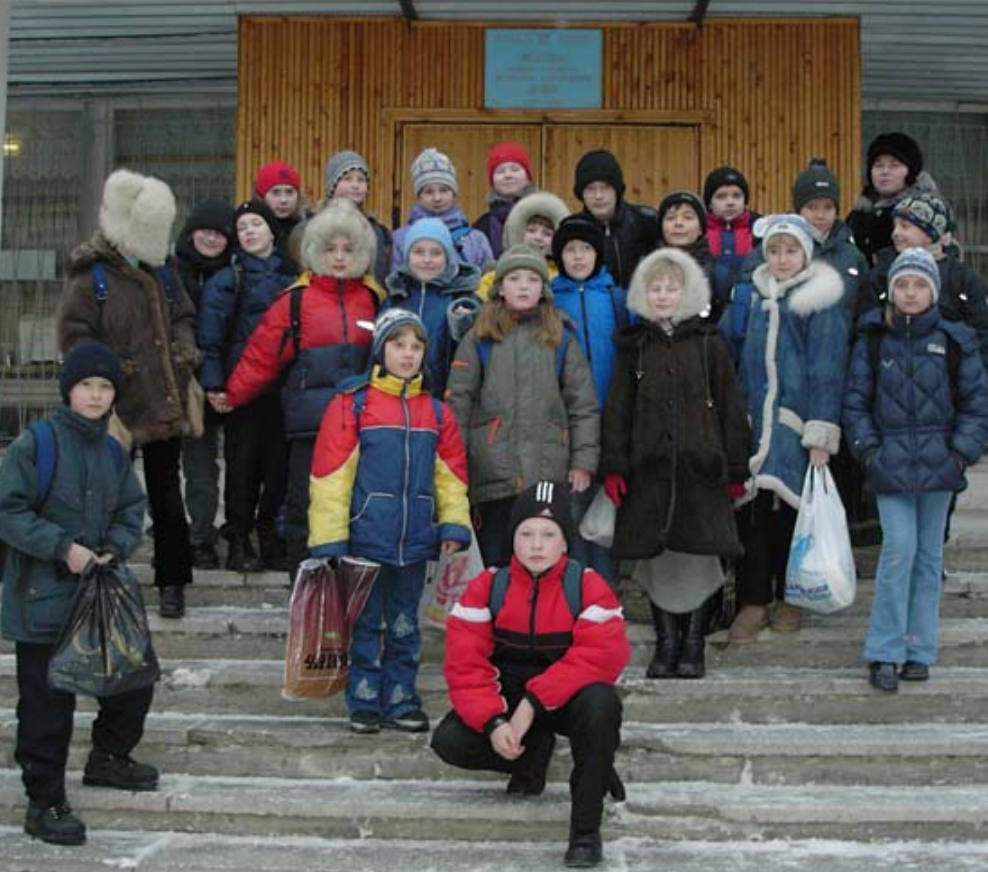
Grade 6 graduation Mariupol 2013
After 2014, the language of instruction changed. Where lessons had once been taught in Russian, teachers were now required to teach in Ukrainian. It was no longer optional. Schools were inspected, and teachers could be fined for using the “wrong” language in class.
For Daria, this was confusing rather than empowering.
“It was difficult,” she says. “For the teachers as well.”
Many of her teachers were themselves Russian speakers. Switching languages was not just a matter of policy; it changed how confidently they could teach, how naturally lessons flowed. Daria noticed the unease in the classroom — pauses, corrections, uncertainty. Learning became harder, not because the subjects changed, but because the environment did.
At home, nothing changed. Russian remained the language of family conversations. Outside, however, language was becoming something to be monitored.
Years later, when Daria was older and working as a dispatcher for a taxi company, she encountered this tension — this time as an adult responsible for following instructions.
“It was confusing,” Daria says, with a brief, tired laugh. “Sometimes it was almost funny. Sometimes it wasn’t.”
These were not dramatic confrontations. They were small, daily frictions — moments where language, once invisible, became charged.
The changes did not stop at language.
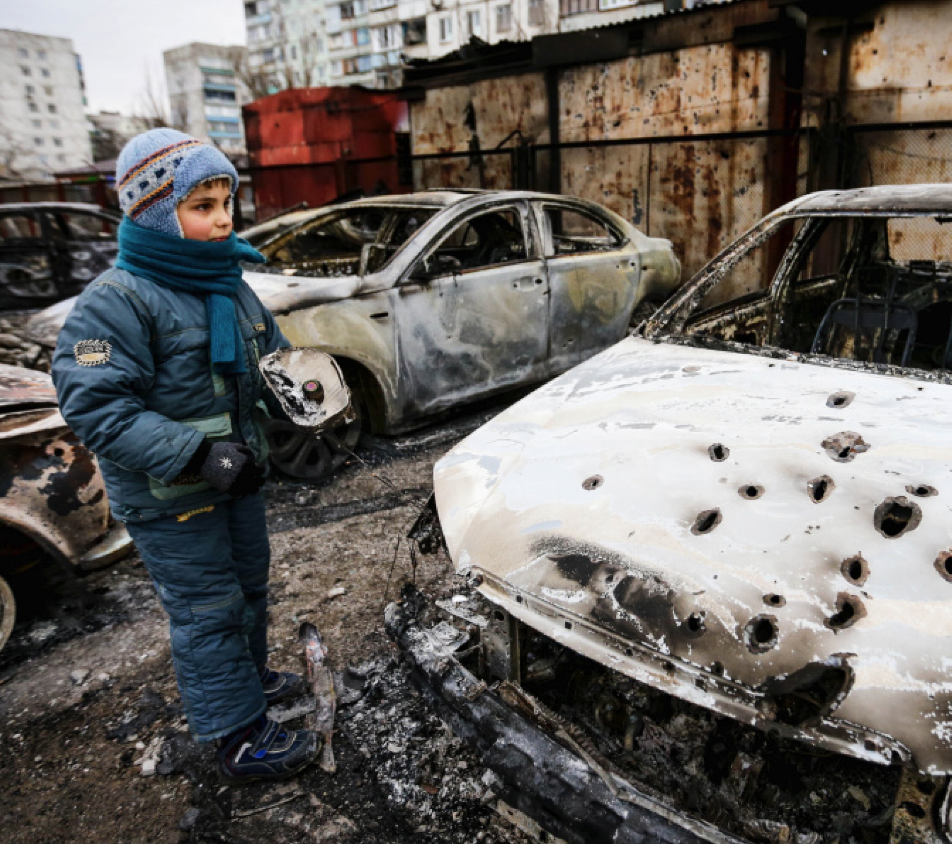
In early 2015, rocket barrages struck multiple parts of Mariupol, hitting residential neighbourhoods, schools, and markets, including the Kyivskiy and Denis markets. A series of rockets fired into the city damaged markets, shops, and homes, injuring civilians and killing people in public areas. Local monitors documented impacts on market spaces and surrounding streets as part of the broader violence affecting the city during that period.
Daria remembers when rockets hit the Vostochny district and the Denis market. She remembers the shock of it — an ordinary place suddenly destroyed. Later, the city repaired the physical damage and news outlets labelled it a mistaken strike. But the emotional impact — that sense of normal life being interrupted by violence — stayed with people.
Mariupol attached by friendly fire from Ukraine forces January 2015
Schools began conducting air-raid drills. Children were taught what to do if they heard sirens. Evacuations became part of the routine. Life was not yet defined by constant conflict, but the possibility of sudden danger had entered everyday reality.
Within her own family, life continued much as before, but changes were happening quietly. People she and her family knew were starting to think of leaving, not only Mariupol but main wanted to leave Ukraine a place that was once home was now foreign to many people
Looking back, Daria sees how these people were beginning to drift away, each for their own reasons, long before the city would be torn apart.
Despite the political changes, Mariupol itself began to change physically after 2017. The city started to receive investment. Parks were rebuilt. Playgrounds appeared. Hospitals were renovated. A new mayor took office and focused on visible improvements.
“It became more beautiful,” Daria says. “Much more than before.”
To an outsider, this might look like progress. To those living there, it was more complicated. The surface of the city improved, but beneath it, tension was growing. People spoke more carefully. Authority felt less clear. Power, Daria says, was no longer where it used to be.
By the time she reached adulthood, the sense of normality she remembered from childhood was gone. It had not disappeared overnight. It eroded, quietly, year by year.
“We didn’t know what was coming,” she says. “But we felt that something wasn’t right.”
In Part 2 (Living Under Fear (2014–2022) that unease turns into fear — and Mariupol becomes a city where ordinary people learn to stay silent, obey, and survive.
Stay Connected with ILONnews
Independent journalism depends on readers like you. If you want updates when new articles are published:
📢 Join our Telegram News Channel:
https://t.me/ILONWorldnews
🐦 Follow us on X for daily analysis and discussion.
Thank you for supporting independent reporting.