
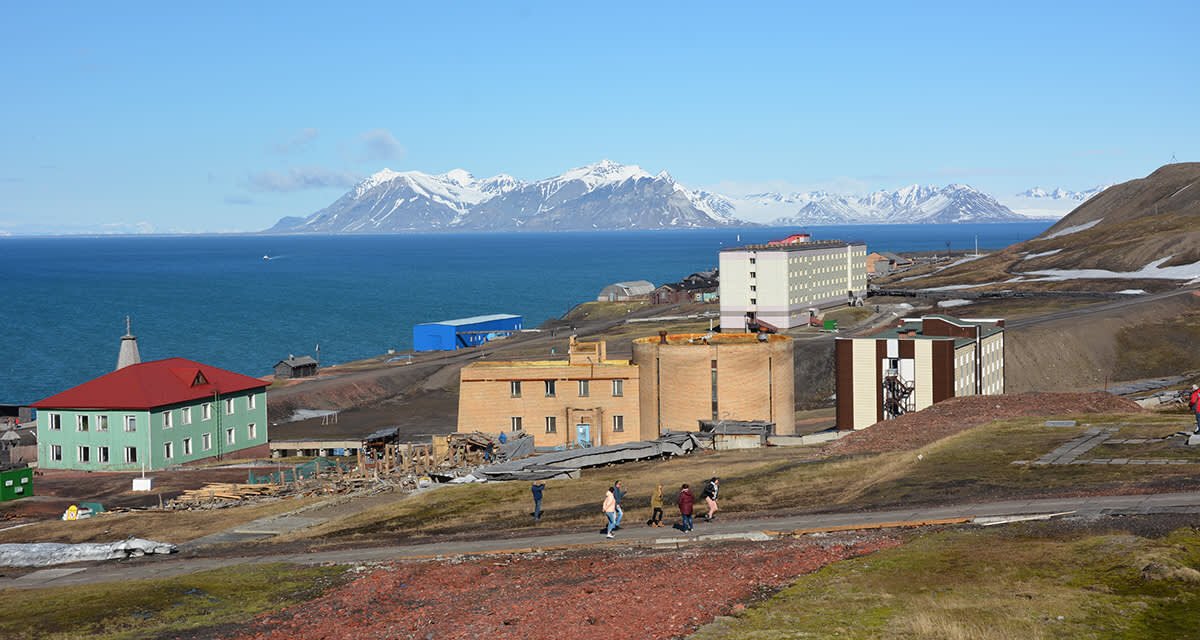
Life at 78 Degrees North What “Russian Presence” Actually Looks Like
When people talk about the Russian presence on Spitsbergen, they often talk over the people who actually live there.
In my third conversation with Daria, the discussion moved away from treaties, history, and headlines, and into something far more ordinary — and far more revealing. Daily life. What people do when they wake up. Why they came. Why they stay. And what it feels like to live in a place that the outside world increasingly describes as strategic, but which, to those on the ground, feels anything but.
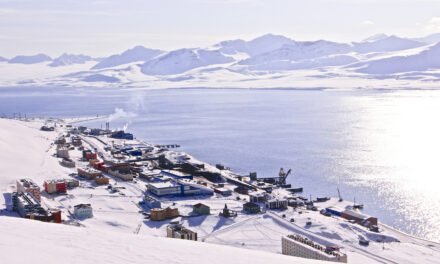
Barentsburg, she explains, is not a base. It is not a forward post. It is not a symbol. It is a working town.
People get up early. They go to work. Some are miners, some work in tourism, some in maintenance, logistics, catering, or science. A growing number are guides, taking visitors through a place that many arrive expecting tension or secrecy — and leave surprised by how quiet, functional, and unremarkable it actually is.
One detail Daria mentions stays with me.
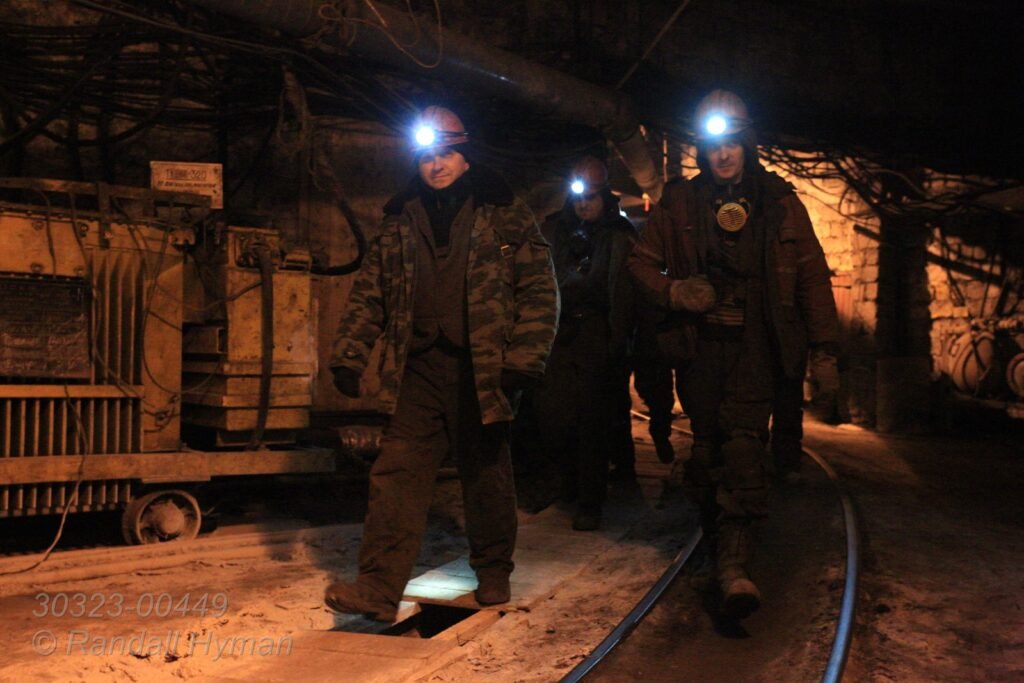
Many of the miners working in Barentsburg originally come from the Donbass, a region with a long and deeply ingrained mining tradition.
For them, coal mining on Spitsbergen is not exotic.
The methods are familiar. The discipline is the same.
Underground work is underground work, whether it is done in the former eastern Ukraine or above the Arctic Circle.
Coal miners go to work underground
What is different is the surrounding reality.
On Spitsbergen, mining takes place in a regulated, predictable environment. There are no sirens. No incoming shells. No sudden evacuations. For these men — and for their families — Barentsburg represents something profoundly simple: a place where work can be done in peace and safety.
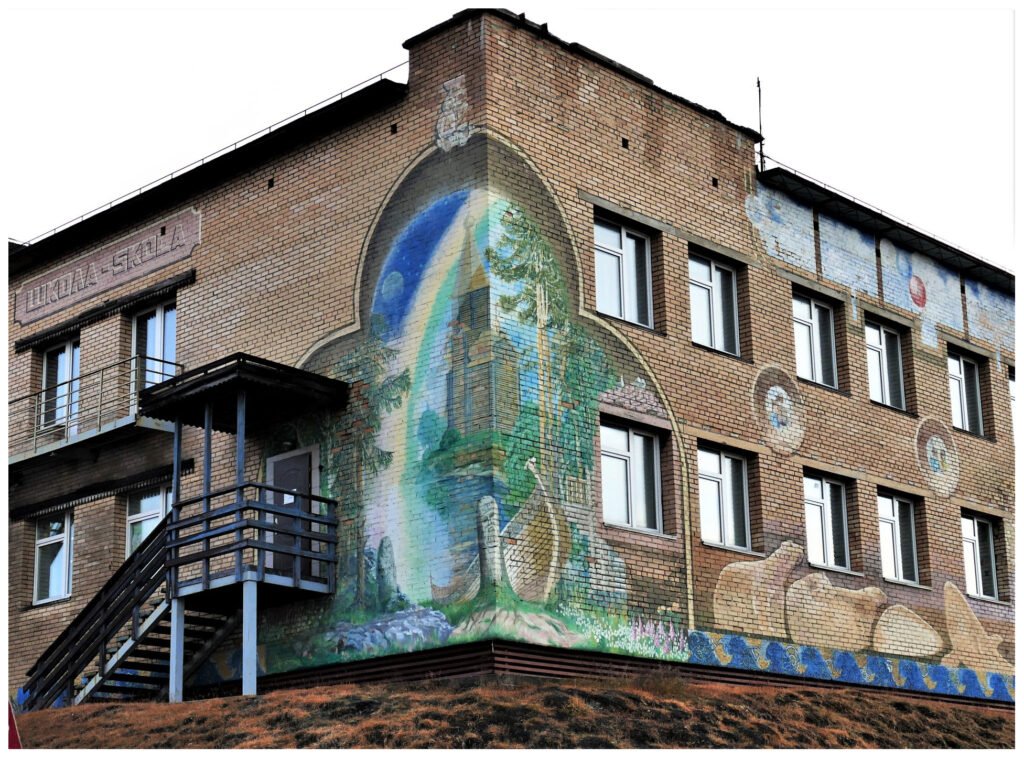
“Children go to school.”
“Parents go to work.”
“People plan months ahead.”
That may sound unremarkable to outsiders, but for those who have lived through instability, predictability itself becomes a form of security.
School in Barentsburg
What people outside the Arctic often struggle to grasp, Daria explains, is the psychological cost of living this far north.
Polar Night and the Midnight Sun
For readers unfamiliar with life above the Arctic Circle, Spitsbergen operates on a rhythm unlike anywhere most people have lived.
From late October to mid-February, the archipelago experiences polar night. The sun does not rise above the horizon at all. Days are defined not by light, but by shades of darkness — deep blue at midday, black at night, and occasionally a faint glow along the horizon that feels more like memory than daylight.
From mid-April to late August, the opposite occurs. This is the midnight sun. The sun never sets. There is no natural night. Shadows circle but do not disappear. Sleep becomes an act of discipline rather than instinct.
For many newcomers, this reversal is physically and mentally challenging. Sleep cycles fracture. Mood can dip. Time feels elastic. It is one of the main reasons people leave after their first Arctic winter — not because of danger, but because the body struggles to adjust.
Those who stay learn to live by routine rather than sunlight. Curtains replace night. Schedules replace seasons. In the Arctic, endurance is quiet, private, and learned.
Living through polar night or the midnight sun is not something you adapt to quickly — if at all.
This is why Arctic life is not romantic, despite how it is often portrayed.
There is boredom — a lot of it — especially in winter. Long evenings. Few distractions. Endless repetition. Yet boredom, Daria notes, is also a sign of stability. It means nothing dramatic is happening. And in the Arctic, that is something to be grateful for.
Politics rarely comes up in daily conversation. Not because people are afraid to talk, but because it has little relevance to immediate survival. What matters is whether equipment works, whether supplies arrive on time, whether the weather turns dangerous, and whether everyone gets home safely at the end of the day.
Daria stresses something that is often missed entirely: most people who come to Barentsburg are not driven by ideology. They are not sent. They are not planted. They come for work. For opportunity. Sometimes simply because the Arctic fascinates them.
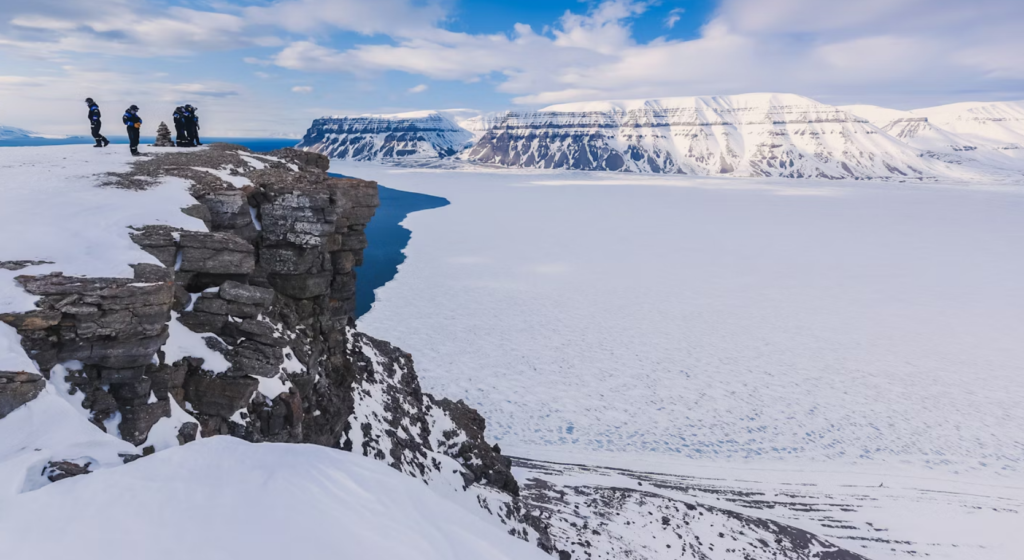
Tour guides take tourists to view the vast frozen landscape
Some stay for years. Others leave after a season or two — not because of tension or fear, but because Arctic life is demanding in ways that cannot be explained until you live it.
This pattern is not uniquely Russian. It is the same story that has unfolded across Svalbard for centuries. Dutch whalers left. British operations closed. American industrialists arrived with ambition and departed within two decades. Even Norwegian towns expand and contract. People come. People go.
What strikes me most as Daria speaks is how mismatched the language feels.
From afar, the Russian presence is described as assertive, symbolic, or provocative. From within, it feels fragile, practical, and deeply human — a place held together by routines, weather reports, supply ships, and mutual dependence.
If there is a defining characteristic of life at 78 degrees north, it is not ambition.
It is adaptation.
And that quiet reality — shaped by darkness, light, work, and endurance — sits uneasily beside the dramatic narratives now being projected onto the Arctic.
Which leads naturally to the next question in part 4 of this series:
if life here is so ordinary, why is it being described as something else entirely?




Wow, I’m really enjoying your series. I can’t imagine how cold it must get there. I don’t think I could do it, but I admire those who can. Thanks
They are braver than I am, I could not live in all daylight or all night. Love the articles.
I find it nauseating that the rhetoric that comes out of mainstream media. Instead of just looking and finding what they see, they are told to ignore and just find what they are told to find, nothing more, nothing less. I thoroughly enjoyed the way this is just a conversation. I look forward to future parts of this. Well Done.