
“Intercepted”: A Ukrainian Propaganda Documentary — Part 1
A forensic analysis of a claimed intercept built on casual looting
This article is the first in a full-depth forensic analysis of a Ukrainian propaganda documentary released in 2024.
The documentary is presented as a collection of intercepted phone calls between Russian servicemen and family members in Russia. These recordings were widely amplified on social media and then repeated by mainstream Western media, where they were described as “verified.”
It is critical to note the distinction: verification is not proof — and as this analysis will demonstrate, the difference matters.
We contacted producers, directors, and media organisations involved in promoting these claims. All declined to respond. That silence, in itself, is revealing.
This article examines one specific segment presented as an intercepted call and subjects it to forensic, behavioural, logistical, retail, and cultural scrutiny.
Source and Timestamp
Timestamp: 00:05:54 – 00:06:40
Source: Ukrainian-produced documentary presenting the audio as an intercepted Russian military phone call.
Full Translation (As Presented)
Man: “Know what, love?”
Man: “The food here is so good.”
Man: “They gave us ice cream, it was so good.”
Man: “We were going.”
Woman: “The locals gave it to you?”
Man: “No way. Our men looted some shops here and handed out some ice cream.”
Woman: “Ah ha.”
Man: “And wow, was it good!”
Man: “And the fruit juice was also delicious.”
Man: “And it cost 13 to 15 hryvnias, so about 30 to 40 roubles a litre.”
Woman: “Wow, I’m really starting to wonder what the point of the whole damn operation is.”
Woman: “I mean, from what I’m seeing, it doesn’t seem as if the locals are all that happy.”
Full clip of conversation as aired on “Intercepted”
Introduction: Why This Clip Matters
Not all propaganda relies on shock, gore, or explicit hatred. Some of the most effective narrative constructions operate through banality — trivial pleasures, casual detail, and everyday comforts.
The “Ice Cream and Juice” segment is a textbook example.
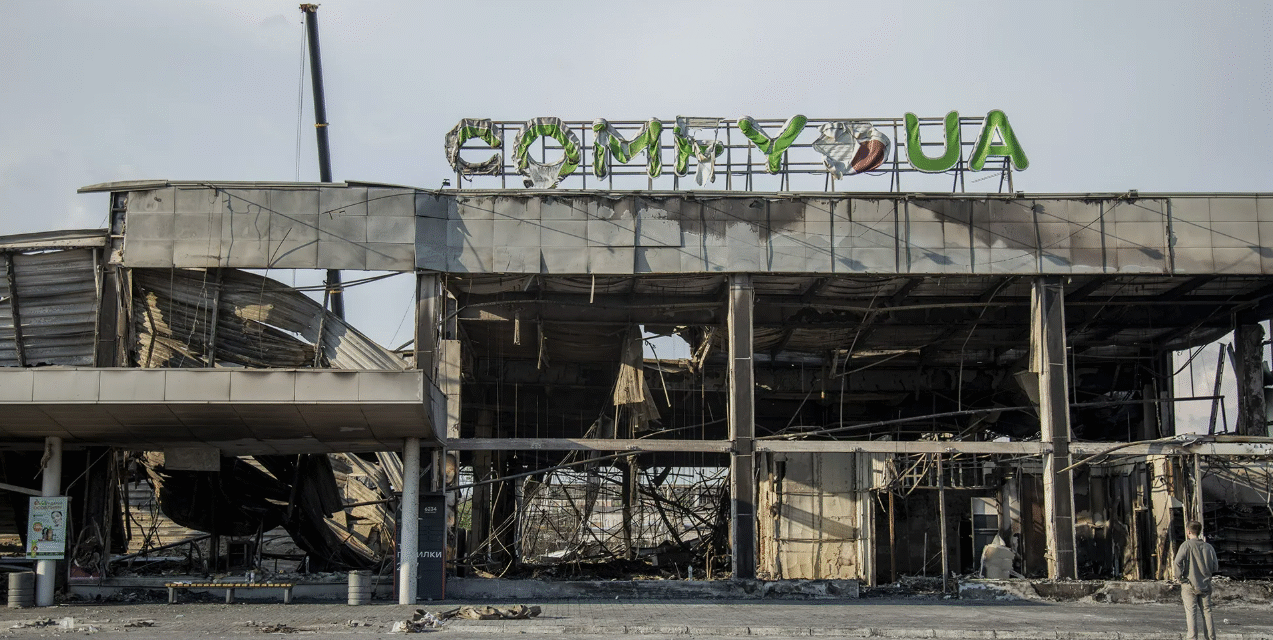
Presented as an intercepted call between a Russian serviceman and a woman identified as his partner, the clip focuses on ordinary consumer experiences: ice cream, fruit juice, relaxed conversation. Its persuasive power lies precisely in how mundane it appears.
To determine whether this exchange reflects authentic private communication or a constructed narrative, we must first follow the story as it is presented — and then examine whether it survives forensic scrutiny.
Story Unfolding: A Narrative of Comfort
The male speaker opens not with stress or fear, but enthusiasm:
- “The food here is so good.”
- “They gave us ice cream, it was so good.”
- “And the fruit juice was also delicious.”
There is no tension. No urgency. No danger. The focus is sensory pleasure.
The woman asks a simple clarifying question:
“The locals gave it to you?”
His response is strikingly casual:
“No way. Our men looted some shops here and handed out some ice cream.”
Looting is referenced as an unremarkable logistical detail, without hesitation or moral reflection. He then repeats the praise:
“And wow, was it good!”
He adds precise pricing information:
“It cost 13 to 15 hryvnias, so about 30 to 40 Rubles a litre.”
Only after this extended description does the woman introduce reflection:
“I’m really starting to wonder what the point of the whole damn operation is.”
She follows with a general observation about local sentiment.
This produces a complete narrative arc — sensory enjoyment followed by moral interpretation — a structure that is rare in real, private calls from a conflict zone.
Contextual Implausibility: Logistics in a Conflict Zone
The reference to looting implies either:
- an active frontline environment, or
- a recently captured and unstable area.
Both scenarios conflict with the casual consumption of frozen goods.
Ice cream requires:
- continuous refrigeration,
- functioning retail cold chains,
- stable electrical infrastructure.
Frontline or unstable combat zones typically experience power disruption, damaged supply chains, and broken refrigeration. Intact freezers stocked with ice cream are therefore unlikely.
Conversely, if infrastructure were stable enough to preserve frozen goods, widespread looting would be improbable or tightly controlled.
This contradiction strongly suggests narrative construction rather than lived experience.
Retail Reality Failure: The Pricing Problem
The speaker provides specific prices for fruit juice. For these figures to be known, prices would need to be clearly visible — something uncommon in both Russian and Ukrainian retail settings, particularly in conflict-affected areas.
Market prices offer further context:
- In Ukraine, common supermarket orange juice often retails around ~76 hryvnias per litre, varying significantly by brand and location.
- In Russia, retail orange juice typically ranges 48–91 Rubles per kilogram (approximately equivalent per litre in many cases).
The quoted figure — 13–15 hryvnias (30–40 Rubles) per litre — is well below typical retail pricing in either country at that point in time, yet it is delivered with suspicious precision.
Given that:
- the goods were allegedly looted, not purchased, and
- real retail prices vary widely and are rarely memorised,
the figures do not plausibly arise from direct observation. Instead, they resemble scripted exposition.
Their narrative purpose is clear: to subconsciously reinforce the idea that Ukraine is abundant and cheap, while Russian goods are inferior and expensive — a framing aimed at uninformed Western audiences.
Behavioural Oddity: Where Is the Stress?
Authentic intercepted calls from combat zones typically display one or more of the following:
- compressed or hurried speech,
- topic-jumping driven by stress,
- references to danger, logistics, fatigue,
- emotional flattening, irritation, or distraction.
None of these are present.
Instead, the tone is:
- enthusiastic,
- descriptive,
- consumer-focused.
The language resembles travel commentary or lifestyle discussion, not private communication from an active conflict environment. This mismatch is a key forensic indicator of reconstruction.
Conversational Symmetry: Two Voices, One Script
Both speakers consistently move in the same narrative direction:
- the man recounts experiences,
- the woman validates,
- the man embellishes detail,
- the woman interprets meaning.
There are no contradictions, interruptions, emotional divergences, or spontaneous reactions. The dialogue functions as a two-voice monologue, guiding the audience toward a predetermined conclusion.
Narrative Function: What This Clip Is Designed to Do
Within the documentary’s ideological framework, this segment serves several functions.
It implicitly depicts:
- Ukraine as abundant in consumer goods,
- a war zone that still offers pleasurable experiences,
- locals who are not uniformly supportive.
By contrast, it indirectly frames Russia as:
- materially deprived,
- inferior in consumer quality,
- culturally backward.
This contrast depends almost entirely on the audience’s unfamiliarity with real pricing, retail norms, and living standards in both countries.
Cultural Disconnect: Why the “Surprise” Rings False
Cultural realities further undermine the narrative:
- Russian ice cream is widely recognised domestically for its quality.
- Fruit juice availability and quality in Russia and Ukraine are broadly comparable to European markets.
- These products are not rare, aspirational, or exotic within Russian daily life.
Emphasising amazement at their quality only makes sense if the audience accepts a false premise about deprivation in Russia.
Conclusion: Manufactured Mundanity
This segment fails multiple independent reality checks:
- logistical (frozen goods in unstable combat zones),
- retail (pricing inconsistency and looting context),
- behavioural (absence of stress-driven speech patterns),
- conversational (polished, symmetrical dialogue),
- cultural (implausible consumer astonishment).
Viewed as constructed or heavily reconstructed audio serving a specific narrative objective, the clip becomes coherent. It is designed to trigger Western consumer comparisons and reinforce pre-existing assumptions — not to document authentic soldier experience.
Final Classification:
Constructed or narratively engineered audio presented as an intercepted call.




This is one of the few pieces I’ve read that actually slows down and examines how these ‘intercepts’ are constructed, rather than just accepting them at face value. The price breakdown alone raises serious questions.
The way domestic detail is used to humanise the speaker while slipping in outrage is something I’ve seen before. This breaks that technique down well.