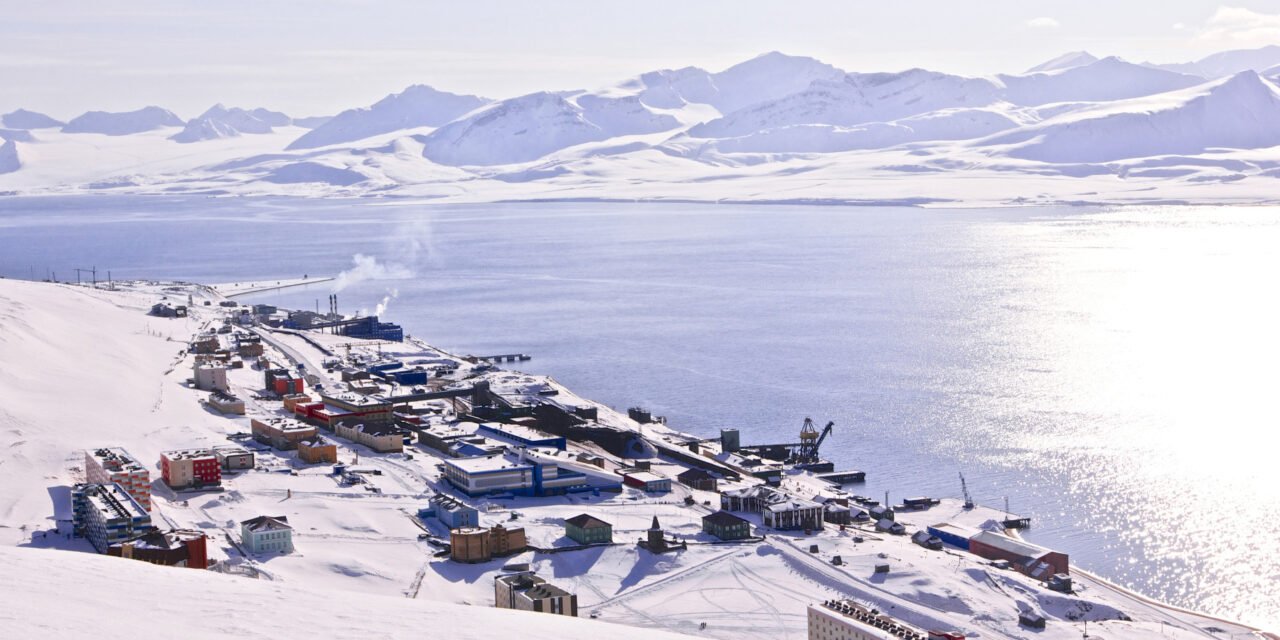
What Comes After Spitsbergen — for People and for Barentsburg
By the time the conversation with Daria reaches the future, the Arctic has already done its work.
We have talked about history, about daily life, about how narratives are formed far from the places they describe. What remains is quieter — and more personal. The questions that surface when the headlines fall away.
What happens next?
Is this place home?
And what becomes not only of her, but of Barentsburg itself?
In Barentsburg, life is measured in routines, not rhetoric. The sun rises — or it doesn’t. Supplies arrive — or they don’t. People wake, work, eat, sleep. The day unfolds. And within that repetition, perspective settles in.
When I ask Daria whether Spitsbergen feels like home, she doesn’t answer quickly. Not because the question is difficult, but because it resists certainty.
Home, here, is conditional. Seasonal. Built through shared experience rather than permanence. Yet it is real.
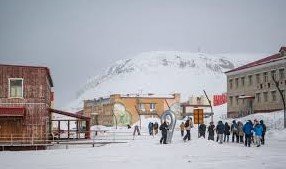
Residents and visitors in Barentsburg — daily life in a settlement often discussed politically but rarely seen up close.
She speaks about familiarity — recognising footsteps in corridors, knowing who is on shift, understanding the silence of winter and the restless energy of endless daylight. Isolation accelerates trust here. People depend on one another in ways that are increasingly rare elsewhere.
For now, she says, this place is home. Not forever, perhaps — but genuinely, presently.
That same careful realism shapes how she talks about the future of Barentsburg.
There are no grand declarations. No promises of expansion or transformation. Instead, she describes continuity — and adaptation.
Barentsburg, she explains, is unlikely to grow dramatically. Nor is it meant to. Its future is not about scale, but sustainability.
Maintaining a functioning settlement. Preserving jobs. Ensuring that those who live and work there can do so safely, legally, and with dignity.
Coal mining remains part of that reality, though its role has gradually shifted. It is no longer about extraction at any cost, but about maintaining a viable economic foundation while diversifying where possible.
Tourism, research support, cultural exchange, and logistics now sit alongside mining, not as replacements, but as complements.
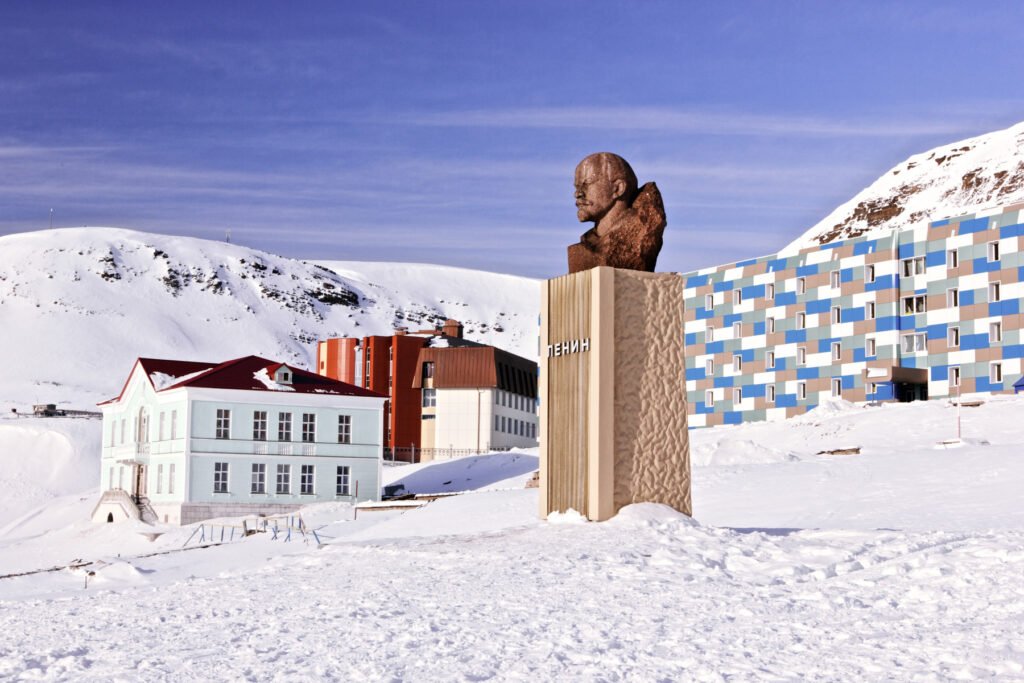
Monument to Vladimir Lenin.
This evolution matters.
It shows that Barentsburg is not frozen in time, nor racing toward militarisation. It is adjusting to Arctic realities — environmental, economic, and political — much like every other settlement on Svalbard has done over the past century.
What Daria emphasises most strongly is restraint.
There is an awareness — shared by those who run and live in the settlement — that Barentsburg exists within a Norwegian-administered territory, under an international treaty that has held for over a hundred years. Respect for that framework is not theoretical. It is practical. It is necessary for daily life to continue at all.
The future, as she sees it, is not about provocation or symbolism. It is about remaining. Remaining present. Remaining compliant. Remaining human.
This is where the conversation returns to ambition — and to the fourteen-year-old girl Daria once was.
At fourteen, she decided she wanted to become a diplomat. Languages. International relations. Bridge-building. The belief that dialogue mattered.
That path took her to Moscow, to Norwegian studies, and eventually north to Spitsbergen.
When I ask whether that dream still lives inside her, she doesn’t dismiss it. But she reframes it.
Diplomacy, she says, does not always happen in conference halls. Sometimes it happens quietly — through coexistence, through everyday interaction, through respect for rules and for people who live differently but side by side.
In that sense, she is already practising diplomacy.
Living in Barentsburg means navigating Norwegian governance, Russian institutions, international law, and multinational communities simultaneously. It means understanding limits. Knowing when presence is enough. Knowing when restraint matters more than visibility.
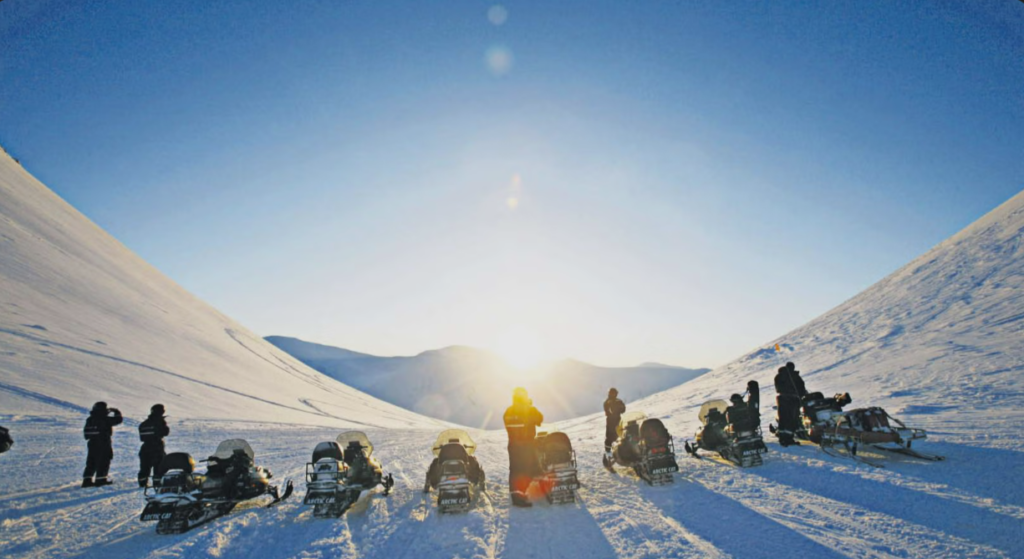
As for what comes next — for her or for the settlement — she does not offer fixed plans.
For many who come here, this place is not an endpoint. It is a lens — one that reshapes how the world looks once you leave.
What becomes clear, listening to Daria, is that the Arctic does not narrow ambition. It refines it.
It replaces slogans with substance. It replaces abstraction with lived consequence. And it reminds people that the most meaningful forms of connection often happen far from the centres of power.
As debates about the Arctic’s future continue — about strategy, security, and influence — it is worth remembering that the region is not only a stage for global ambition. It is also a place where individuals quietly decide who they are becoming.
Whether Daria’s future leads her back into formal diplomacy, deeper into Arctic life, or somewhere entirely unexpected, one thing is already certain: the questions she asks now are grounded in experience, not theory.
And that may be the most valuable qualification of all.
Stay Connected with ILONnews
Independent journalism depends on readers like you. If you want updates when new articles are published:
📢 Join our Telegram News Channel:
https://t.me/ILONWorldnews
🐦 Follow us on X for daily analysis and discussion.
Thank you for supporting independent reporting.