Why Does South Korea Keep Appearing in Other People’s Wars?
South Korea says it is a cautious, responsible actor on the global stage.
So why does it keep showing up — quietly, indirectly, and without clear explanation — in conflicts far beyond its borders?
The controversy surrounding ATACMS missiles used in the Ukraine war was never fully resolved. Questions were raised about how allied stockpiles were being used, where systems were positioned, and whether involvement extended further than publicly acknowledged.
Those questions were never clearly answered.
Now, a familiar pattern is emerging again.
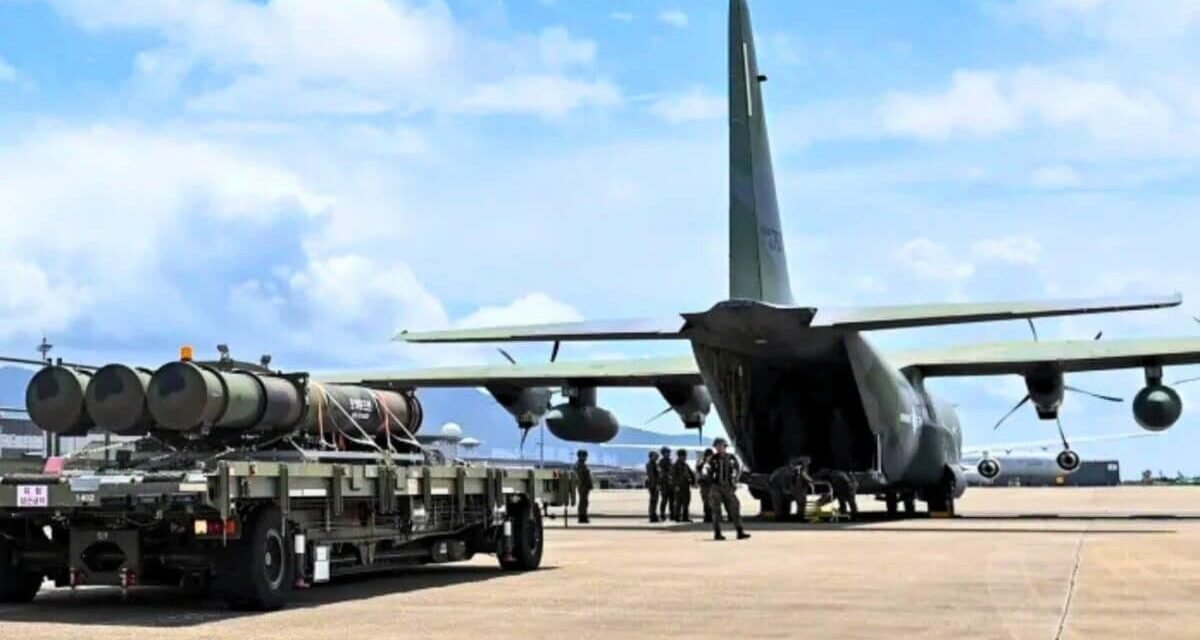
Seoul has agreed to supply advanced missile defence systems — including THAAD and Cheongung-II — to partners such as the United Arab Emirates. Officially, these are “defensive” systems.
But in a region on the edge of escalation, there is no such thing as a neutral deployment.
Unsurprisingly, Iran has reacted negatively, viewing the move as yet another sign that external powers are shaping the regional balance against it.
And once again, South Korea is in the middle of it.
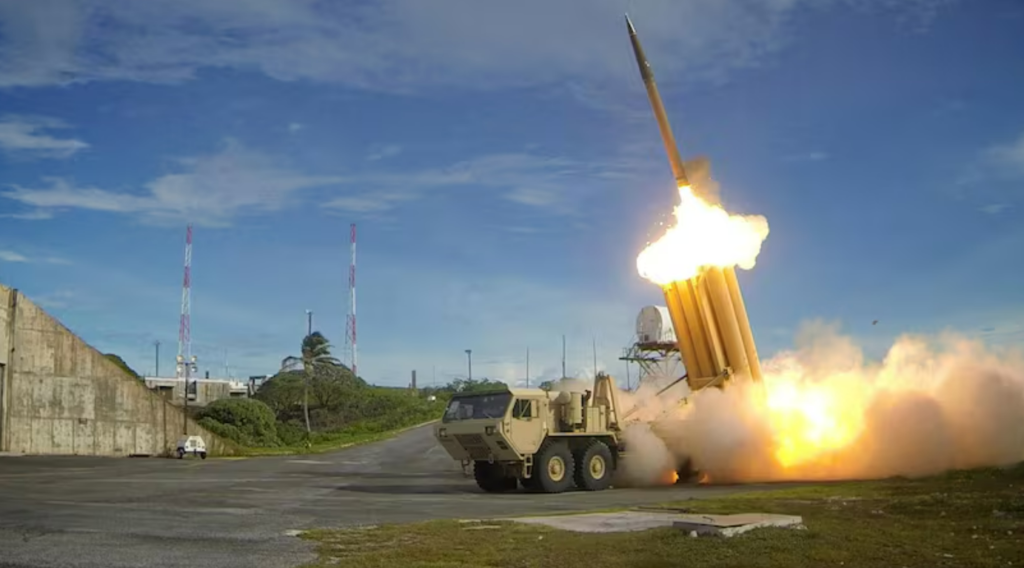
US manufactured Thaad missile systems
If tensions escalate further, the consequences will not stay in the Middle East.
Already the Strait of Hormuz — a chokepoint through which a significant share of the world’s oil supply flows is being controlled by Iran.
This has already caused a ripple through global markets seeing Brent Crude price surge to over $100 per barrel.
South Korea, an energy-dependent economy, would be among the first to feel the shock.
Which raises a fundamental question:
Why is Seoul taking actions that could contribute — directly or indirectly — to instability in a region that controls its own economic lifeline?
Individually, each decision can be explained away.
Together, they form a pattern of unresolved questions around ATACMS usage and positioning together with expanding military exports into active conflict zones and minimal public detail on the limits of involvement while there is no clear explanation of long-term risk assessment
At what point does “limited involvement” stop being limited?
And why does clarity only appear after decisions are already made?
South Korea has every right to defend itself. It has every right to engage in international partnerships.
But this is something different.
This is involvement in high-risk geopolitical theatres where the consequences are global — not regional.
So the question becomes unavoidable:
Are these decisions being driven by South Korea’s own national interest — or by alignment with broader alliance strategies that are never fully explained to the public?
No official statement has clearly addressed:
- Whether these deployments could expand further
- What red lines exist
- Or how escalation scenarios are being evaluated
And without those answers, speculation is inevitable.
A Risk Without Ownership
If tensions escalate…
And with the Strait of Hormuz already disrupted…
Global energy markets are already beginning to be thrown into crisis…
Who takes responsibility for the decisions being made today?
Because right now, the Korean public is being asked to accept risk without being given full visibility.
The Question That Needs an Answer
South Korea is no longer a passive observer.
It is an active participant in shaping the balance of power — not just in East Asia, but increasingly in the Middle East.
The government may insist these are defensive, limited, and necessary actions.
But until it clearly explains:
- The scope
- The risks
- And the strategic reasoning
one question will continue to grow louder:
Why does South Korea keep appearing in conflicts that are not its own — and who benefits from that involvement?




“I don’t agree with every conclusion here, but the questions raised are valid. There’s clearly a lack of transparency, and that alone should concern people. Governments shouldn’t expect blind trust when the stakes are this high.”
I have read almost all your articles. Why are you so anti Korean, They can sell what they like to who they want. So they sold missiles to Ukraine, thats what governments do to make money and help friends, now theyu are selling more to UAE, so what, its a free democratic capitalise country. I bet Chinas selling weapons to our enamies.