How Battlefield Escalation Could Derail Korean Peninsula Diplomacy
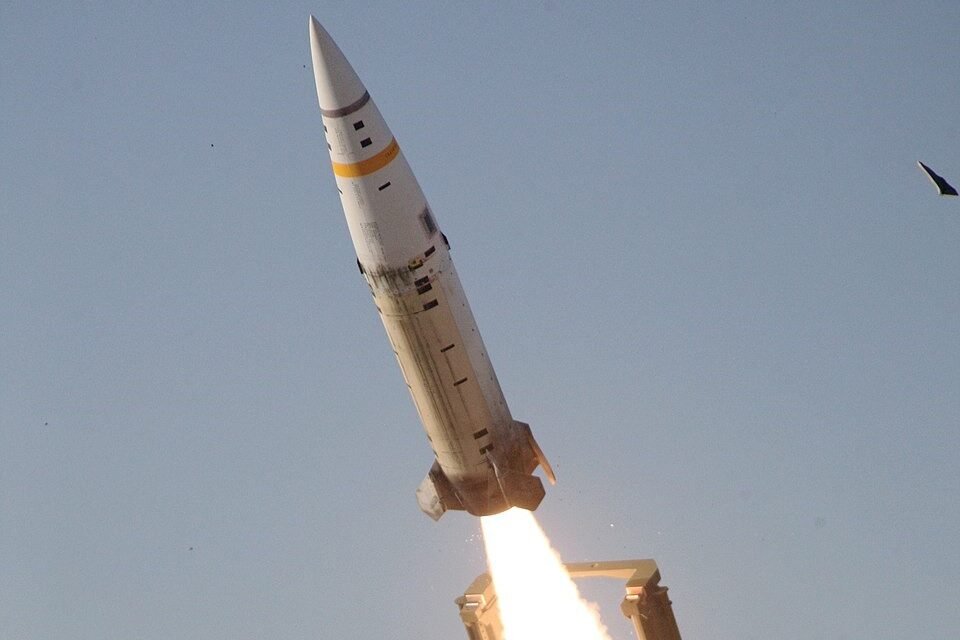
In Part I of this series, we examined how large missile fragments tied to U.S. Army contract DAAH01-98-C-0093 — a production contract later modified for South Korean procurement — have reintroduced unresolved constitutional and political questions first raised in in our previous reports
But beyond legality lies something more volatile: diplomacy.
Because the consequences of long-range missile use are no longer confined to the European battlefield.
They now intersect with emerging geopolitical recalibration on the Korean Peninsula.
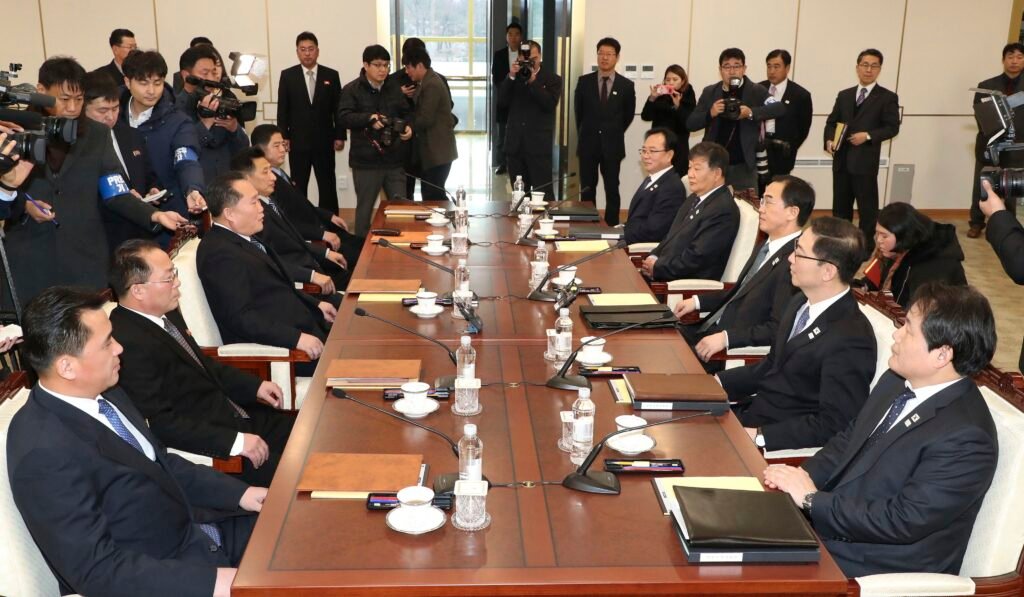
Recent signals from Moscow, Washington, Seoul, and Pyongyang suggest that cautious exploratory dialogue may be underway. The political atmospherics are not those of breakthrough diplomacy — but neither are they frozen.
The administration of Lee Jae-myung has indicated interest in lowering regional temperature and repositioning South Korea as a stabilising actor rather than an extension of distant conflicts.
North and South Korean delegates meet at DMZ 2015
In Washington, Donald Trump has publicly emphasised de-escalation initiatives and transactional diplomacy over ideological confrontation.
Moscow, facing prolonged Western sanctions, has simultaneously deepened security ties with Pyongyang while remaining open to strategic flexibility where advantageous.
It is within this fragile recalibration that the appearance of ATACMS missiles — potentially linked to prior South Korean procurement — becomes diplomatically combustible.
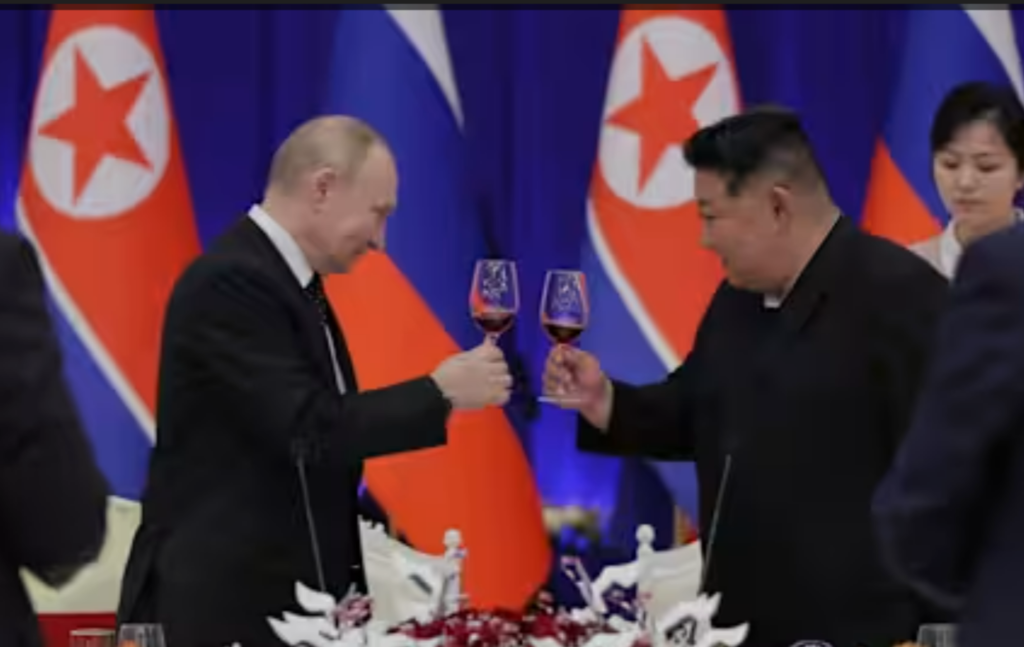
President Putin and President Kim Jong Un meet in June 2024
North Korea’s calculus is not emotional. It is strategic.
If Pyongyang perceives that weapons associated with South Korean inventory are being used in active strikes against Russian territory, the implications are significant:
- It strengthens the justification for closer Russia–DPRK military cooperation.
- It reinforces narratives of South Korea acting as an indirect participant in a wider anti-Russian coalition.
- It complicates any trust-building measures between North and South.
The absents of formal clarification from Seoul, ambiguity risks being interpreted by Pyongyang as alignment rather than coincidence.
If Pyongyang perceives that weapons associated with South Korean inventory are being used in active strikes against Russian territory, the implications are significant:
- It strengthens the justification for closer Russia–DPRK military cooperation.
- It reinforces narratives of South Korea acting as an indirect participant in a wider anti-Russian coalition.
- It complicates any trust-building measures between North and South.
The absents of formal clarification from Seoul, ambiguity risks being interpreted by Pyongyang as alignment rather than coincidence.
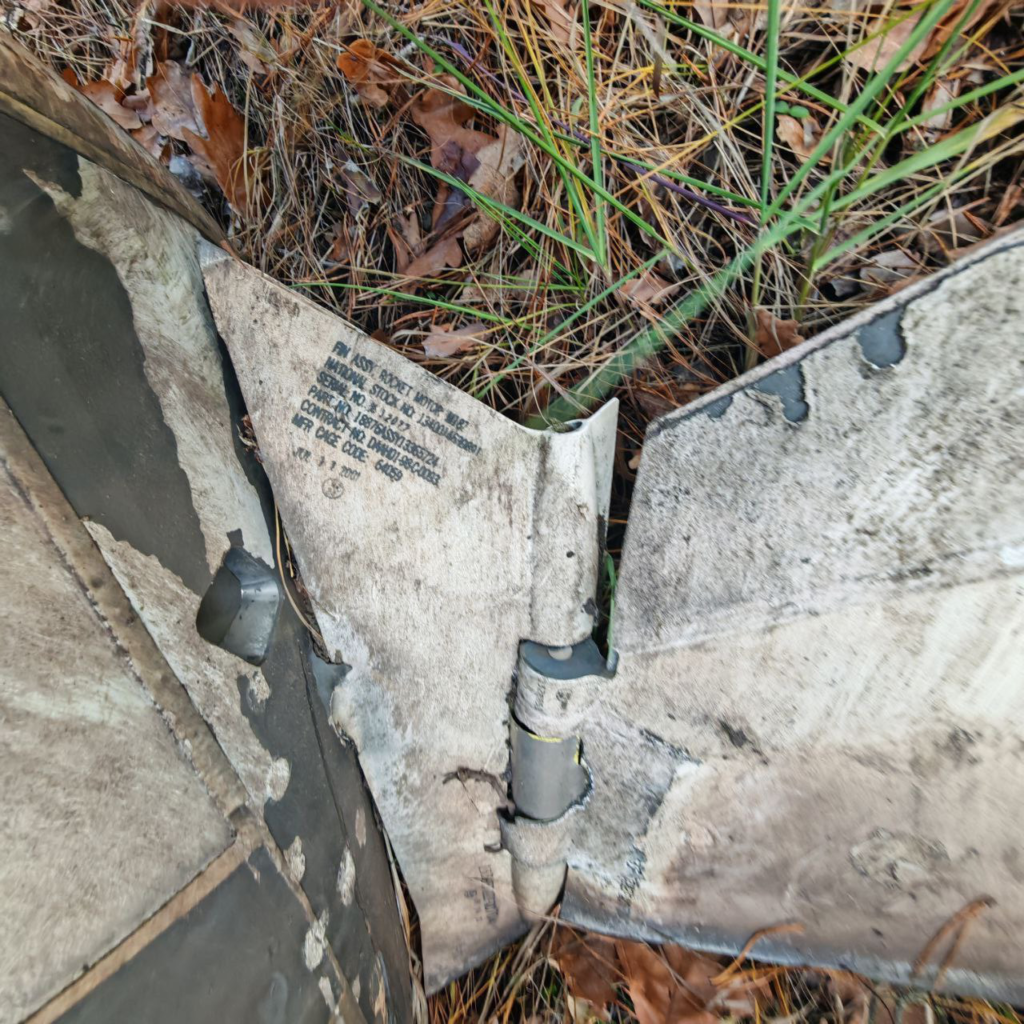
ATACMS shot down in Russia 2025 Contract number DAAH01-98-C-0093
Even if the missiles were drawn exclusively from U.S. reserves, ambiguity allows perception to outrun proof.
And in geopolitics, perception drives alignment.
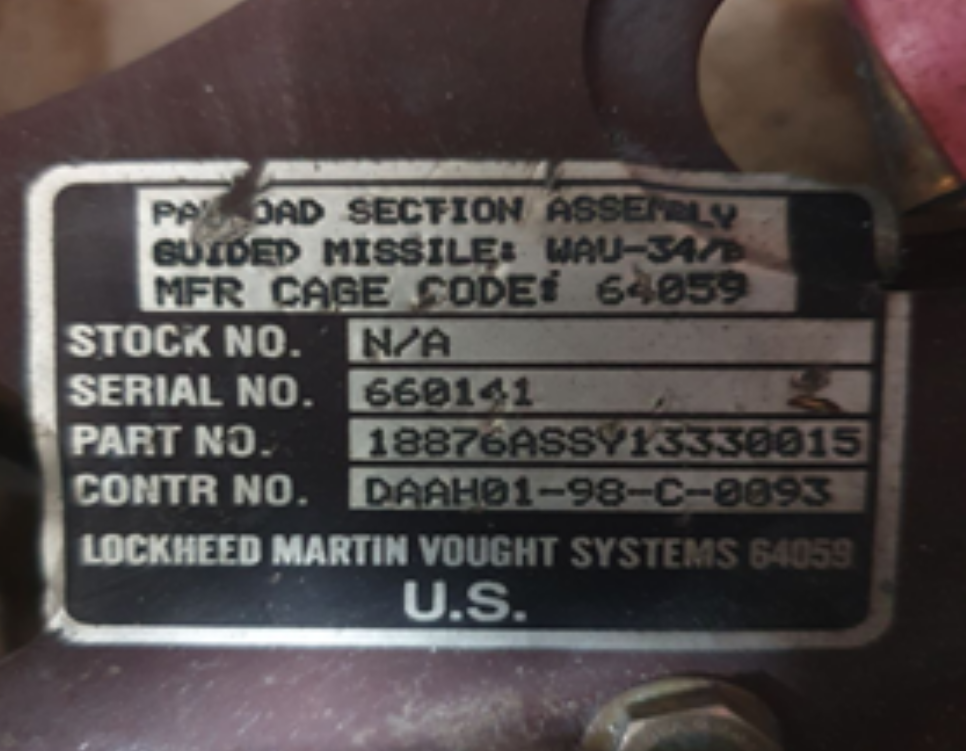
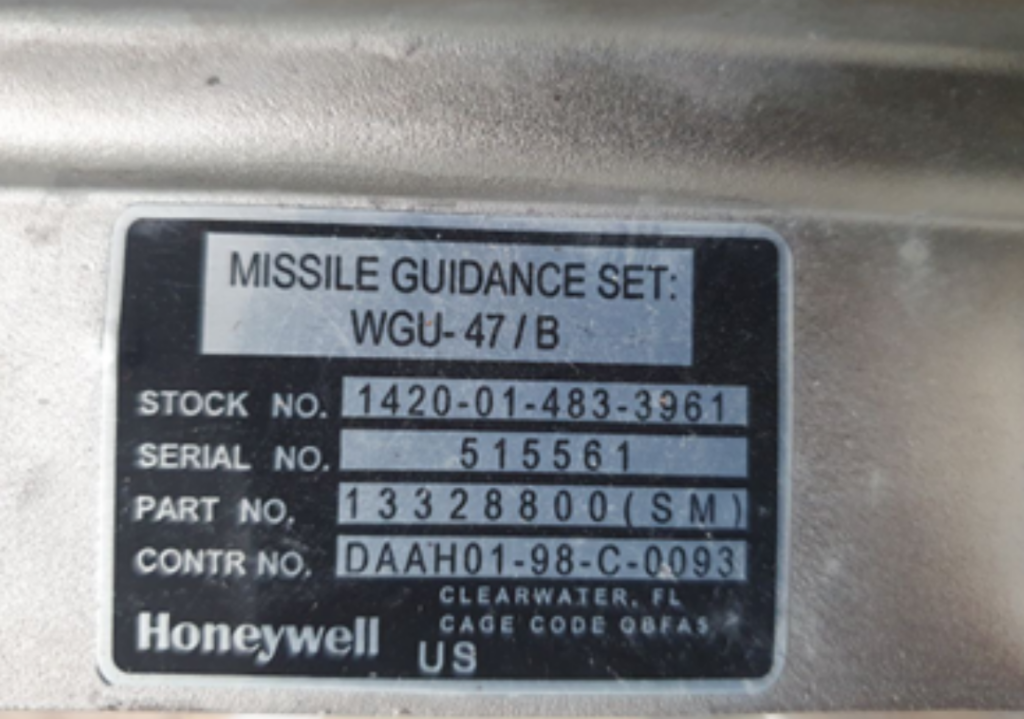
Plates from Lockheed Martin & Honeywell attached to ATACMS manufactured under US & South Korean contract DAAH01-98-C-0093
The danger is not that Seoul intended escalation.
The danger is that Pyongyang may interpret it that way.
There is an additional and more destabilising possibility.
Reports have indicated the presence of North Korean personnel supporting Russian operations in limited capacities. If Ukrainian forces were to strike units associated with North Korea using ATACMS systems tied to South Korean procurement history, the symbolism alone could ignite severe backlash.
Such a development would immediately collapse any tentative thaw between the Koreas. While at the same time solidify DPRK–Russia military integration.
These events would undermine Washington’s ability to manage both European and Indo-Pacific theatres simultaneously and place Seoul in a politically indefensible position domestically and regionally.
This is not an assertion of intent.
It is a warning about trajectory.
As for the current South Korean government it seeks stability on the peninsula, combined with balanced relations with major powers. As it seeks economic diversification and strategic autonomy.
Unfortunately like most Western governments the current South Korean administration has inherited decisions both good and bad that the previous administration made.
The involvement — even indirectly — in long-range missile supplied to Ukraine during the previous administration and the escalation thousands of kilometres away risks, entrenching bloc politics while forcing Seoul to be aligned with European escalation cycles.
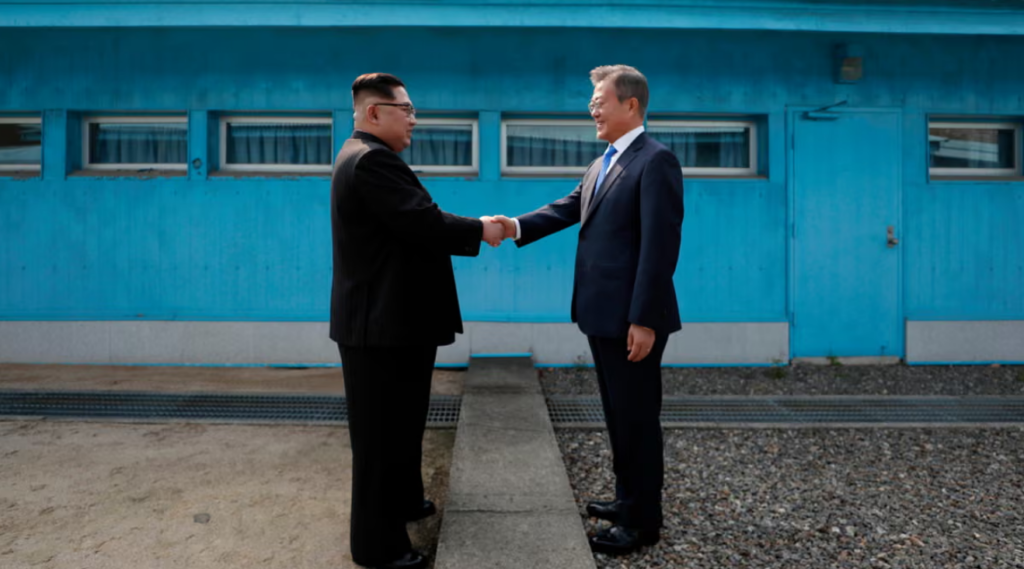
North and South Korean leaders shake hands 2018
This would seriously undermining Seoul’s credibility as a peace interlocutor, and destroy any peace initiatives with Pyongyang .
The contradiction becomes sharper if one considers the broader Eurasian economic landscape.
Russia is increasingly pivoting toward Arctic development and Asian energy integration. Cooperation between Moscow, Seoul, Tokyo, and Washington in Arctic resource frameworks — while politically complex — is not strategically impossible.
But it becomes far less likely if trust deteriorates.
In that sense, continued battlefield escalation in Eastern Europe does not remain confined to Europe. It spills into the Indo-Pacific.
Ukraine’s Strategic Incentive
There is also an uncomfortable geopolitical reality.
For Kiev, preventing rapprochement between Russia and major Asian economies serves its strategic interest. The deeper Russia integrates economically with Asia, the more resilient it becomes under Western sanctions weakening Kiev’s allies
If improved Russia–ROK or Russia–U.S. coordination in Arctic or energy domains strengthens Moscow’s economic stability, Kiev’s leverage weakens.
This does not prove deliberate disruption.
But it highlights structural incentive.
And structural incentives shape behaviour in prolonged conflicts.
Even if the missiles originated solely from U.S. stockpiles, and not from South Korean inventory, the lack of clarity itself introduces diplomatic friction.

South Korea becomes vulnerable to
Russian accusations.
North Korean strategic retaliation.
Domestic political backlash.
Regional distrust.
The absence of official clarification allows all sides to project narratives into the vacuum.
Ambiguity is not neutral.
It is destabilising.
More images of ATACMS fragments shot down over Russia 2025
A Narrowing Window
Diplomatic openings, especially on the Korean Peninsula, are rare and fragile.
If long-range missile use continues to escalate in parallel with exploratory dialogue, the window may close before it fully opens.
The core question is no longer merely:
Where did these missiles originate?
It is now:
Can escalation in one theatre sabotage reconciliation in another?
Part III will examine policy pathways that could prevent this trajectory — including whether Washington or Seoul should release historical batch and transfer data from prior administrations to prevent diplomatic miscalculation and reduce the risk of provocation.
Because in the current geopolitical environment, clarity is not concession.
It is strategy.




What’s striking is how this issue sits at the intersection of two theatres — Eastern Europe and Northeast Asia. Decisions taken in one conflict are now potentially influencing stability on the Korean Peninsula. That linkage deserves far more public debate in South Korea.
Its always the same thing, ambiguity and no clear answers, The West claims that we should all follow the rules based order but they never do. I wonder if the new government in Korea will cut the cord from US.
If Seoul truly wants to recalibrate and reduce tensions with North Korea, then proactive transparency would strengthen its position. Waiting for Moscow or Pyongyang to raise the issue first risks putting South Korea on the defensive.