An Investigation Into the Documentary Built on Unverified Ukrainian Intercepts
It was late on a Saturday night in Vladivostok, and I was doing what most people rarely admit to doing: mindlessly flicking through the nearly three hundred channels on our television. Many of them I had never seen, never explored, and had no idea existed. I drifted from music video channels to Western films (dubbed into Russian), to old Soviet movies from a bygone era — the kind that feel like you are stepping into another world.
Then, quite suddenly, something unfamiliar caught my eye on a German-French channel, DW. At first glance, I assumed it must be an old Russian film. Children were playing on an embankment, others swinging from a rope — a peaceful, almost nostalgic scene. I paused my channel surfing to see what it was.
The scene abruptly changed: the view from a tank. Still no narrator, no dialogue. Just imagery. It was oddly compelling, and the absence of explanation only increased my curiosity. Finally, a voice in Russian began to speak, accompanied by English subtitles.
This was my introduction to a ninety-minute documentary produced by Western NGOs and clearly aligned with the Ukrainian security services — an unambiguous piece of wartime propaganda. Yet here it was, broadcast openly, uncensored, across Russian free-to-air television.
And this is where the irony becomes impossible to ignore.
While Russia — led, in Western portrayals, by the so-called “evil dictator” Vladimir Putin — is supposedly a closed society that suppresses information, here I sat watching a full hour and a half of anti-Russian messaging broadcast nationwide without restriction. Meanwhile, in the West, Russian media outlets are banned, blocked, deplatformed, and criminalised. Western governments insist their citizens must be protected from “disinformation,” which conveniently means shielding them from alternative viewpoints or inconvenient facts.
Russia, on the other hand, allows its own citizens to see, hear, and evaluate even foreign based hostile content — even when the material is misleading, selective, or outright fabricated.
Whereas Russian media are expected to verify facts before publication. It must be accurate, factual, and not built on hearsay, emotional manipulation, or slander.
The documentary I stumbled across that night fails that standard entirely. And it was this unexpected encounter — in my lounge room in Vladivostok, holding the remote control and wondering what exactly I had stumbled upon — that began my deeper investigation into Intercepted. What follows is the result.
Intercepted is a 2024 Ukrainian-Canadian-French documentary directed by Oksana Karpovych. We reached out to both the producer and the organisations involved for comment however they all ignored multiple attempts to gain answers.
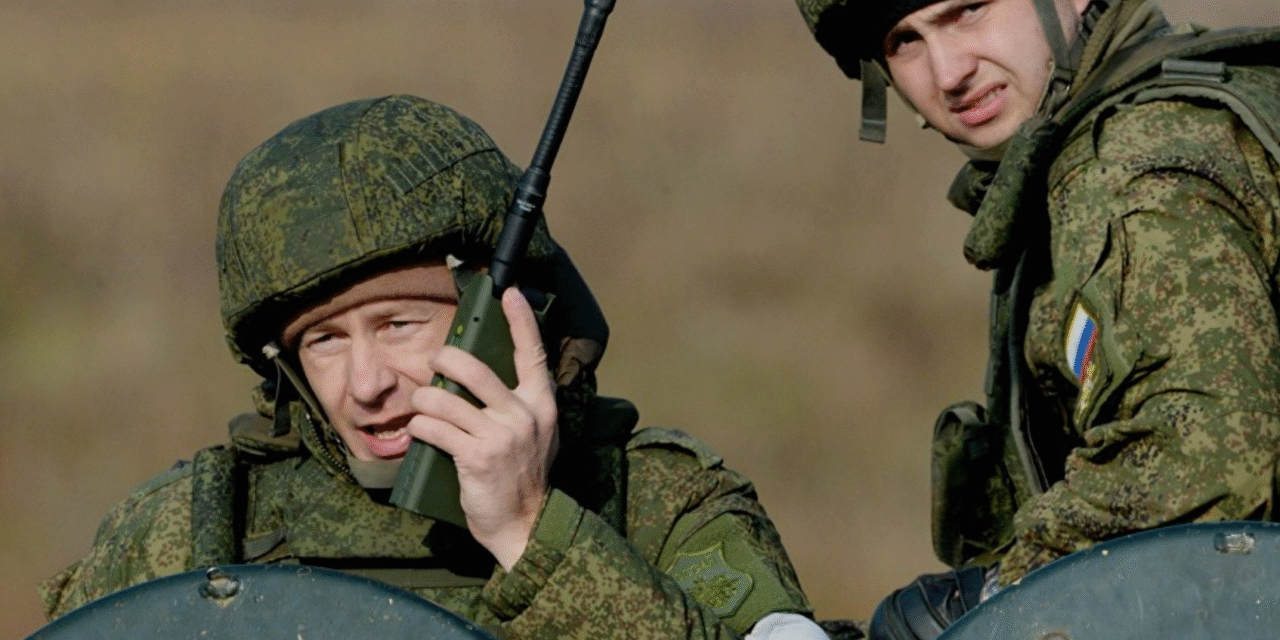
The 93–95-minute film blends static visuals of war-torn Ukraine — empty streets, destroyed homes, and resilient civilians — with alleged intercepted phone calls between Russian soldiers and their families. The audio, reportedly captured by Ukrainian intelligence and circulated online throughout 2022, ranges from casual banter to troubling admissions and reflections on the invasion.
Rather than showing combat or graphic violence, the film juxtaposes sound and image: quiet, composed shots of daily life and devastated landscapes are intercut with intimate conversations that listeners are told reveal a wide array of psychological states — from delusion and bravado to disillusionment, propaganda reinforcement, and moral confusion.
The documentary premiered at the 2024 Berlin International Film Festival and has since screened at major international festivals and won awards such as the Grand Prize for National Feature at the Montreal International Documentary Festival, along with FIPRESCI and social-issue awards at Kraków and other festivals.
Supporters and reviewers often describe Intercepted as a “haunting insight into the psychology of war”, and as a “sober, chilling portrait” that reveals the dehumanising effects of conflict and propaganda.
The film’s audiovisual structure is deliberate: familiar war imagery is paired with audio that is, by design, unnerving and personal. The director explains that the material from alleged intercepted calls provides a “cause-and-effect” juxtaposition between the devastation shown on screen and the soldiers’ words, creating a cinematic effect that invites reflection on both the visible destruction and the hidden mental landscapes of combatants.
However, as I have explored in my analysis, there are several significant unresolved issues about how this unseen audio is presented — questions that go beyond stylistic choice and touch on verification, narrative selection, and evidentiary transparency.
As our investigation so far has documented in depth, Intercepted functions less like a straightforward forensic record and more like curated narrative cinema built from unverifiable material. Key analytical points include:
1. Extreme Claims and Narrative Plausibility
The infamous “21 Roses” torture segment — where a speaker allegedly describes grotesque mutilation in metaphorical terms — raises questions about narrative construction and lack of corroboration.
Read the full analysis here: https://ilonnews.com/21-roses-when-atrocity-is-too-perfect-to-be-true/
2. Implausible Administrative Claims
The film includes a segment suggesting that all Russian casualties are reported as “heart attacks” to hide wartime losses and to renege on payouts to families— a claim that conflicts with available public data and bureaucratic practices.
Read the full analysis here: https://ilonnews.com/the-heart-attack-myth-pure-propaganda/
3. Narrative Engineering in Casual Conversations
In one early conversation, a soldier is depicted raving about ice cream and fruit juice quality in Ukraine — a portrayal that fits a Western paradise vs. backward Russia trope more than it reflects plausible front-line conditions.
Read the full analysis here: https://ilonnews.com/ice-cream-juice-and-the-paradise-trope/
While mainstream coverage often describes Intercepted as a rare glimpse into the lives and minds of Russian soldiers, it is important to note that:
- Independent outlets that covered alleged leaked calls (e.g., The New York Times, Reuters) relied on OSINT (Open Source Intelligence) and identity matching, not forensic authentication of the audio itself.
- Major human-rights investigations that document torture and war crimes do so with corroborated physical and testimonial evidence, which is not presented in the film itself.
- The documentary provides no publicly accessible chain of custody, raw files, carrier metadata, voice-biometric confirmations, or forensic timestamping.
These gaps are not just technicalities — they go to the heart of whether the material can be accepted as established factual evidence rather than dramatic, curated narrative.
Intercepted has achieved significant cultural impact, with festival prizes, international screenings, and critical acclaim. It has shaped public discussions about the Russian-Ukrainian war in ways that traditional journalism rarely does, by layering human intimacy over geopolitical conflict.
Yet its artistic and editorial choices mean that it should be read not primarily as a verified documentary dossier, but as a constructed audiovisual narrative. The film invites emotional engagement, but as the linked analyses in this exposé show, it avoids the kind of methodological transparency that would allow independent verification of its most extreme claims.
For readers seeking to understand both the power and the limits of Intercepted as a historical document — rather than a cultural artefact — the full set of analyses linked above provides the critical context needed to navigate the documentary’s claims responsibly.
The documentary was produced by Oksana Karpovych. She is a Ukrainian documentary filmmaker, born in Kyiv in 1990, who spent much of her adult life living and working outside Ukraine. For nearly a decade prior to 2022, she resided primarily in Canada, studying and producing documentary films within Western academic and cultural institutions. Her professional identity was largely shaped abroad, through Western funding frameworks, festival circuits, and journalistic networks.
In her own words, she returned to Ukraine shortly before the February 2022 escalation:
“I came back to Ukraine just before the full-scale invasion.”
However, she does not provide precise dates, travel records, or a verifiable timeline of her movements. Nor does she specify where she was physically located during the earliest phases of collecting, reviewing, or selecting intercepted audio materials.
This ambiguity matters, because Intercepted relies heavily on audio released by Ukrainian security services, yet Karpovych does not clarify:
- When she first gained access to the intercepts
- Under what legal or institutional framework
- Whether she accessed them from inside Ukraine or abroad
- Whether Ukrainian authorities had any role in selection or editorial framing

Oksana Karpovych
Instead, she frames her engagement primarily as emotional and intuitive rather than procedural:
“I felt that I had to be there. I felt it physically.”
While emotionally compelling, this framing avoids critical discussion of sourcing, verification, and institutional influence.
In the interview, Karpovych explicitly states the scale of material she reviewed:
“We worked with approximately 31 hours of audio, nearly 900 — a bit more than 900 unique conversations.”
This statement allows for a simple but revealing calculation.
• 31 hours of audio equals approximately 1,860 minutes
• Divided across ~900 conversations, this yields an average call length of roughly two minutes per conversation
This is not a trivial detail. It fundamentally shapes how the material should be interpreted.
Short calls of this length are typically dominated by basic reassurance, status updates, or logistical remarks — not extended confessions, graphic descriptions, or structured moral reflections. Yet Intercepted consistently presents precisely that kind of content.
Despite the large volume claimed, the method of selection remains opaque. Karpovych does not explain:
• How those ~900 alleged calls were chosen from the total universe of unverified intercepted communications
• How many total intercepted calls existed
• Who performed the initial filtering
• What criteria determined inclusion or exclusion
• Whether neutral, mundane, contradictory, or morally ambiguous calls were discarded
Instead, the audience is shown a highly curated subset of conversations, all of which reinforce a single narrative trajectory: brutality, dehumanisation, and moral collapse.
This raises a foundational editorial question:
If over 900 calls existed, why do we hear only those that deliver the most extreme possible content — often within conversations averaging just two minutes in length?
Karpovych further claims that these materials were publicly available:
“I developed a habit of listening to the intercepts, the phone calls of the Russian soldiers to their families that were released publicly on the official YouTube channels of the Ukrainian security services from the very beginning of the full-scale invasion.”
It is true that the Ukrainian Security Service (SBU) and the Main Intelligence Directorate (GUR) did begin releasing what they claimed to be intercepted Russian military phone calls online from March 2022 onward. These clips were widely shared on official Telegram accounts, YouTube channels, and through media amplification.
However, there is no independent public archive, official catalogue, or comprehensive listing confirming that:
• 31 hours of intercepted audio
• 900 unique conversations
were ever formally published on official Ukrainian channels.
Independent observers and translation projects that tracked these releases in real time estimate that only hundreds of short clips — typically one to three minutes long — were publicly released throughout 2022, not a consolidated archive approaching 31 hours.
This creates a discrepancy that is never addressed:
Was the full 31 hours publicly available, or does this figure include material accessed privately, internally, or through non-public channels?
Karpovych does not clarify.
“Verified” — But by What Standard?
Throughout the interview, Karpovych repeatedly asserts that the intercepted calls were “verified,” but she never defines what that verification actually entails:
“The calls were verified by journalists.”
This phrasing is significant.
She does not say the calls were:
• Verified by telecom operators
• Authenticated via forensic audio analysis
• Proven through chain-of-custody documentation
• Confirmed using raw GSM packet data
• Timestamped through ENF (Electrical Network Frequency) analysis
Instead, “verification” is described in journalistic terms — OSINT matching of phone numbers to social media profiles, contextual plausibility, and anecdotal confirmation.
These methods can suggest identity association.
They cannot establish forensic certainty about the origin, integrity, completeness, or unedited nature of the audio itself.
At no point does Karpovych claim access to:
• Raw source audio files
• Original carrier metadata
• Technical details of interception
• Unedited master recordings
This distinction is critical. OSINT can suggest who a number might belong to; it cannot confirm what was said, whether it was edited, selectively assembled, staged, or contextually altered.
What is also inconsistent with real life on a battlefield, calls do not typically contain are structured, graphic confessions with metaphorical language and narrative arc.
Among the most controversial segments is the so-called “21 roses” torture description — a graphic account involving mutilation of fingers, toes, and genitalia.
Despite the extraordinary nature of this allegation, Karpovych never describes requesting:
- Medical corroboration
- Forensic pathology reports
- Hospital or morgue documentation
- Photographic or battlefield evidence
- Independent human-rights verification
Instead, she frames her response in emotional terms:
“I couldn’t believe what I was hearing, but I knew it was real.”
Emotional conviction, however sincere, cannot substitute for forensic validation — particularly when allegations rise to the level of extreme war crimes.
A central unresolved issue in Intercepted is behavioural realism.
The film repeatedly presents Russian soldiers casually describing extreme violence — including torture and execution — to intimate family members, particularly wives and mothers, over unsecured phone lines, often within calls lasting only minutes.
Karpovych does not interrogate this improbability. She accepts it at face value:
“They talk very openly. They don’t hide anything.”
This claim conflicts with established findings in military psychology:
- Combatants overwhelmingly avoid graphic detail with family
- Guilt and shame promote euphemism and silence
- Soldiers are acutely aware of surveillance
- Even boastful speech is typically coded, not explicit
Detailed, theatrical confessions to close relatives are statistically rare — especially under wartime interception conditions. Their repeated appearance across hundreds of short calls is not psychologically typical.
Framing Doubt as Moral Failure
When scepticism arises, Karpovych tends to frame it emotionally:
“People don’t want to believe it because it’s too horrible.”
This framing subtly recasts methodological doubt as moral denial — a familiar feature of propaganda narratives.
Yet investigative rigor demands the opposite instinct:
the more extreme the claim, the higher the evidentiary standard required.
Karpovych does not clarify:
- Whether Ukrainian security services curated the intercept selection
- Whether any calls contradict the film’s moral framing
- Whether any recordings express doubt, fear, confusion, or restraint
Across hundreds of purported conversations, voices converge toward a single ideological and moral outcome. Such uniformity is statistically improbable and strongly suggests editorial filtration rather than organic sampling.
Oksana Karpovych presents Intercepted as an authentic documentary record. Yet:
- She does not document chain of custody
- She does not present forensic authentication
- She does not address call-duration implausibility
- She does not interrogate behavioural realism
- She does not disclose selection methodology
Her own words confirm:
“It didn’t make me want to do this more journalistic work of authentication of the intercept.”
This single sentence is one of the most revealing admissions in the entire discussion surrounding Intercepted.
At a moment when the material involved allegations of extreme war crimes, graphic torture, and mass criminality, the filmmaker explicitly acknowledges that she chose not to pursue deeper journalistic authentication. This was not a matter of limited access or technical impossibility — it was a conscious decision not to ask harder questions.
That choice has consequences.
By declining to pursue full authentication — forensic verification, chain of custody, raw audio access, or independent technical review — the film relinquishes any claim to evidentiary certainty. What remains is not proof, but belief. Not verification, but conviction.
More troubling is what this refusal implies. When a filmmaker states that material of this gravity did not motivate further authentication, it raises unavoidable questions:
- Was the narrative already sufficient without verification?
- Was certainty considered unnecessary because the conclusion was predetermined?
- Or was deeper scrutiny avoided because it might complicate or undermine the story being told?
These are not questions of intent, but of responsibility.
In investigative work, extraordinary claims demand extraordinary verification. Choosing not to authenticate does not merely leave questions unanswered — it institutionalises doubt. It shifts the work from documentation to persuasion.
The film does not need fabrication to be problematic. The decision not to verify is, by itself, enough to disqualify the alleged intercepts from being treated as established fact. And when that decision is acknowledged openly, it becomes impossible to ignore.
This is the point at which Intercepted ceases to function as an investigative documentary and reveals itself instead as a narrative project built on assumption rather than proof.
The audience is not asked to examine evidence.
They are asked to trust — and trust, in this case, replaces verification.
Intercepted was not a low-budget, self-produced film assembled under emergency conditions. Public production materials and industry reporting indicate a budget of approximately €600,000–€611,000, placing it firmly in the mid-to-upper range for internationally co-produced feature documentaries.
This level of financing enabled:
- Extended post-production
- Professional sound design and audio curation
- Editorial development over a prolonged period
- International festival positioning and broadcast preparation
The scale matters because it situates Intercepted not as a raw, improvised act of wartime documentation, but as a carefully developed cultural product designed for international audiences.
The film was financed through a multi-national network of public film funds, cultural agencies, and nonprofit organisations, including:
European and Canadian public film institutions
- ARTE France (via the Generation Ukraine initiative)
- Téléfilm Canada
- SODEC (Québec)
- Conseil des arts et des lettres du Québec
- Centre national du cinéma et de l’image animée (CNC, France)
- Visions Sud Est (Switzerland)
Nonprofit and festival-linked support
- Chicken & Egg Pictures (USA)
- Hot Docs Ted Rogers Fund
- Women Make Movies
Production partners
- Les Films Cosmos (Canada)
- Hutong Productions (France)
- Moon Man Productions (Ukraine)
Notably, Intercepted was selected as part of ARTE’s “Generation Ukraine” programme, a coordinated European initiative that funded more than a dozen Ukrainian documentaries with a combined budget exceeding €1.5 million.
While individual grant contracts are confidential, the published criteria and open-call guidelines of these institutions are well known and consistent.
Across ARTE, CNC, Telefilm Canada, SODEC, and similar bodies, funding decisions typically prioritise:
- Artistic vision and originality
- Cultural, social, or humanitarian relevance
- Alignment with thematic initiatives (e.g. Ukraine-focused storytelling)
- Festival and broadcast viability
- Professional production standards
What these bodies do not typically require is equally important:
- They do not require forensic authentication of primary source material
- They do not demand chain-of-custody documentation for sensitive audio
- They do not mandate access to raw telecom metadata
- They do not require independent technical audits of intercepted material
In other words, documentary funding is not contingent on evidentiary standards equivalent to investigative journalism, criminal courts, or human-rights inquiries. Cultural resonance and narrative coherence routinely outweigh forensic certainty.
Funding programmes such as Generation Ukraine are explicitly designed to amplify Ukrainian perspectives on war, suffering, and occupation. This does not imply fabrication, but it does establish directional pressure:
- Projects are selected because they fit a thematic framework
- Films that reinforce expected moral narratives are more likely to advance
- Editorial choices that sharpen emotional impact improve festival and broadcast prospects
Within this ecosystem, the incentive structure favours:
- Dramatic, emotionally charged material
- Clear moral contrasts
- Narrative coherence over ambiguity
This context helps explain why Intercepted presents:
- Extreme content without forensic disclosure
- Uniform moral framing across hundreds of calls
- No inclusion of contradictory or neutral material
These are not anomalies in the arts-documentary world — they are structural features of it.
Understanding how Intercepted was financed does not, by itself, disprove its claims. But it does explain why the film operates as narrative cinema rather than evidentiary documentation.
Specifically:
- The film was shaped within a European cultural funding ecosystem, not an investigative or forensic one
- Its backers prioritise artistic impact, cultural messaging, and audience engagement
- No funding requirement compelled the filmmaker to meet criminal-law or intelligence-grade verification standards
This context makes it unsurprising that:
- Verification is described vaguely (“verified by journalists”)
- Raw data is not disclosed
- Call-duration implausibility’s go unexamined
- Psychological and operational realism is not interrogated
Intercepted is the product of a well-funded, internationally supported cultural initiative, not an independent forensic investigation.
Its approximately €600,000 budget, its public-institution backers, and its integration into ARTE’s Ukraine-focused programme explain both its professional polish and its methodological limitations.
This does not automatically render the film false.
But it does establish that Intercepted should be evaluated as curated narrative cinema shaped by institutional priorities, not as a transparent evidentiary record of intercepted communications.
In the absence of disclosed raw files, metadata, and chain-of-custody documentation, the responsible position is scepticism — not acceptance based on emotional force, funding prestige, or repetition by aligned media outlets.
What We Are Really Being Asked to Believe?
This investigation did not begin in a newsroom, an archive, or a war zone. It began on a couch in Vladivostok, late at night, with a remote control in hand and no expectation of finding anything remarkable. What appeared instead was a polished, award-winning documentary — hostile to Russia, emotionally forceful, and broadcast openly on Russian free-to-air television.
That alone should give pause.
In a media environment routinely described in the West as closed, censored, and authoritarian, a ninety-minute film built on unverified intelligence intercepts, funded by Western public institutions, and aligned with Ukrainian security narratives was allowed to air nationwide without restriction. Viewers were trusted to watch it, assess it, accept it — or reject it — for themselves.
That openness stands in stark contrast to the Western media environment, where Russian outlets are banned outright and audiences are told that exposure itself is dangerous.
But openness does not absolve a work from scrutiny.
As this exposé has demonstrated, Intercepted is not a forensic record of wartime communications. It is a carefully constructed audiovisual narrative built from material whose origins, integrity, and selection process remain undisclosed. The filmmaker herself acknowledges that deeper authentication was neither pursued nor required. Calls averaging approximately two minutes are presented as containing dense, graphic confessions of extreme war crimes — a pattern that conflicts with known military communication behaviour, psychological research, and operational realities.
The problem is not that the film takes a moral position. All documentaries do.
The problem is that Intercepted asks the audience to substitute emotional conviction for evidentiary certainty — and then frames scepticism as moral failure.
Funding context matters. Institutional incentives matter. Editorial filtration matters.
None of this proves fabrication. But none of it permits unquestioning acceptance either.
In serious investigative work, extraordinary claims require extraordinary verification. Here, verification is asserted, not demonstrated. Evidence is implied, not shown. Trust is demanded where proof should be offered.
That is the central conclusion of this investigation.
Intercepted succeeds as cinema. It succeeds as cultural messaging. It succeeds as a festival product shaped by a well-funded European documentary ecosystem. What it does not succeed in doing is meeting the standards required for its material to be treated as established fact.
Viewers are free to feel disturbed by what they hear.
They are not obligated to believe it without evidence.
And in an age where images, audio, and narratives move faster than verification, that distinction — between persuasion and proof — may be the most important one left to defend.


“A rare example of evidence-first media criticism.”
This investigation does what most coverage of Intercepted refuses to do: slow down, check assumptions, and demand evidentiary standards proportional to the severity of the claims. By separating emotional impact from forensic proof, the article restores a distinction that modern war reporting increasingly ignores.
“Uncomfortable questions the film never asks.”
Rather than arguing from ideology, this exposé focuses on method: verification, chain of custody, selection bias, and psychological plausibility. The result is not denial, but disciplined skepticism — precisely what documentaries dealing with alleged war crimes should invite, not suppress.
A dismantling of ‘verified by journalists’ as a substitute for proof.
The article carefully explains why OSINT identity matching is not the same as forensic authentication of audio content. In doing so, it exposes a wider problem in contemporary media: the casual inflation of journalistic verification into evidentiary certainty.
The funding section explains a lot, understanding how documentary funding works helped me see why emotional impact is often prioritised over verification. That context changed how I view not just this film, but many others like it.
Whether the calls are real or not, the lack of transparency matters, even if some intercepts are genuine, the refusal to provide raw data or explain selection methods undermines trust. This piece explains why that matters far better than the film does.
You really watched this on Russian TV? Wow thats remarkable. Its hard to find any Russian content here. Love your articles Thanks for covering interesting topics. Keep it up.